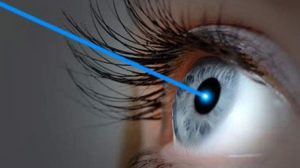

You have just had your pre-LASIK evaluation and your pachymetry report reads 460 microns. Naturally, the first question is: “Is my cornea thick enough for laser eye surgery?” The short answer is yes—460 microns falls within the eligible range for most patients. But thickness alone does not decide your candidacy. Here is what actually matters.
LASIK reshapes the cornea by removing a precise amount of stromal tissue. The thinner your cornea, the less tissue is available to work with—so your surgeon must balance the correction you need against the tissue that must remain for long-term corneal stability. A reading of 460 microns sits at the lower end of the normal spectrum (roughly 460–550 µm), which means you are likely eligible but will need a thorough evaluation. This guide breaks down what that evaluation involves, which procedures suit thinner corneas best, and how to make a confident decision.
Key Takeaways
- A corneal thickness of 460 microns is within the normal range and does not automatically disqualify you from LASIK.
- Eligibility depends on multiple factors: refractive error, residual stromal bed, corneal topography, pupil size, and overall eye health.
- For thinner corneas, flapless procedures like SMILE Pro or TransPRK conserve more tissue than traditional flap-based LASIK.
- A comprehensive pre-operative workup—not a single pachymetry number—determines your true candidacy.
What Is Corneal Thickness and Why Does It Matter?
Corneal thickness—measured through a test called pachymetry—tells your surgeon how much tissue is available for laser reshaping. The average human cornea is roughly 540 microns (about half a millimetre) at its centre. During LASIK, the excimer laser ablates a thin layer of stromal tissue to correct your refractive error, so there must be enough tissue left over to maintain the cornea’s structural integrity for the rest of your life.
A Pentacam scan maps the thickness across the entire cornea—not just the centre—because uneven thinning can reveal early signs of conditions like keratoconus. If the thinnest point is significantly below the central reading, that changes the eligibility picture entirely.
Is 460 Microns Enough for LASIK?
In most cases, yes. A corneal thickness of 460 microns is not considered “thin” in the clinical sense—corneas below 300 microns are the ones that raise red flags. At 460 µm, you sit at the lower boundary of the normal range, which means you are a candidate provided your refractive error is not excessively high.
Here is the practical reality: the amount of tissue ablated depends on your spectacle prescription. A patient with −2.00 dioptres needs far less corneal removal than someone with −8.00. So a 460-micron cornea paired with mild myopia is perfectly workable, whereas the same cornea paired with a high prescription might leave too little residual tissue. Your surgeon will run this calculation during the pre-LASIK testing process to confirm safety margins.
What Else Your Surgeon Evaluates Beyond Thickness
Corneal Topography and Tomography
Corneal topography maps the front surface curvature, while tomography (like the Pentacam) scans both front and back surfaces. Together, they detect irregular astigmatism, asymmetric steepening, or early ectasia that pachymetry alone would miss. For a 460-micron cornea, these scans are especially important because they confirm the tissue is healthy and evenly distributed.
Refractive Error and Ablation Depth
Every dioptre of correction requires roughly 12–16 microns of tissue removal. Your surgeon calculates the total ablation depth (including the flap, if applicable) and subtracts it from your corneal thickness to ensure the residual stromal bed stays above the safe minimum—typically 250–300 microns.
Pupil Size
Larger pupils, especially in dim light, expose more of the corneal periphery. If the optical zone cannot cover the dilated pupil, you risk post-operative glare and halos. This becomes more relevant when tissue conservation is a priority.
Overall Eye Health
Conditions such as pre-existing dry eye, previous eye surgery, or a fluctuating prescription can all affect eligibility regardless of corneal thickness. Your surgeon also checks the retina, intraocular pressure, and lens clarity as part of the full workup.
Best Procedures for Thinner Corneas
SMILE Pro
SMILE Pro is a flapless, keyhole procedure that extracts a small lenticule of tissue through a 2–4 mm incision—no flap needed. Because it skips the flap (which itself consumes around 100–120 microns), it preserves significantly more corneal tissue than traditional LASIK. For a 460-micron cornea, this can be the difference between eligibility and disqualification. Learn more about SMILE for thin corneas.
TransPRK (Surface Ablation)
TransPRK reshapes the cornea’s surface without creating any flap or incision at all. Recovery is a bit slower—typically five to seven days for clear vision—but it conserves the most tissue of any laser procedure. It can be an excellent option when corneal thickness is borderline.
Contoura Vision (Topography-Guided LASIK)
Contoura Vision uses topographic data to plan a more efficient ablation profile, often requiring slightly less tissue removal than standard LASIK. Combined with a thin-flap femtosecond laser, it can work well for corneas in the 460-micron range with low-to-moderate prescriptions.
ICL (Implantable Collamer Lens)
If laser procedures are ruled out because of high power combined with thin corneas, an implantable collamer lens is a safe alternative. ICL does not remove any corneal tissue at all—a biocompatible lens is placed inside the eye behind the iris.
Understanding the Residual Stromal Bed
The residual stromal bed (RSB) is the amount of corneal tissue that remains after the flap and ablation. Most surgeons follow a minimum RSB of 250–300 microns to prevent a serious complication called post-LASIK ectasia, where the weakened cornea progressively bulges forward.
For a quick illustration: if your cornea is 460 µm, the flap is 110 µm, and the ablation is 80 µm, your RSB would be 270 µm—above the safe threshold. If the ablation were 120 µm instead (for a higher prescription), the RSB drops to 230 µm, which most surgeons would consider too risky. This is exactly why your surgeon runs these numbers before approving the procedure. For a deeper dive, see our guide on calculating residual corneal thickness.
Risks of Ignoring Corneal Thickness
Proceeding with LASIK on an inadequately thick cornea can lead to corneal ectasia—a progressive condition similar to keratoconus where the cornea weakens, thins, and distorts over time. This results in worsening vision that may eventually require corneal cross-linking (C3R) or even a corneal transplant to stabilise.
Conclusion
A corneal thickness of 460 microns does not shut the door on laser vision correction—far from it. You are within the eligible range, especially if your refractive error is mild to moderate and your corneal topography is healthy. The key is a thorough pre-operative evaluation that considers thickness alongside prescription, corneal shape, pupil size, and overall eye health. For thinner corneas, tissue-conserving options like SMILE Pro, TransPRK, and Contoura Vision offer excellent outcomes with greater safety margins. If you want a personalised assessment of your 460-micron cornea, book a consultation at Visual Aids Centre—our team will walk you through every number on your report and recommend the safest path to clear vision.
Frequently Asked Questions (FAQs)
Is 460 microns too thin for LASIK?
No. A corneal thickness of 460 microns falls within the normal range (460–550 µm). Eligibility depends on your prescription, residual stromal bed calculation, and corneal health—not thickness alone.
What is the minimum corneal thickness for LASIK?
Most surgeons require at least 480–500 microns for standard LASIK with a flap. However, flapless procedures like SMILE Pro and TransPRK can safely treat corneas as thin as 450–460 microns in suitable candidates.
Which laser eye surgery is best for thin corneas?
SMILE Pro and TransPRK conserve the most corneal tissue because neither requires a flap. They are generally the preferred options when corneal thickness is on the lower side.
Can I get LASIK if my cornea is below 460 microns?
Possibly, depending on your prescription and the procedure chosen. A very low refractive error with a cornea of 440–450 µm may still leave a safe residual bed. Your surgeon must confirm this with detailed calculations.
What happens if LASIK is done on a cornea that is too thin?
If the residual stromal bed is insufficient, the cornea may progressively weaken and bulge—a condition called post-LASIK ectasia. This can cause severe visual distortion and may require cross-linking or a transplant to treat.
👁️ MEDICALLY REVIEWED BY
Padmashree Dr. Vipin Buckshey
Optometrist & Post-Operative Care Specialist | AIIMS Graduate, 1977 | Padma Shri Honouree
With over four decades of clinical experience and more than 250,000 laser vision correction procedures performed at Visual Aids Centre, Dr. Vipin Buckshey has personally assessed thousands of patients with borderline corneal thickness. An AIIMS alumnus, former President of the Indian Optometric Association, and official optometrist to the President of India, Dr. Buckshey ensures that every candidacy decision at the centre is based on a comprehensive diagnostic workup—not a single number on a pachymetry report.