
During your LASIK consultation, the surgeon measures dozens of variables—corneal thickness, prescription stability, tear quality. But one measurement that often catches patients off guard is pupil size. If your pupils dilate larger than average, does that put you at risk for complications? Could it disqualify you entirely?
Pupil size used to be one of the biggest concerns in laser eye surgery. With older-generation lasers, large pupils were a genuine red flag for post-operative glare and halos. But technology has evolved dramatically, and the relationship between pupil diameter and LASIK outcomes is far more nuanced than the blanket warnings of the early 2000s. This guide from Visual Aids Centre explains what counts as a “large” pupil, why it matters, and whether it should actually worry you in 2026.
Key Takeaways
- A pupil that dilates beyond 7 mm in dim lighting is generally considered large for LASIK purposes.
- Large pupils were a major concern with older lasers that had small treatment zones, but modern platforms use optical zones of 6.5–8.0 mm that accommodate most pupil sizes.
- The real risk factor isn’t pupil size alone—it’s the relationship between your dilated pupil diameter and the laser’s optical zone.
- Most patients with large pupils are still excellent LASIK candidates with today’s technology.
What Pupil Size Is Considered Large?
In the context of LASIK, a pupil is considered large when its scotopic (dim-light) diameter exceeds approximately 7 mm. Average adult pupils dilate to about 5–6 mm in low light. Anything above 7 mm places you in the upper range, and pupils reaching 8 mm or beyond are notably large.
It’s important to understand that your pupils change size constantly—constricting in bright environments and dilating in darkness. The measurement that matters for LASIK planning is your maximum dilation in dim conditions, because that’s when the pupil expands beyond the laser’s treatment zone and visual side effects are most likely to appear. Your mesopic pupil size (measured in moderate lighting) is also relevant for everyday scenarios like driving at dusk.
Why Pupil Size Matters in LASIK
During LASIK, the excimer laser reshapes a defined area of the cornea called the optical zone. This reshaped region is where light passes through correctly to focus on your retina. Beyond the optical zone, the cornea retains its original curvature—untreated and unchanged.
When your pupil is smaller than the optical zone, all light entering your eye passes through the corrected area. No problem. But when your pupil dilates larger than the optical zone—which happens naturally in dim lighting—some light enters through the uncorrected peripheral cornea. This mismatch creates optical aberrations: starburst patterns around headlights, halo rings around streetlights, and general glare that can be distracting, especially when driving at night. Understanding the full spectrum of refractive issues LASIK addresses provides helpful context here.
The Connection Between Large Pupils, Glare, and Halos
Glare and halos are the most commonly cited concern for large-pupil LASIK patients. In the 1990s and early 2000s, lasers could only treat optical zones of about 5.5–6.0 mm. For anyone whose pupils dilated beyond that—which includes a significant portion of young adults—nighttime visual disturbances were a real and sometimes persistent problem.
This led to a widespread clinical guideline: if your pupils dilated beyond 6 mm, you were often told LASIK wasn’t advisable. Some surgeons still cite this threshold today. However, the research from the last decade has shown that the relationship isn’t nearly as straightforward as once believed. Several large studies found no statistically significant correlation between scotopic pupil size and patient-reported satisfaction with night vision after LASIK—when modern, wide-zone lasers were used. The key variable isn’t your pupil size in isolation; it’s the ratio between your pupil diameter and the laser’s effective treatment zone. For a broader look at night vision after laser correction, see our guide on how LASIK affects night vision.
How Is Pupil Size Measured Before LASIK?
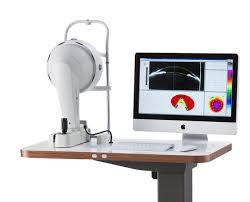
Your surgeon measures pupil size using a device called an infrared pupillometer or a wavefront aberrometer that captures pupil diameter as part of its overall optical mapping. The measurement is taken in a dimly lit room to simulate the conditions where your pupils reach maximum dilation.
At Visual Aids Centre, pupil measurement is one component of the 20+ diagnostic tests performed during the pre-operative evaluation. It’s assessed alongside corneal topography, Pentacam tomography, pachymetry, wavefront analysis, and tear film assessment. The surgeon then compares your dilated pupil diameter against the planned optical zone to determine whether any special adjustments are needed to your treatment profile.
How Modern Lasers Have Changed the Equation
This is where the story gets encouraging for large-pupil patients. Current-generation excimer lasers—including the platforms used at Visual Aids Centre—deliver optical zones of 6.5 mm and above, with blend (transition) zones extending to 8.0–9.0 mm. The blend zone creates a gradual transition between the corrected and uncorrected cornea, rather than the abrupt edge that older lasers produced. This dramatically reduces the boundary effect that causes glare and halos.
Wavefront-Optimised Treatments
Wavefront-optimised profiles are designed specifically to reduce spherical aberration—the optical phenomenon most responsible for halos. These profiles preserve the natural asphericity of the cornea, which helps maintain better night vision regardless of pupil size. Topography-guided LASIK takes this even further by mapping and correcting micro-irregularities unique to your cornea.
Contoura Vision
The Contoura Vision platform captures 22,000 data points from the corneal surface and creates a personalised ablation profile. Because the treatment is customised down to individual corneal irregularities, it can produce exceptionally sharp outcomes—including night vision quality that may actually surpass what you experienced with glasses. For patients with larger pupils, this level of customisation provides an extra margin of optical quality.
Can You Still Get LASIK With Large Pupils?
In the vast majority of cases, yes. A dilated pupil size of 7 mm or even 7.5 mm is not a contraindication for LASIK with modern technology. What matters is the overall clinical picture: your prescription, corneal thickness (which determines how large an optical zone the surgeon can use), pre-existing higher-order aberrations, and the specific laser platform being used.
There are some scenarios where large pupils may prompt your surgeon to recommend a different approach. If your cornea is on the thinner side—say, below 500 microns—the surgeon may not be able to use the largest possible optical zone without compromising the residual stromal bed. In that case, a flapless procedure like SMILE Pro or a surface treatment like TransPRK might be recommended instead, since they conserve more corneal tissue and allow for adequate treatment zone depth.
Best Procedures for Patients With Large Pupils
Contoura Vision / Wavefront-Guided LASIK
The gold standard for large-pupil patients who have sufficient corneal thickness. Personalised ablation profiles with wide optical zones minimise night-vision disturbances.
SMILE Pro
If corneal tissue conservation is a priority, SMILE Pro extracts a lenticule through a 2 mm keyhole incision without creating a flap. The optical zone in SMILE is inherently well-defined, and the flapless design preserves biomechanical strength—a valuable combination for patients where maximising every micron of corneal tissue matters.
TransPRK
For patients with both large pupils and thin corneas, TransPRK is a surface procedure that removes zero stromal tissue for flap creation, allowing the surgeon to devote the full available depth to the optical zone. Recovery is slower, but optical outcomes can be excellent.
What to Ask Your Surgeon
If you’ve been told you have large pupils—or if nighttime visual quality is a high priority for you—here are the right questions to raise during your consultation. Ask what your scotopic and mesopic pupil measurements are, what optical zone size the surgeon plans to use, whether the planned zone covers your maximum pupil dilation, and whether a wavefront-optimised or topography-guided profile is being applied. Your surgeon should be able to answer each of these confidently and show you the numbers.
At Visual Aids Centre, we walk every patient through these specifics as part of the pre-operative consultation process. If you’re concerned about pupil size or nighttime vision, book an evaluation and we’ll map your exact measurements and recommend the best approach.
Conclusion
A pupil that dilates beyond 7 mm in dim light is considered large for LASIK purposes. While this was a significant concern with older laser technology, modern platforms with wide optical zones, blend transitions, and wavefront-guided profiles have largely eliminated the risk of debilitating glare and halos for large-pupil patients. The real question isn’t whether your pupils are “too big” but whether your surgeon is using the right technology and treatment strategy to match your specific anatomy. For most patients, large pupils are no longer a barrier to excellent LASIK outcomes.
Frequently Asked Questions (FAQs)
What pupil size is too large for LASIK?
With modern lasers, there is no absolute cutoff. Pupils dilating to 7–7.5 mm are well within the treatable range. Beyond 8 mm, your surgeon may adjust the approach—but even very large pupils can often be treated safely with wavefront-guided or topography-guided platforms.
Will I see halos after LASIK if I have large pupils?
Mild halos are common for all LASIK patients in the first few weeks and typically resolve. With wide-zone modern lasers, the risk of persistent halos specifically due to large pupils is very low.
How is pupil size measured before LASIK?
Using an infrared pupillometer in a dimly lit room, which simulates low-light conditions. Some clinics also capture pupil data through wavefront aberrometers during the diagnostic workup.
Does pupil size change with age?
Yes. Pupils naturally become smaller with age—a process called senile miosis. A 25-year-old with a 7.5 mm scotopic pupil may measure 6.5 mm by age 45. This means night-vision concerns tend to decrease over time.
Is SMILE Pro better than LASIK for large pupils?
SMILE Pro conserves more corneal tissue, which can allow for a wider effective treatment zone in patients with thinner corneas. For patients with adequate corneal thickness, wavefront-guided LASIK with a large optical zone is equally effective.
👁️ MEDICALLY REVIEWED BY
Padmashree Dr. Vipin Buckshey
Optometrist & Vision Correction Specialist | AIIMS Graduate, 1977 | Padma Shri Honouree
The clinical guidance in this article reflects the protocols followed at Visual Aids Centre under the direct oversight of Dr. Vipin Buckshey. With over four decades of practice and more than 250,000 laser vision correction procedures supervised, Dr. Buckshey routinely evaluates patients with larger-than-average pupils and customises optical zone planning to optimise both daytime acuity and nighttime visual quality.
An AIIMS alumnus, former President of the Indian Optometric Association, official optometrist to the President of India, and Padma Shri recipient, Dr. Buckshey personally reviews each patient’s pupillometry data alongside corneal topography and wavefront analysis to determine the ideal treatment profile—ensuring optical zone coverage is matched precisely to the individual’s pupil dynamics.