Dry eyes are the most common side effect after any corneal refractive surgery—but the good news is that SMILE causes significantly less dryness than LASIK, and for most patients, the symptoms are mild, manageable, and temporary.
If your eyes feel gritty, scratchy, or tired in the days following SMILE surgery, that is your corneal nerves recovering from a procedure that deliberately disrupted them. Understanding why this happens, how long it lasts, and what you can do about it turns a frustrating side effect into a predictable phase of healing you can manage with confidence. This guide covers the clinical mechanism behind post-SMILE dryness, a realistic week-by-week timeline, the full treatment ladder from basic drops to advanced therapies, and the specific reasons SMILE causes less dry eye than flap-based procedures.
Key Takeaways
- SMILE disrupts fewer corneal nerves than LASIK because it uses a 2–4 mm incision instead of a 20 mm flap—resulting in milder, shorter-lasting dry eye symptoms.
- Most patients experience peak dryness during weeks 1–4, with significant improvement by month 3 and full resolution by month 6–12.
- Preservative-free artificial tears are the first-line treatment; prescription drops, punctal plugs, and omega-3 supplements are added as needed.
- Pre-existing dry eye conditions should be treated before surgery to minimise post-operative symptoms.
Why Dry Eyes Happen After SMILE Surgery
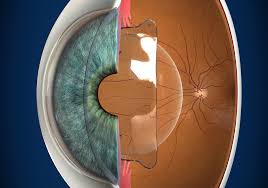
The cornea is one of the most densely innervated tissues in the human body. These nerve fibres play a critical role in the feedback loop that triggers tear production: when the corneal surface senses dryness, the nerves signal the lacrimal gland to produce tears. During SMILE (Small Incision Lenticule Extraction), a femtosecond laser creates a small lenticule within the corneal stroma, which the surgeon removes through a 2–4 mm incision. This process temporarily disrupts some of the corneal nerve fibres running through the treatment zone.
With fewer functioning nerves, the cornea temporarily loses some of its ability to detect surface dryness—so the brain receives a weaker “produce tears” signal. The result is a period of reduced tear production even though nothing is wrong with the tear glands themselves. As the corneal nerves regenerate over the following weeks and months, the feedback loop restores itself and tear production normalises.
Why SMILE Causes Less Dry Eye Than LASIK
This is one of SMILE’s most significant clinical advantages. In Femto LASIK, a corneal flap approximately 20 mm in circumference is created, severing the superficial corneal nerve plexus across almost the entire treatment zone. In SMILE, the same vision correction is achieved through an incision that is roughly 2–4 mm long—preserving the vast majority of the nerve network intact.
Published studies consistently show that SMILE patients report fewer dry eye symptoms, use artificial tears for a shorter duration, and show faster recovery of corneal sensitivity compared to LASIK patients. This is a key reason why surgeons increasingly recommend SMILE or SMILE Pro for patients who already have borderline dry eyes, work long hours at screens, or live in dry, air-conditioned environments. For a detailed procedure comparison, see our guide on how SMILE Pro reduces dry eye risks.
Week-by-Week Dry Eye Recovery Timeline
Week 1: Peak Symptoms
The first week is typically when dryness feels worst. You may notice a gritty or sandy sensation, mild stinging when blinking, intermittent blurring that clears with a blink, and increased sensitivity to air conditioning or wind. This is entirely expected. Your surgeon will prescribe preservative-free artificial tears to use every one to two hours during waking hours, along with antibiotic and steroid drops. Follow the prescribed post-SMILE drop schedule closely during this phase.
Weeks 2–4: Gradual Improvement
By week two, most patients notice the gritty sensation becoming less constant. You may still experience dryness during concentrated screen work, in the evenings, or in air-conditioned environments—but the baseline comfort improves noticeably. Artificial tear use typically drops to four to six times per day. If you wake up with sticky or dry eyes in the morning, a lubricating gel at bedtime can help.
Months 2–3: Significant Recovery
By the end of month three, the majority of SMILE patients find that their dry eye symptoms have resolved or become so mild they only notice them during extended screen sessions or on particularly dry days. Artificial tear use is typically as-needed rather than scheduled. Corneal nerve density is measurably recovering at this stage.
Months 6–12: Full Resolution
For most patients, corneal nerve regeneration is essentially complete by six to twelve months, and dry eye symptoms have fully resolved. A small percentage of patients with pre-existing dry eye conditions may experience lingering symptoms that require ongoing management—but this is the exception, not the rule.
Treatment Options: From Basic to Advanced
Preservative-Free Artificial Tears
This is the first and most important treatment. Preservative-free formulations are essential because preservatives like benzalkonium chloride (BAK) can irritate a recovering corneal surface and actually worsen dryness over time. Use them liberally in the first month—you cannot overuse preservative-free drops.
Omega-3 Fatty Acid Supplements
Omega-3s (from fish oil or flaxseed oil) support meibomian gland function, which produces the oily layer of the tear film that prevents evaporation. Starting an omega-3 supplement two to four weeks before surgery and continuing for three months afterwards can measurably improve tear film stability. Our article on omega-3 supplementation after refractive surgery covers dosage and timing.
Warm Compresses
A warm compress applied to closed eyelids for five to ten minutes daily helps liquefy the meibomian gland secretions, improving the quality of the tear film’s lipid layer. This is particularly helpful if your dryness is worse in the mornings or if your eyelids feel heavy.
Prescription Treatments for Persistent Cases
If symptoms remain significant beyond three months, your surgeon may recommend cyclosporine eye drops (which reduce inflammation on the ocular surface and promote tear production), punctal plugs (tiny silicone inserts placed in the tear drainage channels to keep tears on the eye surface longer), or in rare cases, autologous serum eye drops made from your own blood plasma. For severe, treatment-resistant dry eye, LipiFlow thermal pulsation therapy can address meibomian gland dysfunction directly.
What You Can Do Before Surgery to Reduce Risk
The best time to address dry eye risk is before your SMILE procedure, not after. During your pre-operative evaluation at Visual Aids Centre, your surgeon will assess your tear film quality, tear break-up time, meibomian gland function, and corneal sensitivity. If borderline dryness is detected, a course of treatment—artificial tears, omega-3 supplements, warm compresses, or even a round of cyclosporine drops—can optimise your ocular surface before the laser ever touches your cornea. Patients who enter surgery with a healthy, stable tear film consistently report milder and shorter-lasting dry eye symptoms post-operatively.
Managing Dry Eyes with Screen Time and Daily Life
Screen work is the single biggest dry eye aggravator after SMILE. When you concentrate on a screen, your blink rate drops by up to 60 percent—and each incomplete blink leaves areas of the corneal surface exposed to evaporation. In the first month after surgery, take deliberate blink breaks every 20 minutes (the 20-20-20 rule: every 20 minutes, look at something 20 feet away for 20 seconds). Position your monitor slightly below eye level so your lids cover more of the corneal surface naturally.
Environmental factors matter too. Avoid direct airflow from fans and air conditioners on your face—if you cannot avoid it, wear wraparound protective glasses. In Delhi’s winter months, indoor heating dries out ambient air; a bedroom humidifier can make a noticeable difference to overnight comfort. Smoky environments, including kitchen fumes and incense, should be avoided during the first few weeks, as irritants trigger reflex tearing that does not actually improve lubrication quality. If you tend to sleep with a fan on at night, consider switching it off during the first month or using a sleep mask.
When Dry Eyes May Signal a Bigger Problem
While some dryness after SMILE is expected, certain patterns warrant a prompt call to your surgeon. If your symptoms are worsening rather than gradually improving after the first week, if you develop significant pain (not just mild irritation), if your vision is becoming progressively blurrier despite regular drop use, or if you notice redness and discharge, these may indicate an inflammatory response, infection, or another complication unrelated to routine dryness. Persistent severe dry eye beyond six months that does not respond to standard treatment may also point to an underlying condition like meibomian gland dysfunction that needs targeted intervention. Do not dismiss worsening symptoms as “normal dryness”—early evaluation preserves your outcome.
Does SMILE Pro Cause Even Less Dryness?
SMILE Pro, performed on the Zeiss VisuMax 800 platform, uses the same flapless lenticule extraction principle as standard SMILE but completes the laser application in approximately 10 seconds compared to 25 seconds for standard SMILE. The faster laser time means less suction duration and potentially less mechanical stress on the corneal surface. While the nerve preservation advantage is fundamentally the same (both use a small incision), early clinical data suggests that the reduced procedure time may translate to slightly faster initial comfort recovery. For a head-to-head comparison, see choosing between SMILE and SMILE Pro.
Conclusion
Dry eyes after SMILE surgery are a predictable, temporary consequence of corneal nerve disruption during lenticule extraction—and SMILE causes significantly less dryness than flap-based LASIK. For most patients, symptoms peak in the first week, improve steadily over one to three months, and resolve fully by six to twelve months. The treatment approach is straightforward: preservative-free artificial tears as the foundation, omega-3 supplements and warm compresses to support tear quality, and prescription options for the small number of patients who need more. The most effective strategy is optimising your tear film before surgery, so the healing process starts from the best possible baseline. If you are considering SMILE and want a thorough pre-operative dry eye assessment, book a consultation at Visual Aids Centre.
Frequently Asked Questions (FAQs)
How long do dry eyes last after SMILE surgery?
Most patients experience peak dryness in weeks 1–4, significant improvement by month 3, and full resolution by month 6–12. Patients with pre-existing dry eye may take longer.
Is dry eye after SMILE less severe than after LASIK?
Yes. SMILE preserves significantly more corneal nerves because it uses a 2–4 mm incision instead of a 20 mm flap, resulting in milder and shorter-lasting dry eye symptoms.
Can I use regular eye drops after SMILE surgery?
Use only preservative-free artificial tears. Drops containing preservatives like benzalkonium chloride can irritate the healing corneal surface and worsen dryness over time.
Will my dry eyes be permanent after SMILE?
Permanent dry eye after SMILE is very rare. The vast majority of patients experience temporary symptoms that resolve as corneal nerves regenerate over three to twelve months.
Should I treat dry eyes before having SMILE surgery?
Yes. Optimising your tear film before surgery—with artificial tears, omega-3 supplements, and warm compresses—leads to milder and shorter post-operative dry eye symptoms.
👁️ MEDICALLY REVIEWED BY
Padmashree Dr. Vipin Buckshey
Optometrist & Post-Operative Care Specialist | AIIMS Graduate, 1977 | Padma Shri Honouree
With over four decades of clinical experience and more than 250,000 laser vision correction procedures performed at Visual Aids Centre, Dr. Vipin Buckshey has managed post-operative dry eye across every generation of refractive surgery—from early PRK through to the latest SMILE Pro platform. An AIIMS alumnus, former President of the Indian Optometric Association, and official optometrist to the President of India, Dr. Buckshey tailors dry eye management protocols to each patient’s tear film profile, ensuring the smoothest possible recovery.