
If you have recently had LASIK eye surgery and are staring at a small bottle of moxifloxacin wondering exactly how long you need to keep using it, you are not alone. Antibiotic drops are among the most important — and least understood — parts of post-LASIK care, and patients frequently stop them too early or continue too long, both of which create avoidable risk.
The standard answer: moxifloxacin eye drops are used for 7 to 10 days after LASIK, applied four times daily. But there is real clinical logic behind that specific window, and understanding it helps you stick to the schedule, avoid resistance, and know exactly when to stop. This guide from Visual Aids Centre covers the pharmacology behind the timeline, the correct application technique, what happens if you miss a dose, and the full post-LASIK eye drop sequence so you know how moxifloxacin fits alongside your other prescribed medications.
Key Takeaways
- Standard moxifloxacin protocol after LASIK: 1 drop, 4 times daily, for 7–10 days as prescribed by your surgeon.
- The 7–10 day window covers the corneal epithelium’s critical sealing phase — the period of highest infection vulnerability.
- Never stop early because “your eye feels fine” — incomplete antibiotic courses breed resistant bacteria.
- Wait at least 5 minutes between moxifloxacin and any other prescribed drop to ensure proper absorption.
Why Moxifloxacin Is Prescribed After LASIK
Moxifloxacin is a fourth-generation fluoroquinolone antibiotic with broad-spectrum activity against both gram-positive and gram-negative bacteria. In the context of LASIK, it serves a single, critical purpose: preventing post-operative infection during the window when the corneal flap is still sealing and the eye’s natural defence barrier is at its weakest.
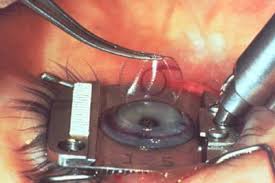
When the surgeon creates and lifts the corneal flap during LASIK, a temporary gateway opens between the external environment and the stromal layer of the cornea. Until the epithelium fully re-seals the flap edges — which takes roughly 5 to 7 days — bacteria on the ocular surface can potentially enter and colonise the interface. This risk, though statistically small, can lead to a sight-threatening condition called post-LASIK keratitis. Moxifloxacin’s job is to maintain a bactericidal concentration at the corneal surface throughout this vulnerable window.
Why moxifloxacin specifically? It penetrates corneal tissue better than most other topical antibiotics, achieves therapeutic concentrations in the aqueous humour within 15 minutes of instillation, and has a low resistance profile compared to older fluoroquinolones like ofloxacin or ciprofloxacin. Some surgeons use the branded formulation (Vigamox), while others prescribe generic equivalents — both contain the same 0.5% moxifloxacin solution.
The 7–10 Day Protocol Explained
The 7 to 10 day course is not arbitrary. It maps directly to the corneal epithelium’s sealing timeline. By day 5 to 7 post-LASIK, the epithelial cells have migrated across and sealed the flap edge in most patients. By day 10, the seal is functionally complete. Continuing antibiotic coverage beyond this point provides diminishing returns and increases the risk of disrupting your normal ocular flora — the healthy bacterial ecosystem that protects your eye surface naturally.
Your surgeon will specify the exact duration at your post-op visit. If your flap is healing faster than average, they may clear you at day 7. If there is any sign of delayed epithelial healing — which is more common in patients with pre-existing dry eye or those who had concurrent steroid use that sometimes slows epithelial migration — the course may extend to the full 10 days or occasionally beyond.
Typical Dosing Schedule
One drop in each operated eye, four times daily. Space the doses roughly evenly across waking hours — morning, midday, evening, and before bed works well. Exact clock-precision is not necessary, but aim for 4 to 6 hours between each dose to maintain steady antibiotic concentration at the corneal surface.
How to Apply Moxifloxacin Drops Correctly
Wash your hands thoroughly before handling the bottle. Tilt your head back or lie flat, and gently pull down your lower eyelid to create a small pocket between the eyelid and the eyeball. Hold the bottle tip 1 to 2 centimetres above the pocket — close enough for accuracy but never touching the eyelid or lashes, as contact contaminates the dropper tip.
Squeeze one drop into the pocket. Close your eye gently — do not squeeze — and press lightly on the inner corner of the eye (the punctal area near the nose) for 60 to 90 seconds. This prevents the drop from draining through the nasolacrimal duct into your throat, keeping the medication on the corneal surface where it belongs. If you are using multiple drops in your post-op regimen, our guide on which drops to use and when provides the full picture.
Where Moxifloxacin Fits in Your Full Drop Schedule
After LASIK, most patients receive three categories of eye drops: an antibiotic (moxifloxacin), a steroid or anti-inflammatory (typically prednisolone acetate), and preservative-free lubricating drops. The sequencing between them matters because each drop needs time to absorb before the next one washes it away.
Apply moxifloxacin first. Wait 5 minutes. Then apply the steroid/anti-inflammatory. Wait another 5 minutes. Then use your lubricating drops. This sequence ensures maximum corneal absorption for the antibiotic — the medication whose concentration timing is most critical. Your surgeon may vary this order slightly, so always defer to their specific instructions over general advice.
What to Do If You Miss a Dose
If you miss a single dose, do not double up. Simply apply the next scheduled dose at its normal time and continue the routine. A single missed dose is unlikely to compromise your healing, provided you resume promptly. However, missing multiple doses or entire days creates a gap in antibiotic coverage that meaningfully increases infection risk. If you realise you have missed more than two consecutive doses, contact your surgeon’s office for guidance rather than self-adjusting.
Side Effects to Watch For
Moxifloxacin is well-tolerated by most patients, but mild side effects can occur. A brief stinging or burning sensation lasting 15 to 30 seconds after instillation is normal — the pH of the solution slightly differs from your tear film. Temporary blurred vision for a minute or two after application is also expected. These resolve on their own and do not indicate a problem.
Watch for unusual symptoms that warrant an immediate call to your surgeon: worsening redness rather than improving redness, yellowish or greenish discharge, increasing pain rather than decreasing discomfort, or significant light sensitivity that develops after day 3. These could indicate the early stages of an infection that the antibiotic is not fully covering, and prompt evaluation is essential. Our guide on recognising infection signs after LASIK covers the full warning list.
Why You Should Never Stop Early
This is the point patients resist most — and the one that matters most clinically. When your eye feels fine at day 4 or 5, the natural impulse is to stop the drops. But “feeling fine” does not mean “fully healed.” The flap interface is still sealing, and the bacteria you cannot see or feel are the exact ones the antibiotic is holding in check.
Stopping a fluoroquinolone course early also contributes to antibiotic resistance — a public health concern that extends well beyond your own eyes. Complete the full prescribed course, then stop on the day your surgeon specifies. If you are uncertain about your drop schedule or have questions about the full post-op protocol, your surgeon’s office should be your first call.
Conclusion
Moxifloxacin eye drops after LASIK are prescribed for 7 to 10 days, four times daily, to cover the critical corneal sealing window. Apply them correctly, sequence them properly with your other medications, complete the full course, and stop when your surgeon says to — not before, not after. This simple discipline eliminates the most avoidable post-LASIK risk: infection. If you are planning LASIK eye surgery in Delhi and want a detailed walkthrough of the full post-operative medication plan, book a consultation at Visual Aids Centre.
Frequently Asked Questions (FAQs)
How long should I use moxifloxacin after LASIK?
7 to 10 days, applied four times daily. Your surgeon will confirm the exact stop date at your follow-up appointment based on how your flap is healing.
Can I stop moxifloxacin if my eye feels fine after 4 days?
No. Feeling fine does not mean the flap is fully sealed. Stopping early leaves the eye unprotected during a still-vulnerable window and promotes antibiotic resistance.
What happens if I miss a dose of moxifloxacin?
Do not double up. Take the next dose at its scheduled time and continue normally. If you miss more than two consecutive doses, contact your surgeon for guidance.
Should I use moxifloxacin before or after steroid drops?
Typically before. Apply moxifloxacin first, wait 5 minutes, then apply your steroid drop, wait another 5 minutes, then use lubricating drops. Always follow your surgeon’s specific instructions.
Is mild stinging normal after applying moxifloxacin?
Yes. A brief stinging or burning for 15 to 30 seconds is a common, harmless reaction to the drop’s pH. Temporary mild blurring for a minute is also normal.
Can I use moxifloxacin longer than 10 days?
Only if your surgeon specifically instructs it. Extended use without need disrupts your eye’s natural bacterial balance and increases the risk of antibiotic resistance.
💊 MEDICATION GUIDANCE REVIEWED BY
Padma Shri Dr. Vipin Buckshey
Post-Operative Pharmacology & Drop Protocol Design | AIIMS New Delhi, Class of 1977
Every LASIK at Visual Aids Centre ends with a printed drop schedule — antibiotic, steroid, lubricant, timings, sequencing — because Dr. Buckshey learned decades ago that verbal instructions alone are not enough. Across 250,000+ refractive procedures, the single most preventable post-op complication he has encountered is patients self-shortening their antibiotic course. A former President of the Indian Optometric Association, Padma Shri honouree, and designated optometrist to the President of India, Dr. Buckshey brings the same medication-compliance rigour to every patient — whether they are a first-time LASIK candidate or a returning enhancement case. Read the clinic’s story.