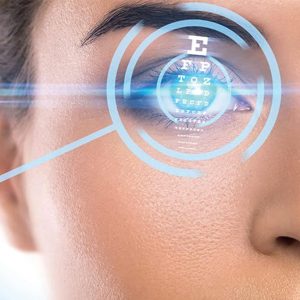
Imagine if your surgeon could study a complete, three-dimensional digital replica of your eye — every curve, every microscopic irregularity, every refractive quirk — before making a single incision. That’s exactly what the 3D Eye-vatar makes possible.
It’s one of those terms that sounds futuristic but is increasingly central to modern refractive surgery planning. If you’re exploring LASIK, SMILE Pro, or any advanced vision correction procedure at Visual Aids Centre, chances are a 3D Eye-vatar is already part of your pre-surgical roadmap. Here’s what it actually is, how it’s built, and why it matters for your outcome.
Key Takeaways
- A 3D Eye-vatar is a personalised digital twin of your eye built from multiple diagnostic scans.
- It combines topography, tomography, wavefront analysis, pupillometry, and biometric data into one treatment-planning model.
- It helps surgeons personalise procedures like Contoura Vision, Femto LASIK, SMILE Pro, TransPRK, and Wavelight Plus Innoveyes.
- It improves safety by identifying thin corneas, irregularities, and risk factors before surgery.
What Is a 3D Eye-vatar?
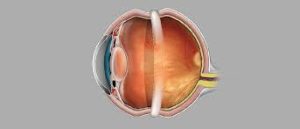
A 3D Eye-vatar is a comprehensive, digitally rendered three-dimensional model of a patient’s individual eye, constructed from multiple layers of pre-surgical diagnostic data. Think of it as your eye’s personal avatar — a precise digital twin that captures not just the surface of your cornea, but its thickness profile, curvature maps, internal architecture, refractive properties, and even higher-order aberrations.
The term combines “eye” with “avatar” — a digital representation — and signals a shift away from generic, population-based surgical planning toward something genuinely personalised. No two Eye-vatars are identical, because no two eyes are.
This isn’t a single scan or a photograph. It’s a synthesised model built from several advanced diagnostic tools working together:
- Corneal topography — maps the front surface curvature
- Corneal tomography (Pentacam) — captures the full corneal thickness and posterior surface
- Wavefront aberrometry — identifies higher-order optical imperfections
- Pupillometry — measures pupil behaviour in different lighting conditions
- Biometric data — includes axial length, anterior chamber depth, and lens position
Together, these inputs create a layered digital portrait of your eye that surgeons can analyse, rotate, and interrogate from every angle before committing to a treatment plan.
How Is a 3D Eye-vatar Built at Visual Aids Centre?
Building your Eye-vatar begins during the comprehensive pre-LASIK evaluation. The process is completely non-invasive and typically takes 30–45 minutes.
Step 1 — Corneal Topography and Tomography
A corneal topography scan maps thousands of reference points across the corneal surface, identifying the precise curvature gradients. The Pentacam test adds a crucial second layer — the posterior corneal surface and full thickness profile, enabling accurate assessment of preoperative corneal thickness and residual stromal bed calculations.
Step 2 — Wavefront Aberrometry
Wavefront technology in LASIK captures how light travels through your entire optical system — not just the cornea, but the lens and vitreous too. This exposes higher-order aberrations (HOAs): subtle optical errors like coma, trefoil, and spherical aberration that standard prescriptions don’t correct but that directly affect contrast sensitivity, night vision, and image sharpness.
Step 3 — Digital Synthesis and AI Processing
Once all data points are collected, sophisticated software — increasingly incorporating AI-driven analysis — integrates them into the unified 3D model. The result is a digital eye that can be queried: What happens to this cornea if we ablate to this depth? What is the predicted residual stromal bed? What optical quality will this patient have post-surgery?
This is where the Eye-vatar becomes genuinely powerful. It transforms reactive diagnosis into predictive planning.
How Does the 3D Eye-vatar Improve Treatment Planning?
Moving From Standard to Truly Custom LASIK
Standard LASIK uses a one-size-fits-all approach based on your spectacle prescription. Custom LASIK, informed by a full 3D Eye-vatar, goes significantly further — it adjusts the laser ablation profile to your individual corneal geometry, aberration map, and biomechanical characteristics.
The difference in outcomes, particularly for night vision quality and contrast sensitivity, can be substantial.
Enabling Topography-Guided Precision
Topography-guided LASIK — as used in procedures like topography-guided LASIK, Contoura Vision, and Wavelight Plus Innoveyes — relies entirely on the depth and accuracy of the corneal map embedded in the Eye-vatar. Without a precise 3D model, topography-guided correction would simply not be possible.
At Visual Aids Centre, the Wavelight Plus Innoveyes platform uses this digital twin concept to generate a unique ablation profile for each patient — optimising not just for 20/20 vision but for visual quality across a range of conditions.
Predicting and Preventing Complications
One of the most clinically significant uses of the 3D Eye-vatar is risk stratification. By modelling the cornea in three dimensions, surgeons can identify:
- Subclinical keratoconus or forme fruste — corneal irregularities that disqualify a patient from LASIK but are safely managed with C3R crosslinking
- Corneas with insufficient thickness for the planned ablation
- Asymmetries that might cause decentred ablation zones
This level of foresight significantly reduces the risk of post-surgical complications like ectasia or irregular astigmatism.
Communicating Outcomes With Patients
Beyond surgical planning, the 3D Eye-vatar is an exceptional communication tool. When your surgeon can show you a rendered model of your own eye and visually explain exactly what the laser will do and why, it transforms an abstract procedure into something tangible and understandable. Informed patients make better decisions and have more realistic expectations — both critical to satisfaction.
Which Procedures at Visual Aids Centre Use 3D Eye-vatar Planning?
The 3D Eye-vatar framework underpins treatment planning across several advanced procedures:
- Contoura Vision — corneal irregularity-driven custom ablation
- Femto LASIK — bladeless precision flap creation guided by corneal maps
- SMILE Pro — lenticule dimensions are calculated using the full 3D corneal model
- Wavelight Plus Innoveyes — AI-integrated biometric modelling for highly personalised ablation
- TransPRK — surface ablation guided by topographic data
Not sure which procedure your Eye-vatar data points toward? Take the candidate refractive quiz to get an initial read before your consultation.
The Bigger Picture — Personalised Eye Surgery Is Now the Standard
The 3D Eye-vatar represents a fundamental shift in how refractive surgery is conceptualised. Instead of adapting the patient to a procedure, the procedure is now adapted to the patient — down to the micron.
Combined with the range of advanced technologies at Visual Aids Centre and the expertise of the surgical team, 3D Eye-vatar-guided planning is what separates contemporary precision eye care from the earlier generation of laser correction.
For anyone considering any form of vision correction surgery, understanding this process should be reassuring: your treatment isn’t being guessed at. It’s being engineered — around a digital model of your unique eye.
Conclusion
The 3D Eye-vatar is far more than a marketing concept — it’s a clinically meaningful tool that makes personalised, safe, and predictable refractive surgery possible. By synthesising corneal maps, wavefront data, thickness profiles, and AI analysis into a single digital model, it gives surgeons the information they need to plan with precision and patients the confidence to proceed with clarity.
If you’re exploring vision correction and want to know what your Eye-vatar reveals about your candidacy, book a comprehensive pre-surgical evaluation at Visual Aids Centre today.
Frequently Asked Questions (FAQs)
What is a 3D Eye-vatar in simple terms?
It’s a detailed digital model of your eye built from multiple diagnostic scans, used by surgeons to plan your vision correction procedure with precision.
Is the 3D Eye-vatar scan painful or invasive?
Not at all. It’s built from non-contact diagnostic equipment. The entire process is quick, comfortable, and completely non-invasive.
Does every LASIK patient need a 3D Eye-vatar?
At centres offering advanced procedures like Contoura, SMILE Pro, or Wavelight Plus Innoveyes, comprehensive 3D mapping is standard practice before any treatment plan is finalised.
How is the 3D Eye-vatar different from a standard eye test?
A standard eye test measures your spectacle prescription. The 3D Eye-vatar captures the full geometry, thickness, aberrations, and biomechanics of your eye — many layers deeper.
Can the 3D Eye-vatar detect if I’m not suitable for LASIK?
Yes. It can identify corneal thinness, early keratoconus, and other anatomical factors that would make LASIK unsafe for you.
Which Eye-vatar-based procedure gives the best results?
It depends on your individual corneal data. Wavelight Plus Innoveyes and Contoura Vision are among the most personalised options available, but your surgeon’s recommendation is based on your specific model.
How long does it take to build a 3D Eye-vatar?
The diagnostic scans typically take 30–45 minutes during your pre-surgical consultation. The software synthesises the data almost instantly.