
If you have astigmatism and are considering SMILE Pro eye surgery, one of the first things your surgeon will evaluate is your cylindrical number — the measurement that tells exactly how much astigmatism your eye has. Understanding this number is essential because it determines whether SMILE Pro can fully correct your vision and what kind of outcome you can realistically expect.
SMILE Pro can treat cylindrical numbers up to –5.00 dioptres. That covers the vast majority of astigmatism cases, from mild to moderately high. But the cylindrical number is only one piece of the puzzle — your corneal thickness, spherical power, and overall eye health all factor into whether you are a suitable candidate. This guide explains what the cylindrical number means, how it is measured, how it influences your SMILE Pro results, and what happens if your cylinder exceeds the treatable range. If you are exploring whether SMILE Pro is the right procedure for your specific prescription, this article will give you the clinical context you need.
Key Takeaways
- The cylindrical number measures the degree of astigmatism in your eye — it indicates how unevenly curved your cornea or lens is.
- SMILE Pro can correct cylindrical numbers up to –5.00 dioptres (5D of astigmatism).
- Accurate measurement of your cylinder power is critical — errors lead to under-correction or over-correction.
- If your cylindrical number exceeds –5D, alternatives like Contoura Vision or ICL may be more appropriate.
- The total correction (sphere + cylinder combined) must fall within the safe treatment range for your corneal thickness.
What Is a Cylindrical Number?
A cylindrical number — also called cylinder power or “CYL” on your prescription — quantifies the amount of astigmatism in your eye. Astigmatism occurs when the cornea (or sometimes the lens) is curved unevenly, shaped more like an oval than a perfect sphere. This irregular curvature causes light to focus at two different points instead of one, producing blurred or distorted vision at all distances.
Cylinder power is measured in dioptres (D) and appears as a negative or positive value on your glasses prescription — for example, –1.50D or –3.25D. The higher the number, the more pronounced the astigmatism. Alongside the cylinder value, your prescription also includes an axis (measured in degrees from 1 to 180), which indicates the orientation of the irregular curvature. Together, these two values tell your surgeon exactly where and how much correction is needed. For a broader look at how cylindrical power affects your vision and the options for managing it, our article on reducing cylindrical power covers both surgical and non-surgical approaches.
How Is the Cylindrical Number Diagnosed?
Your cylindrical number is determined during a comprehensive eye examination that includes several complementary tests.
Refraction test: Using a phoropter (the instrument with multiple lens options), your ophthalmologist fine-tunes your sphere, cylinder, and axis until you achieve the sharpest possible vision. This gives the subjective cylinder measurement — what your eyes actually perceive as clearest.
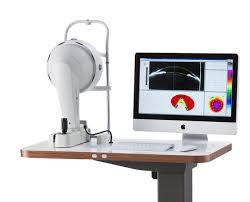
Corneal topography: A topographic scan maps the curvature of your entire corneal surface, identifying exactly where the steeper and flatter meridians lie. This is particularly valuable because it detects irregular astigmatism that a standard refraction might miss.
Autorefraction and keratometry: These automated measurements provide objective data on your refractive error and corneal curvature, which your surgeon cross-references against the subjective refraction for accuracy. At Visual Aids Centre, we also use Pentacam imaging to evaluate the posterior corneal surface — an area that contributes to total astigmatism but is invisible to standard instruments.
Getting the cylindrical number right is not optional. Even a small measurement error — half a dioptre off, or the axis misaligned by 10 degrees — can leave you with residual astigmatism after surgery that requires glasses for specific tasks. This is why the pre-operative workup for SMILE Pro at Visual Aids Centre involves multiple cross-checked measurements before any laser parameters are programmed.
Cylindrical Number Limits for SMILE Pro
SMILE Pro is approved to correct astigmatism up to –5.00 dioptres. This is the ceiling for cylinder correction in a single procedure — and it covers the vast majority of patients who present with astigmatism at Visual Aids Centre.
To put that in perspective, most astigmatism falls into three clinical categories. Mild astigmatism ranges from –0.50 to –1.50D and is the most common — patients in this range are ideal candidates with highly predictable outcomes. Moderate astigmatism, from –1.50 to –3.00D, is also well within SMILE Pro’s comfort zone, though the surgical planning becomes more precise. High astigmatism, from –3.00 to –5.00D, is treatable but requires careful evaluation of corneal thickness and overall tissue availability, since correcting a large cylinder removes more lenticule tissue. For context on how SMILE Pro addresses the full range of refractive errors, our overview of how SMILE Pro corrects different prescriptions explains the mechanics in detail.
It is important to note that the –5D limit applies to the cylindrical component alone. Your total prescription — sphere plus cylinder — must also fall within the overall treatable range. A patient with –6.00 sphere and –4.00 cylinder has a combined correction demand that is significantly higher than someone with –2.00 sphere and –4.00 cylinder, even though both have the same astigmatism. Your surgeon evaluates the total tissue removal required, not just the cylinder in isolation. Understanding how much corneal tissue is extracted during the procedure helps explain why these limits exist — our article on corneal tissue removal in SMILE Pro breaks down the calculations.
How Cylindrical Number Affects SMILE Pro Outcomes
The cylindrical number directly shapes two critical aspects of your surgical outcome: the accuracy of the correction and the biomechanical stability of your cornea afterward.
Precision of Correction
SMILE Pro uses a femtosecond laser (the Zeiss VisuMax 800) to create and extract a precisely shaped lenticule from within the cornea. For astigmatism correction, that lenticule must be shaped asymmetrically — thicker along one axis and thinner along the other — to selectively flatten the steeper corneal meridian. The higher your cylindrical number, the more asymmetric the lenticule becomes, and the more critical it is that the laser aligns perfectly with your eye’s axis of astigmatism. Even minor rotational misalignment (cyclotorsion) during surgery can reduce the effectiveness of high-cylinder corrections, which is why advanced platforms incorporate eye-tracking technology to compensate.
Corneal Biomechanics
Every dioptre of correction requires removing a specific amount of corneal tissue. Correcting a high cylindrical number alongside a moderate sphere means more total tissue extraction. If your cornea is on the thinner side, this can push the residual stromal bed below the safe threshold — typically 250 microns. Understanding the relationship between tissue removal and structural integrity is fundamental to safe outcomes. Our article on corneal biomechanics in SMILE Pro versus SMILE explains why the newer platform preserves more structural strength than its predecessor.
What If Your Cylindrical Number Is Too High?
If your astigmatism exceeds –5.00D, SMILE Pro is not the right procedure — but you still have excellent alternatives.
Contoura Vision (topography-guided LASIK): This platform uses a detailed map of your individual corneal surface to programme a custom ablation profile. It can address higher and more irregular forms of astigmatism than SMILE Pro because the excimer laser has more flexibility in shaping the corneal surface. For patients whose cylinder falls outside SMILE Pro’s range, Contoura Vision is often the recommended alternative at Visual Aids Centre.
For patients with very high combined prescriptions or corneas too thin for any laser procedure, an Implantable Collamer Lens (ICL) corrects astigmatism without removing any corneal tissue at all. Toric ICL models can address up to 4–5 dioptres of cylinder alongside high myopia. If you are unsure which astigmatism correction method suits your profile.
Other Factors That Determine SMILE Pro Eligibility
Your cylindrical number is one qualification criterion — but it is not the only one. SMILE Pro candidacy also depends on your age (typically 18 or older, with a stable prescription), adequate corneal thickness (evaluated with pachymetry and Pentacam), absence of corneal conditions like keratoconus, and overall eye health including healthy retinas and a stable tear film.
For a complete picture of the qualification criteria, our article on who makes a good SMILE Pro candidate covers every factor your surgeon will assess. If your cornea is borderline in thickness, SMILE’s approach for thin corneas explains why the flapless design may still offer a viable path when LASIK would not.
Conclusion
The cylindrical number is the measurement that defines your astigmatism — and for SMILE Pro, the treatable limit is –5.00 dioptres. Within that range, outcomes are highly predictable, with most patients achieving clear, spectacle-free vision after a single procedure. The keys to success are accurate pre-operative measurement, sufficient corneal thickness for the total correction required, and a surgeon experienced in programming high-cylinder lenticule extractions. If your astigmatism exceeds the SMILE Pro threshold, topography-guided platforms like Contoura Vision or toric ICL lenses provide excellent alternatives. To find out exactly where your cylindrical number falls and which procedure delivers the best outcome for your eyes, book a consultation at Visual Aids Centre — our team will map your cornea, measure your cylinder with precision, and recommend the safest path to clear vision.
Frequently Asked Questions (FAQs)
What is the maximum cylindrical number SMILE Pro can correct?
SMILE Pro can correct astigmatism up to –5.00 dioptres. Beyond this limit, alternatives like Contoura Vision or toric ICL are recommended.
Can SMILE Pro correct both spherical and cylindrical numbers at the same time?
Yes. SMILE Pro corrects myopia (up to –10D) and astigmatism (up to –5D) simultaneously in a single procedure by extracting a custom-shaped lenticule.
What happens if my cylindrical number is measured incorrectly?
An inaccurate cylinder measurement can result in under-correction or over-correction, leaving residual astigmatism. This is why multiple cross-checked measurements are taken before surgery.
Is SMILE Pro better than LASIK for correcting astigmatism?
Both are effective. SMILE Pro preserves more corneal biomechanical strength because it is flapless, which may benefit patients with higher corrections. Contoura Vision LASIK can handle a wider range of irregular astigmatism.
Can astigmatism come back after SMILE Pro?
The corneal correction is permanent. However, in rare cases, mild residual astigmatism may persist or develop due to healing responses. An enhancement can address this if needed.
How do I know my exact cylindrical number?
A comprehensive eye exam including refraction, corneal topography, and keratometry will determine your precise cylinder power and axis. Your eye care provider can explain each value on your prescription.
👁️ MEDICALLY REVIEWED BY
Padmashree Dr. Vipin Buckshey
Optometrist & Refractive Surgery Specialist | AIIMS Graduate, 1977 | Padma Shri Honouree
With more than four decades of clinical experience and over 250,000 laser vision correction procedures performed at Visual Aids Centre, Dr. Vipin Buckshey has evaluated thousands of patients with cylindrical prescriptions ranging from mild to complex — personally calibrating astigmatism correction parameters for SMILE Pro, Contoura Vision, and Femto LASIK. An AIIMS alumnus, former President of the Indian Optometric Association, and official optometrist to the President of India, Dr. Buckshey ensures every astigmatism measurement at the centre is cross-verified across multiple instruments before surgical planning begins. View credentials and accomplishments.