
Neither TransPRK nor LASIK is universally “better” — each procedure wins in different clinical scenarios. TransPRK is the safer structural choice because it eliminates the corneal flap entirely, preserving more biomechanical strength and removing any risk of flap-related complications. LASIK delivers faster visual recovery and less post-operative discomfort. The right choice depends on your corneal thickness, prescription, occupation, and how quickly you need to return to full visual function.
This comparison breaks down how each procedure works at the tissue level, where TransPRK genuinely outperforms LASIK, where LASIK has the edge, and which patients are best suited for each approach. If you are also considering lenticule extraction as a third option, our three-way comparison of TransPRK, LASIK, and SMILE covers the full picture. For a detailed explanation of the TransPRK procedure itself, start with our guide on what TransPRK eye surgery is.
Key Takeaways
- TransPRK is completely flapless and touchless — no blade, no microkeratome, no suction ring contacts the eye.
- LASIK creates a corneal flap, enabling faster recovery (clear vision within hours) but introducing flap-related risks.
- TransPRK preserves Bowman’s layer integrity better and leaves more residual corneal strength — a significant advantage for thin corneas.
- LASIK recovery takes 1–2 days to functional vision; TransPRK takes 4–7 days, with full stabilisation over 1–3 months.
- For contact sports athletes, military personnel, and patients with borderline corneal thickness, TransPRK is the clinically preferred option.
How TransPRK and LASIK Work Differently
Both procedures use an excimer laser to reshape the corneal stroma and correct refractive errors — myopia, hyperopia, and astigmatism. The fundamental difference lies in how the laser accesses the stroma.
The LASIK Approach: Flap-Based Access
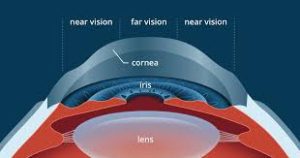
In LASIK, a femtosecond laser creates a thin hinged flap (typically 100–120 microns thick) on the corneal surface. This flap is lifted to expose the underlying stroma, the excimer laser reshapes the tissue, and the flap is repositioned. The flap acts as a natural bandage, which is why patients experience minimal discomfort and rapid visual recovery — often seeing clearly within hours. However, that flap never fully bonds back to its original strength.
The TransPRK Approach: No-Touch Surface Ablation
TransPRK (Transepithelial Photorefractive Keratectomy) takes a completely different path. There is no flap, no blade, and no instrument touches the eye. The excimer laser itself removes the thin epithelial layer (the outermost 50 microns of the cornea) and then continues directly into the stroma to perform the refractive correction — all in a single, continuous laser application. Because the epithelium is removed rather than lifted as a flap, it must regenerate naturally over 3–5 days, which accounts for the slower recovery but also eliminates every flap-related risk entirely.
Where TransPRK Is Genuinely Better
No Flap, No Flap Complications
The corneal flap is simultaneously LASIK’s greatest advantage (fast recovery) and its greatest vulnerability. Flap displacement, flap striae (wrinkles), epithelial ingrowth under the flap, and diffuse lamellar keratitis are all complications that exist exclusively because of the flap. TransPRK eliminates this entire category of risk.
Superior Corneal Biomechanical Preservation
Because TransPRK does not cut a flap, it preserves more of the cornea’s structural integrity — particularly the anterior stroma and Bowman’s layer, which contribute disproportionately to corneal strength. This matters most for patients with borderline corneal thickness or higher prescriptions, where every micron of residual tissue counts. TransPRK leaves a thicker residual stromal bed than LASIK for the same prescription correction, reducing the long-term risk of corneal weakening.
Better for Contact Sports and Physical Occupations
Because there is no flap to dislodge, TransPRK is the preferred procedure for boxers, MMA fighters, military combat personnel, and anyone whose profession or lifestyle involves a risk of blunt trauma to the face. A flap created during LASIK can theoretically be displaced by a direct blow to the eye even years after surgery — a risk that simply does not exist with TransPRK.
Reduced Higher-Order Aberrations in Some Cases
Modern TransPRK platforms with topography-guided or wavefront-optimised ablation profiles can produce excellent optical quality, and some studies show a slight advantage in higher-order aberration profiles compared to flap-based procedures, partly because the absence of a flap hinge eliminates one source of irregular astigmatism.
Where LASIK Has the Edge
Dramatically Faster Visual Recovery
This is LASIK’s strongest advantage and the main reason it remains the most popular refractive procedure worldwide. Most LASIK patients achieve functional vision (driving-level clarity) within 4–6 hours and near-final acuity within 1–2 days. TransPRK patients typically experience 3–5 days of blurred, watery vision while the epithelium regenerates, with full visual stabilisation taking 1–3 months. For people who cannot afford extended time away from work or screens, this difference matters enormously.
Significantly Less Post-Operative Discomfort
TransPRK involves removing the epithelium — the cornea’s most nerve-dense layer — which makes the first 48–72 hours notably uncomfortable. Patients describe stinging, tearing, and light sensitivity that requires rest and careful pain management. LASIK, by contrast, typically involves only mild grittiness for a few hours. The TransPRK recovery experience is manageable with proper medication, but it is not comparable to LASIK’s near-painless first day.
Lower Risk of Corneal Haze
Surface ablation procedures like TransPRK carry a small risk of post-operative corneal haze — a faint clouding of the stroma during healing that can temporarily reduce visual clarity. This risk is higher with larger corrections (above −6D) and is mitigated by applying mitomycin C during surgery. LASIK does not carry this risk because the flap protects the stromal surface from the healing response that causes haze.
Recovery: The Biggest Trade-Off
Recovery is the single factor that most influences patient choice between these two procedures. LASIK patients are typically back at a computer within 24 hours and cleared for most activities within a week. TransPRK patients should plan for 5–7 days of limited screen use and 1–2 weeks before resuming demanding visual tasks. Full prescription stabilisation after TransPRK can take 2–3 months, compared to 1–4 weeks for LASIK.
This does not make TransPRK a worse procedure — it means the recovery investment is front-loaded in exchange for long-term structural advantages. For patients who can plan around the downtime, TransPRK delivers equivalent final visual acuity with a stronger corneal profile. For a broader perspective on how different procedures compare on recovery, our surface ablation vs LASIK comparison covers the full spectrum.
Who Should Choose Which?
Choose TransPRK If You Have
Thinner corneas that leave insufficient residual tissue for a safe LASIK flap, an occupation or sport involving physical contact or trauma risk, a preference for the structurally most conservative option, or a willingness to accept slower recovery in exchange for better long-term corneal nerve and tissue integrity. TransPRK is also the procedure of choice for patients with anterior basement membrane dystrophy or other epithelial irregularities where creating a flap would be risky. Patients with conditions like early keratoconus may find that neither procedure is suitable — but if surface ablation combined with cross-linking is being considered, TransPRK is the ablation method of choice.
Choose LASIK If You Need
The fastest possible return to clear vision, minimal post-operative discomfort, or cannot take more than 1–2 days away from work. LASIK is also preferred for patients with higher prescriptions where the risk of post-TransPRK haze increases, and for those who have already been confirmed to have adequate corneal thickness for safe flap creation. For an overview of the full range of procedures available at our centre, including Contoura Vision and SMILE Pro, visit the TransPRK service page.
Conclusion
TransPRK is better than LASIK in terms of corneal structural preservation, elimination of flap risks, and suitability for physically active patients. LASIK is better in terms of recovery speed, post-operative comfort, and convenience for people who need to return to visual tasks quickly. Both achieve the same final visual acuity — typically 6/6 or better — with success rates exceeding 95%. The “better” procedure is the one that matches your corneal anatomy, lifestyle demands, and recovery expectations. At Visual Aids Centre, we perform both TransPRK and LASIK (along with SMILE Pro and Contoura Vision) and recommend the procedure that best fits each patient’s clinical profile — not a one-size-fits-all approach. If you want to find out which option is right for your eyes, book a consultation and we will map your cornea, evaluate your prescription, and give you a clear recommendation.
Frequently Asked Questions (FAQs)
Is TransPRK safer than LASIK?
TransPRK eliminates all flap-related complications, making it structurally safer for the cornea. However, both procedures have excellent overall safety profiles with complication rates below 1%.
Does TransPRK hurt more than LASIK?
Yes, the first 2–3 days after TransPRK involve more discomfort (stinging, tearing, light sensitivity) because the epithelium is removed. LASIK is nearly painless from day one due to the protective flap.
Is the final vision quality the same for both?
Yes. Studies consistently show equivalent long-term visual acuity. Both procedures achieve 6/6 vision or better in over 95% of suitable candidates.
How long is TransPRK recovery compared to LASIK?
Functional vision returns in 5–7 days with TransPRK versus 1 day with LASIK. Full visual stabilisation takes 1–3 months for TransPRK and 2–4 weeks for LASIK.
Is TransPRK better for thin corneas?
Yes. Because TransPRK does not create a flap (which consumes 100–120 microns of tissue), it preserves more corneal thickness and is the preferred option when corneal tissue is limited.
Can I get TransPRK if I was told I’m not a candidate for LASIK?
Often yes. Patients rejected for LASIK due to thin corneas, flat corneas, or anterior membrane irregularities may be excellent TransPRK candidates. A comprehensive evaluation will confirm your eligibility.
👁️ MEDICALLY REVIEWED BY
Padmashree Dr. Vipin Buckshey
Optometrist & Refractive Surgery Specialist | AIIMS Graduate, 1977 | Padma Shri Honouree
With more than four decades of clinical experience and over 250,000 laser vision correction procedures performed — including both surface ablation and flap-based techniques — Dr. Vipin Buckshey personally evaluates each patient’s corneal anatomy, prescription, and lifestyle to recommend the procedure that delivers the best long-term outcome. An AIIMS alumnus, former President of the Indian Optometric Association, and official optometrist to the President of India, Dr. Buckshey has witnessed the full evolution of refractive surgery from early PRK through modern TransPRK and SMILE Pro platforms. Learn more about our team and legacy.