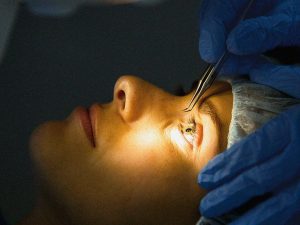

After LASIK, your surgeon hands you a small arsenal of eye drops—and the steroid drops are arguably the most important ones to get right. Use them too briefly and you risk inflammation that can compromise your visual outcome. Use them too long and you’re looking at elevated eye pressure or other steroid-related complications. Getting the timing and tapering schedule correct is one of the simplest ways to protect your investment in better vision.
This guide from Visual Aids Centre explains exactly how long steroid drops are typically prescribed after LASIK, why the tapering schedule matters, what happens when patients deviate from the plan, and how to handle common concerns that come up during the post-operative drop regimen. Whether you had Femto LASIK, Contoura Vision, or a flapless procedure, the principles below will help you understand your prescription.
Key Takeaways
- Most LASIK patients use steroid eye drops for 1–4 weeks, with a gradual taper rather than an abrupt stop.
- Prednisolone acetate and fluorometholone are the most commonly prescribed post-LASIK steroids.
- Never stop steroid drops early or extend them without your surgeon’s guidance—both carry real risks.
- Steroid-induced pressure spikes (steroid response) are uncommon but can happen; your surgeon monitors for this at follow-ups.
Why Steroid Drops Are Prescribed After LASIK
LASIK involves creating a corneal flap and using an excimer laser to reshape the underlying stroma. Even though the procedure is precise and minimally invasive, the cornea responds with an inflammatory cascade—this is the body’s natural healing response to tissue disruption. A controlled level of inflammation is expected, but excessive or prolonged inflammation can lead to complications like diffuse lamellar keratitis (DLK), corneal haze, or delayed visual recovery.
Steroid drops suppress this inflammatory response. They prevent immune cells from releasing chemicals that cause swelling, redness, and tissue damage at the flap interface. By keeping inflammation in check during the critical first weeks of healing, steroids help ensure a smooth optical surface and predictable refractive outcome. They’re not optional—they’re a core part of the post-LASIK protocol that directly affects how well you see once healing is complete.
How Long Is the Typical Course?
Standard LASIK and Femto LASIK
For most patients undergoing standard or Femto LASIK, steroid drops are prescribed for approximately two to four weeks. The most common pattern is four times daily in the first week, tapering to three times daily in week two, twice daily in week three, and once daily in the final week before stopping. Some surgeons use a shorter two-week protocol for uncomplicated cases with minimal inflammation at the one-week follow-up.
Contoura Vision and Topography-Guided LASIK
The steroid schedule for topography-guided procedures like Contoura Vision is similar to standard LASIK. However, because these procedures involve more precise corneal reshaping, some surgeons may extend the course slightly if the pre-operative corneal surface was irregular or if greater tissue ablation was required.
SMILE and SMILE Pro
Because SMILE Pro is a flapless procedure with a smaller incision, the inflammatory response is generally milder. Many surgeons prescribe a shorter steroid course—often two weeks—compared to flap-based procedures. That said, the exact duration still depends on how each patient’s eyes respond during the first post-operative visit.
The Tapering Schedule: Why Gradual Reduction Matters
Steroid drops are never stopped abruptly. The reason is straightforward: if you suddenly remove the anti-inflammatory suppression, the cornea can experience a rebound inflammatory flare. This “rebound inflammation” can cause discomfort, light sensitivity, and in rare cases, complications like DLK that may need aggressive treatment.
A typical tapering schedule looks like this: four drops per day in week one, reducing by one drop per day each subsequent week. By week four, you’re using just one drop daily before discontinuing entirely. Your surgeon may adjust this based on what they see at each follow-up examination—if inflammation is resolving faster than expected, the taper may accelerate; if there are signs of persistent inflammation, the course may extend.
The key rule is simple: follow your surgeon’s specific schedule, not a generic one you found online. Post-operative protocols are personalised for a reason.
What Happens If You Stop Steroid Drops Too Early?
Stopping before your surgeon advises is one of the more common mistakes patients make—often because the eyes feel fine and the drops seem unnecessary. The risk is real. Premature cessation can trigger rebound inflammation, which may present as increased redness, a gritty or burning sensation, light sensitivity, or a sudden worsening of vision clarity.
In more significant cases, uncontrolled inflammation at the flap interface can develop into DLK—sometimes called “sands of Sahara” because of its appearance under the slit lamp. DLK can range from mild (requiring resumption of steroids) to severe (potentially affecting visual quality if not treated promptly). The bottom line: even if your eyes feel perfectly comfortable, complete the full prescribed course.
What Happens If You Use Them Too Long?
Extended steroid use carries its own set of risks. The most significant is steroid-induced ocular hypertension—a rise in intraocular pressure (IOP) that can damage the optic nerve if left unchecked. Approximately 5–6% of the general population are “steroid responders,” meaning their eye pressure rises significantly with topical steroid use. This is why your surgeon checks your IOP at follow-up visits.
Prolonged steroid use can also delay corneal wound healing, increase susceptibility to eye infections (because steroids suppress local immunity), and in extreme cases of very long-term use, contribute to posterior subcapsular cataracts. These complications are rare in the context of a standard 2–4 week LASIK course, but they become relevant if patients continue using steroid drops beyond the prescribed period—for instance, using leftover drops from a previous prescription without medical guidance.
Common Steroid Drops Used After LASIK
Prednisolone Acetate (Pred Forte)
The most widely prescribed post-LASIK steroid. Prednisolone acetate is a potent anti-inflammatory that penetrates the cornea effectively. It’s typically used in the first one to two weeks when inflammation is at its peak, then may be switched to a milder steroid for the tapering phase.
Fluorometholone (FML)
A milder steroid with a lower risk of IOP elevation. Some surgeons use fluorometholone for the entire course in patients with a known history of steroid response, or they switch from prednisolone to fluorometholone midway through the taper to reduce pressure-related risk while maintaining anti-inflammatory coverage.
Loteprednol Etabonate (Lotemax)
A “soft steroid” designed to be metabolised quickly, reducing the risk of IOP spikes. It’s a good option for patients who need anti-inflammatory coverage but are at higher risk for steroid-related side effects. For more on this specific drop, see our guide on using Lotemax after LASIK.
How Steroid Drops Fit Into Your Full Drop Regimen
After LASIK, you’ll typically be prescribed three types of eye drops: antibiotic drops (to prevent infection, usually moxifloxacin for about one week), steroid drops (for inflammation, two to four weeks), and preservative-free artificial tears (for dryness, often continued for several months).
When using multiple drops, space them at least five minutes apart. This allows each drop to absorb properly rather than getting washed out by the next one. Many patients find it helpful to set phone reminders for the first week or two, especially when the dosing frequency is four times daily. If you’re unsure about the order, a general rule is: antibiotic first, steroid five minutes later, lubricating drops as needed throughout the day. Your surgeon’s specific instructions always take priority over general guidelines.
When to Contact Your Surgeon
Reach out to your eye care provider if you experience a sudden increase in eye pain or pressure sensation while on steroid drops, if your vision becomes noticeably more blurred during the steroid course rather than improving, if you develop increased redness or discharge that wasn’t present before, or if you accidentally missed several days of drops and aren’t sure how to resume. A sudden change in symptoms while on steroids warrants prompt evaluation—don’t wait for your next scheduled follow-up appointment.
Conclusion
Steroid drops after LASIK are typically used for two to four weeks with a gradual taper, and they play a critical role in controlling inflammation during the most important phase of corneal healing. The exact duration depends on your procedure type, your individual healing response, and what your surgeon observes at each follow-up. Never stop early because your eyes feel fine, and never continue beyond your prescribed schedule without guidance. If you’re preparing for LASIK and want to understand every aspect of post-operative care—including exactly which drops you’ll use and for how long—book a consultation at Visual Aids Centre and our team will walk you through the complete recovery protocol before your surgery date.
Frequently Asked Questions (FAQs)
Can I stop steroid drops if my eyes feel completely normal?
No. Even if your eyes feel fine, inflammation may still be present at a microscopic level. Always complete the full prescribed course and tapering schedule to avoid rebound inflammation.
What should I do if I miss a dose of steroid drops?
Apply the missed dose as soon as you remember, then resume your regular schedule. If it’s almost time for your next dose, skip the missed one—don’t double up.
Can steroid eye drops raise my eye pressure after LASIK?
Yes, about 5–6% of patients are steroid responders and may experience elevated intraocular pressure. This is why your surgeon checks IOP at follow-up visits and may switch to a milder steroid if needed.
Are steroid drops the same as antibiotic drops?
No. Steroid drops control inflammation, while antibiotic drops prevent bacterial infection. Both are prescribed after LASIK but serve different purposes and have different durations of use.
How long should I wait between using different eye drops after LASIK?
Wait at least five minutes between different eye drops. This ensures each medication is properly absorbed before the next one is applied.
👁️ MEDICALLY REVIEWED BY
Padmashree Dr. Vipin Buckshey
Optometrist & Post-Operative Care Specialist | AIIMS Graduate, 1977 | Padma Shri Honouree
The post-operative drop protocols described in this article reflect the standard of care followed at Visual Aids Centre, refined across more than 250,000 laser vision correction procedures. Dr. Vipin Buckshey—an AIIMS alumnus, former President of the Indian Optometric Association, and official optometrist to the President of India—personally oversees post-operative medication schedules and adjusts steroid tapering based on individual patient response at every follow-up visit.