
It’s one of the most frequently Googled questions about laser eye surgery — and the answer may surprise you in how straightforward it is. LASIK does not change your eye colour. Not slightly, not temporarily, not as a side effect.
But the question keeps coming up for a reason. Some patients feel their eyes “look different” after surgery, and there are separate cosmetic procedures that do claim to alter iris colour. This guide explains why LASIK has zero impact on the colour of your eyes, where the confusion comes from, and what you should know about procedures that actually do target eye colour — including why most ophthalmologists advise against them.
Key Takeaways
- LASIK reshapes the cornea — a transparent tissue. It does not touch the iris, which is the coloured part of your eye.
- No form of refractive surgery (LASIK, SMILE Pro, Contoura Vision, PRK) alters eye colour.
- Perceived changes in eye appearance after LASIK are due to removing glasses, reduced redness over time, or improved visual clarity — not actual pigment change.
- Cosmetic eye colour change procedures exist but carry serious risks and are not performed at reputable refractive surgery centres.
The Short Answer — No, LASIK Does Not Change Eye Colour
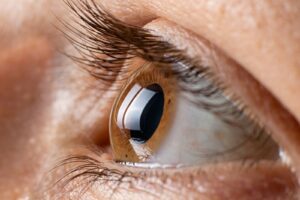
LASIK is a corneal procedure. The cornea is the clear, dome-shaped front surface of the eye — it has no pigment. The iris, which sits behind the cornea and gives your eyes their brown, blue, green, or hazel colour, is a completely separate structure that the LASIK laser never contacts. Whether you undergo standard Femto LASIK, Contoura Vision, or SMILE Pro, your eye colour will remain exactly as it was before surgery.
Why LASIK Cannot Affect Your Eye Colour
Where LASIK Works vs Where Colour Lives
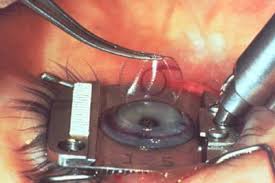
To understand this, it helps to know the basic anatomy. The cornea is the outermost transparent layer — it bends light to help you focus. Behind the cornea is a fluid-filled space called the anterior chamber, and behind that sits the iris with its pigmented cells (melanocytes). LASIK uses an excimer laser to reshape the corneal stroma — a layer roughly 500 microns thick — to correct your refractive error. The laser penetrates only about 50–150 microns into the cornea, depending on your prescription. It physically cannot reach the iris, which is millimetres deeper inside the eye. For more on how the cornea is involved, see our guide on how the cornea heals after LASIK.
The Laser Doesn’t Reach the Iris
The excimer laser used in LASIK operates at a wavelength of 193 nanometres. This ultraviolet light is absorbed almost entirely by the corneal tissue it contacts — it doesn’t pass through the cornea to reach deeper structures. Think of it as sanding the surface of a window: you’re changing the shape of the glass, but the wall behind the window remains completely untouched. The iris, pupil, lens, and retina are all unaffected by the LASIK procedure. This is also why LASIK doesn’t impact intraocular structures directly — any changes to IOP, for example, are medication-related, not laser-related.
Why Do Some Patients Think Their Eyes Look Different After LASIK?
Despite the science being clear, this question persists because some patients genuinely feel their eyes “look different” post-surgery. Here’s why.
Improved Clarity Creates a Perception Shift
Before LASIK, many patients see themselves primarily through glasses. The lenses in spectacle frames alter how others perceive the size and colour of your eyes — minus lenses (for myopia) make eyes appear smaller, while plus lenses (for hyperopia) magnify them. Remove the glasses, and suddenly your natural eye colour, size, and shape are visible without distortion. This can feel like a colour change, but it’s simply your eyes appearing as they naturally are for the first time in years. If you’re curious about the full experience of going glasses-free, our life after LASIK article covers what changes and what doesn’t.
Post-Operative Redness Can Alter Appearance Temporarily
In the first few days after LASIK, mild redness in the white of the eye (subconjunctival haemorrhage from the suction ring) can make the iris colour appear more vivid by contrast. This is a temporary cosmetic effect — the redness fades within 1–2 weeks, and the perceived colour “enhancement” disappears with it. Similarly, if your eyes were chronically red from contact lens wear before surgery, the improved ocular surface health after LASIK can make the whites appear brighter, which indirectly makes the iris colour seem more vivid.
Lighting and Glasses-Free Face Change How Eyes Are Seen
Without frames casting shadows across your face, your eyes receive and reflect light differently. People who switch from thick-framed glasses to no glasses often get comments like “your eyes look brighter” or “did your eye colour change?” — it’s an optical illusion created by removing the visual barrier of the frame, not any physical change to the iris. If you’re planning how you’ll look post-surgery, our page on whether eyes look different after LASIK addresses this in detail.
What About Cosmetic Eye Colour Change Procedures?
While LASIK doesn’t change eye colour, there are procedures specifically designed to do so. It’s important to know about them — and why most eye surgeons advise extreme caution.
Iris Implants
Artificial iris implants are coloured silicone discs surgically placed inside the eye, in front of the natural iris. Originally developed for patients with iris defects (aniridia or traumatic iris damage), they’ve been marketed cosmetically in some countries. The risks are significant: glaucoma, cataracts, corneal damage, uveitis, and vision loss. They are not approved for cosmetic use by the US FDA, and most reputable ophthalmologists worldwide strongly advise against them for aesthetic purposes.
Keratopigmentation
This is essentially a corneal tattoo — pigment is deposited into the corneal stroma to create the appearance of a different eye colour. While newer techniques have improved safety somewhat, risks include infection, inflammation, pigment migration, and unpredictable visual effects. It’s primarily used medically for patients with corneal scars or disfigurement, not as a cosmetic choice for healthy eyes.
Laser Iris Depigmentation
A low-energy laser targets melanin in the iris to lighten brown eyes toward blue or green. This is experimental, not widely available, and carries risks including pigment dispersion leading to glaucoma, chronic inflammation, and irreversible damage. No major regulatory body has approved this procedure. At Visual Aids Centre, we do not perform or recommend any cosmetic eye colour change procedure — the risk-to-benefit ratio is not justified for healthy eyes.
Can Any Laser Eye Surgery Affect Iris Colour?
No. Whether it’s LASIK, SMILE Pro, TransPRK, or PRK — all refractive laser procedures work exclusively on the cornea. None of them interact with the iris or its pigment cells. The same applies to lens-based procedures like ICL surgery, which places a lens behind the iris without altering its colour. If anyone tells you that a refractive procedure changed their eye colour, what actually changed is how their eyes are perceived — not the physical pigmentation. For a full overview of what each procedure does and doesn’t do, see our types of LASIK procedures comparison.
The Bottom Line
LASIK cannot and does not change your eye colour — the laser works on the cornea, which is transparent, and never touches the iris, which holds your pigment. If your eyes seem to look different after surgery, it’s because removing glasses changes how your face and eyes are perceived, not because the procedure altered any pigmentation. If you have questions about what LASIK will and won’t change about your appearance, book a consultation at Visual Aids Centre and we’ll address every concern during your pre-operative evaluation.
Frequently Asked Questions (FAQs)
Can LASIK make my brown eyes blue?
No. LASIK reshapes the cornea — a transparent tissue. It does not interact with the iris or its melanin, so it cannot change brown eyes to blue or any other colour.
Why do my eyes look brighter after LASIK?
Removing glasses eliminates lens distortion and frame shadows, making your natural eye colour more visible. Improved ocular surface health after ditching contact lenses can also make the whites of your eyes appear brighter.
Is there a safe procedure to change eye colour?
Currently, no cosmetic eye colour change procedure is widely considered safe by mainstream ophthalmology. Iris implants, keratopigmentation, and laser depigmentation all carry significant risks including glaucoma and vision loss.
Does SMILE Pro or Contoura Vision change eye colour?
No. Like LASIK, both SMILE Pro and Contoura Vision are corneal procedures. They do not touch the iris and have no effect on eye colour.
Can the excimer laser used in LASIK damage the iris?
No. The excimer laser (193 nm wavelength) is fully absorbed by corneal tissue and does not penetrate deeper structures. The iris, lens, and retina are unaffected during LASIK.
👁️ MEDICALLY REVIEWED BY
Padmashree Dr. Vipin Buckshey
Optometrist & Refractive Surgery Specialist | AIIMS Graduate, 1977 | Padma Shri Honouree
The clinical information in this article reflects protocols and outcomes from over 250,000 laser vision correction procedures at Visual Aids Centre. Dr. Vipin Buckshey—an AIIMS alumnus, former President of the Indian Optometric Association, and official optometrist to the President of India—personally oversees all refractive surgery consultations and ensures patients receive accurate, evidence-based answers to every concern before proceeding.