If one of your eyes sees clearly while the other is noticeably blurry — or your left and right prescriptions differ by two dioptres or more — you likely have anisometropia. And you’ve probably wondered whether LASIK can fix both eyes independently and give you balanced, glasses-free vision. The short answer: yes, in the majority of cases it can.
LASIK is actually one of the best solutions for anisometropia because it treats each eye individually, reshaping each cornea to its own specific prescription. Unlike glasses — which can cause unequal image sizes and discomfort at high prescription differences — laser surgery eliminates the optical imbalance at its source. This guide explains how LASIK corrects anisometropia, who qualifies, what the risks are, and when an alternative procedure might be a better fit. If you’re unfamiliar with the range of refractive errors that laser surgery addresses, that’s a good starting point before diving into the specifics below.
Key Takeaways
- LASIK corrects anisometropia by independently reshaping each cornea to its specific prescription — eliminating the power difference between the two eyes.
- It’s particularly effective for mild to moderate anisometropia (1–4 dioptres difference) with adequate corneal thickness.
- Patients with anisometropia often tolerate LASIK better than glasses, which cause aniseikonia (unequal image sizes) at high prescription gaps.
- Severe anisometropia or thin corneas may require alternatives like ICL or PRK.
- A thorough pre-operative evaluation — including corneal mapping of both eyes — is essential for accurate, balanced outcomes.
What Is Anisometropia?
Anisometropia is a condition where your two eyes have significantly different refractive powers. One eye might be –1.00 while the other is –4.50, or one could be farsighted while the other is nearsighted. A difference of 1 dioptre or more between the two eyes is clinically considered anisometropia, though symptoms typically become bothersome at 2 dioptres or above.
Why It Matters Beyond Just Blurry Vision
The real problem with anisometropia isn’t that one eye is blurry — glasses can technically correct that. The issue is what happens when you correct a large prescription difference with lenses. Spectacle lenses magnify or minify the image differently for each eye (a phenomenon called aniseikonia), making it difficult for the brain to fuse the two images into a single, comfortable 3D picture. This leads to headaches, eye strain, poor depth perception, and — in children — a risk of developing amblyopia (lazy eye) if the brain suppresses the blurrier eye. For context on how amblyopia and refractive imbalance interact, our article on whether LASIK can address lazy eye explains the relationship.
Contact lenses partially solve the image-size problem (because they sit closer to the eye), but many people find long-term contact wear uncomfortable, especially with high prescriptions. This is exactly where LASIK excels — by changing the cornea’s shape directly, it corrects the refractive error without introducing any optical distortion from an external lens.
How LASIK Corrects Anisometropia
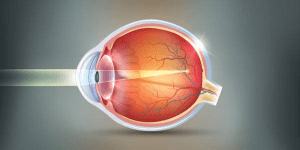
During LASIK, each eye is treated independently. The excimer laser removes a precisely calculated amount of corneal tissue from each eye based on its individual prescription — more tissue from the eye with the higher error, less from the other. After surgery, both corneas focus light correctly onto the retina, and the prescription difference between the eyes is eliminated (or drastically reduced).
This independence is the key advantage. Unlike glasses, where both lenses must work together through a shared frame — creating optical compromises — LASIK gives each eye exactly what it needs. The result is equalised vision without the aniseikonia that makes spectacle correction uncomfortable for anisometropic patients. Most patients notice the difference immediately: for the first time, both eyes contribute equally to a single, clear visual image. If you’ve experienced one eye seeing better than the other after any eye procedure, our explanation of why one eye may temporarily lag behind can help set expectations.
Are You a Good Candidate?
Ideal Candidates
You’re likely a strong candidate for LASIK correction of anisometropia if your prescription has been stable for at least 12 months, both eyes have sufficient corneal thickness (typically 500+ microns) for the ablation depth required, the prescription difference is in the mild to moderate range (up to about 4–6 dioptres), and you have no other disqualifying conditions such as keratoconus, severe dry eye, or uncontrolled autoimmune disease.
When It Gets More Complex
High anisometropia — say, one eye at –1.00 and the other at –8.00 — is trickier because the eye with the larger correction requires significantly more corneal tissue removal. If that eye’s cornea isn’t thick enough to safely absorb the ablation, LASIK may not be suitable for that specific eye. This is where a detailed corneal topography scan becomes critical — it maps the shape and thickness of each cornea to determine whether the planned treatment is safe. For patients whose prescription falls outside LASIK’s safe range, our guide on what to do when your prescription is too high for LASIK outlines the next steps.
Pre-Operative Assessment at Visual Aids Centre
Because anisometropia adds complexity, the pre-operative evaluation is more detailed than a standard LASIK workup. Both eyes undergo independent corneal mapping, wavefront analysis, and residual stromal bed calculations to confirm that each eye can be safely treated to its target correction. Our team also evaluates binocular vision function — how well the two eyes work together — to predict how your brain will adapt to suddenly receiving two equally clear images after potentially years of imbalance. Testing corneal health thoroughly with the corneal examination protocol is a non-negotiable part of this process.
What the Procedure Involves
The LASIK procedure for anisometropia follows the same steps as standard LASIK — the only difference is the laser programming. Each eye receives a customised ablation profile based on its unique prescription.
A femtosecond laser creates a thin corneal flap. The excimer laser then reshapes the underlying stroma — flattening it for myopia, steepening it for hyperopia, or smoothing irregularities for astigmatism. The flap is repositioned and heals naturally. Both eyes are typically treated in the same session, and most patients notice dramatically improved and more balanced vision within 24 hours.
For patients with significant astigmatism in addition to their anisometropia, topography-guided or wavefront-guided platforms can further refine the outcome. Our article on the best surgical approaches for astigmatism covers how different laser platforms handle cylindrical corrections.
Risks and Challenges Specific to Anisometropia
Overcorrection or Undercorrection
When treating two eyes with very different prescriptions, the margin for error matters more. A small undercorrection in the higher-powered eye can leave a residual imbalance that the patient notices more than a typical LASIK patient would. Experienced surgeons account for this by using refined nomograms and may aim for slight overcorrection in the dominant eye to maximise binocular comfort. For a deeper understanding of this specific risk, see our article on overcorrection and undercorrection after LASIK.
Temporary Visual Imbalance During Healing
Because the two eyes have different amounts of tissue removed, they may heal at slightly different rates. It’s common for one eye to stabilise before the other, creating a temporary imbalance in the first 1–3 weeks. This resolves as both eyes complete their healing. If double vision occurs transiently during this period, it’s usually a normal part of the adjustment — our guide on double vision duration after LASIK explains what to expect.
Neural Adaptation
Patients who have lived with anisometropia for years — especially those whose brain has been suppressing the blurrier eye — may need time for neuroadaptation. The brain must learn to use both eyes equally again, which can take several weeks. This is particularly relevant if any degree of diplopia was present before surgery.
When LASIK Isn’t the Right Fit: Alternatives
ICL (Implantable Collamer Lens)
For patients with very high prescriptions in one or both eyes, or corneas too thin for safe LASIK ablation, an Implantable Collamer Lens (ICL) may be a better option. ICL doesn’t remove corneal tissue — instead, a biocompatible lens is placed inside the eye behind the iris. It can correct prescriptions up to –18.00 D, making it suitable for extreme anisometropia where LASIK’s range falls short.
PRK (Photorefractive Keratectomy)
PRK reshapes the cornea without creating a flap, preserving more corneal tissue. It’s sometimes preferred when the higher-powered eye has borderline corneal thickness that makes LASIK risky but PRK feasible.
Contact Lenses
For patients who aren’t surgical candidates, contact lenses remain the best non-surgical option for anisometropia. Because contacts sit directly on the eye, they minimise the image-size difference that plagues spectacle wearers. >Customised lens designs can further optimise comfort and visual quality for complex prescriptions.
Conclusion
LASIK is one of the most effective treatments for anisometropia — often more effective than glasses or contacts — because it eliminates the refractive imbalance at the corneal level without introducing the optical distortions that external lenses create. For mild to moderate anisometropia with healthy corneas, the results are typically excellent: balanced binocular vision, freedom from corrective lenses, and an end to the headaches and eye strain that come with living with two very different prescriptions. For severe cases, alternatives like ICL fill the gap. The critical step is a thorough, eye-specific evaluation to determine which procedure gives each eye the safest path to clear vision. To find out whether LASIK or another approach is right for your anisometropia, book a consultation at Visual Aids Centre — we evaluate each eye independently and recommend the treatment that delivers the best binocular outcome.
Frequently Asked Questions (FAQs)
How much prescription difference can LASIK correct between two eyes?
LASIK can typically correct prescription differences of up to 6–8 dioptres between the two eyes, depending on corneal thickness. Beyond that range, ICL is often a safer choice for the higher-powered eye.
Will both eyes be treated in the same session?
Yes. Both eyes are treated during the same appointment, each receiving its own customised laser programme. This ensures balanced vision recovery and avoids the discomfort of living with one corrected and one uncorrected eye between sessions.
Can children with anisometropia get LASIK?
No. LASIK requires a stable prescription, which typically occurs after age 18–21. Children with anisometropia are managed with glasses, contact lenses, and patching therapy to prevent amblyopia development.
Is LASIK for anisometropia more expensive than standard LASIK?
Not typically. The procedure is the same — only the laser settings differ. Pricing at Visual Aids Centre is based on the technology used, not the prescription complexity. For current pricing, see our LASIK cost breakdown for Delhi.
What if only one eye needs correction — can LASIK be done on just one eye?
Yes. If one eye has good unaided vision and only the other eye needs correction, LASIK can be performed on a single eye. This is sometimes the simplest path to balanced binocular vision for unilateral anisometropia.
👁️ MEDICALLY REVIEWED BY
Padmashree Dr. Vipin Buckshey
Optometrist & Refractive Surgery Specialist | AIIMS Graduate, 1977 | Padma Shri Honouree
With more than four decades of clinical experience and over 250,000 laser vision correction procedures at Visual Aids Centre, Dr. Vipin Buckshey has extensive experience treating anisometropia across all severity levels — from mild binocular imbalances managed with spectacles to complex cases requiring independent surgical planning for each eye. An AIIMS alumnus, former President of the Indian Optometric Association, and official optometrist to the President of India, Dr. Buckshey personally oversees binocular vision assessments and laser programming for anisometropic patients to ensure optimal outcomes for both eyes.