You’ve invested in LASIK, enjoyed months or years of clear vision without glasses—and now you’re noticing your eyesight isn’t quite as sharp as it was. Naturally, you’re wondering: did the surgery wear off? Can your eyes actually go bad again after LASIK?
The honest answer is that LASIK permanently reshapes your cornea, so the correction itself doesn’t “wear off.” But your eyes are living tissue, and they continue to change over time. Certain age-related shifts, residual refractive changes, or underlying conditions can alter your vision years after the procedure—and it’s important to understand the difference between the surgery failing and your eyes naturally evolving. This guide from Visual Aids Centre explains exactly what can change, why it happens, and what options you have if it does.
Key Takeaways
- LASIK permanently changes the shape of your cornea—the correction itself does not reverse.
- A small percentage of patients experience myopic regression, where mild nearsightedness returns over time.
- Presbyopia (age-related loss of near vision) affects everyone after 40, regardless of whether they’ve had LASIK.
- Enhancement procedures can address most post-LASIK vision changes if the cornea supports retreatment.
Is LASIK Permanent?
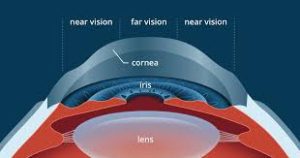
Yes—the corneal reshaping performed during LASIK is permanent. The excimer laser removes microscopic layers of corneal tissue to correct your refractive error, and that tissue does not grow back. If you were -4.00 dioptres before surgery and the laser corrected all four dioptres, that specific correction remains in place for life.
What LASIK cannot do is freeze your eyes in time. Your eyes are biological structures that continue aging, and new refractive changes can develop independently of the original surgery. Understand the full scope of what LASIK corrects to set the right expectations from the start.
What Is Myopic Regression After LASIK?
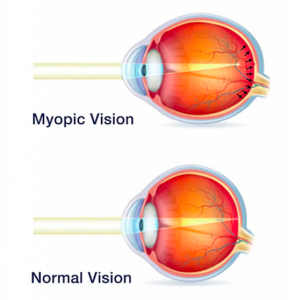
Myopic regression is the gradual return of mild nearsightedness after LASIK. It doesn’t mean the surgery reversed—it means the eye has undergone a small biological shift that partially offsets the original correction. This typically involves the cornea very slightly steepening over time or, less commonly, the eyeball continuing to elongate marginally.
Regression is more common in patients who had higher prescriptions before surgery. Someone corrected from -8.00 has a statistically greater chance of experiencing a -0.50 or -0.75 shift than someone corrected from -2.00. The shift, when it occurs, is usually small and stabilises within a few years. For a deeper dive into why this happens, see what causes regression after LASIK.
How Presbyopia Affects Post-LASIK Vision
This is the most common reason people think their LASIK “stopped working.” Presbyopia is the natural, age-related hardening of the eye’s crystalline lens that reduces your ability to focus on close objects. It begins affecting most people in their early-to-mid 40s and progresses gradually through the 50s and 60s.
LASIK corrects your cornea, not your lens. So even if your distance vision remains a crisp 6/6, you may find yourself holding your phone at arm’s length or squinting at restaurant menus. This isn’t regression—it’s a completely separate condition that happens to everyone, glasses-wearers and LASIK patients alike. Options like monovision LASIK can help manage both distance and near vision simultaneously, though they involve a deliberate trade-off in sharpness between the two eyes.
Other Reasons Vision May Change After LASIK
Cataracts
Cataracts are a clouding of the eye’s natural lens that develops with age—typically after 60, though it can start earlier. Cataract formation is unrelated to LASIK and would have occurred regardless of whether you had the procedure. The good news is that cataract surgery can still be performed after LASIK, though your surgeon will need to use adjusted lens power calculations due to the altered corneal shape.
Dry Eye
Chronic dry eye can cause fluctuating or blurred vision that mimics a refractive change. Post-LASIK dryness typically peaks in the first few months and resolves within six to twelve months, but some patients experience longer-lasting symptoms. If your vision seems to fluctuate throughout the day—clearer in the morning, hazier by evening—dry eye is a more likely culprit than regression. Learn about long-term management at how to treat dry eyes after LASIK.
Hormonal Changes
Pregnancy, breastfeeding, and menopause can temporarily shift your refractive status due to fluid retention and hormonal fluctuations. These changes are usually reversible once hormone levels stabilise, which is why surgeons recommend waiting until your prescription is stable for at least 12 months before considering LASIK in the first place.
How Common Is It for Vision to Change?
Large-scale studies consistently show that the vast majority of LASIK patients maintain excellent distance vision for decades. A commonly cited figure is that roughly 10–15% of patients may experience some measurable change in their refraction over a 10-year period—but “measurable” doesn’t always mean “noticeable.” A shift of -0.25 or -0.50 dioptres might show up on an eye test without meaningfully affecting daily vision.
Clinically significant regression—enough to warrant an enhancement—occurs in approximately 3–5% of patients at experienced, high-volume centres. These numbers are lower for patients with moderate prescriptions and higher for those who started with very high myopia or hyperopia.
Signs Your Vision Has Changed After LASIK
Not every visual disturbance means your eyes have “gone bad.” Some symptoms warrant attention, while others are normal and temporary. Changes worth investigating include gradual difficulty reading road signs that were previously clear, needing to squint in well-lit conditions, persistent blurriness that doesn’t improve with blinking or artificial tears, and increased difficulty with night driving beyond what you experienced in the first few months after surgery.
If you’re experiencing any of these, the first step is a comprehensive eye examination—not a guess. Your optometrist can measure whether your refraction has shifted, check for cataracts or dry eye, and determine whether a corrective step is needed.
What Can You Do If Your Eyes Go Bad Again?
LASIK Enhancement
If your cornea has sufficient residual thickness, a LASIK enhancement (or “touch-up”) can fine-tune the original correction. The surgeon lifts the existing flap or creates a new treatment surface to address the residual prescription. Enhancement rates at experienced centres are typically below 5%, and the procedure is straightforward when candidacy criteria are met. Learn more at how often enhancement surgery is required.
Alternative Procedures
If your cornea is too thin for a second LASIK treatment, other options exist. PRK can be performed on the surface without lifting a flap, and implantable collamer lenses (ICL) can be placed inside the eye to correct significant residual prescriptions without touching the cornea at all.
Glasses or Contact Lenses
For very mild changes—particularly presbyopia-related near vision loss—a simple pair of reading glasses may be the most practical solution. There’s no rule that says LASIK patients can never wear glasses again. Many patients happily use inexpensive readers for close work while enjoying unaided distance vision for everything else.
Can You Prevent Vision Changes After LASIK?
You can’t stop your eyes from aging, but you can optimise conditions for long-term stability. Ensuring your prescription was genuinely stable for at least 12 months before surgery reduces regression risk significantly. Following your post-operative care protocol—including all recommended healing steps, UV protection, and follow-up appointments—supports optimal outcomes.
Beyond the first year, protecting your eyes from excessive UV exposure with quality sunglasses and maintaining overall eye health through regular check-ups gives you the best chance of sustaining your results.
Conclusion
LASIK permanently reshapes your cornea, and for the vast majority of patients, the results hold up well for decades. But “permanent correction” doesn’t mean “permanent immunity from all future vision changes.” Mild regression, presbyopia after 40, cataracts, and dry eye can all affect your visual experience over time—none of which mean the surgery failed. Understanding these possibilities upfront is the best way to maintain realistic expectations and respond quickly if your vision does shift. If you’ve noticed changes or want to assess your long-term candidacy, book a consultation at Visual Aids Centre for a thorough evaluation.
Frequently Asked Questions (FAQs)
Can LASIK wear off over time?
No. The corneal reshaping is permanent. However, new age-related changes like presbyopia or mild myopic regression can develop independently, which may make it feel like the surgery “wore off.”
How many years does LASIK last?
The correction itself lasts a lifetime. Most patients enjoy stable distance vision for 20+ years. Some may need reading glasses after 40 due to presbyopia, which is a separate, universal condition.
What is the chance of needing glasses again after LASIK?
For distance vision, about 90–95% of patients remain glasses-free long-term. For near vision, most people over 40 will eventually need reading glasses regardless of LASIK.
Can I get LASIK again if my vision changes?
Yes, if your cornea has enough residual thickness. This is called a LASIK enhancement and is a common, safe procedure. If your cornea is too thin, alternatives like PRK or ICL are available.
Does high myopia increase the risk of regression?
Yes. Patients with prescriptions above -6.00 dioptres have a slightly higher probability of mild regression compared to those with moderate myopia. The shift is usually small and manageable.
👁️ MEDICALLY REVIEWED BY
Padmashree Dr. Vipin Buckshey
Optometrist & Vision Correction Specialist | AIIMS Graduate, 1977 | Padma Shri Honouree
The long-term outcome data referenced in this article is consistent with the clinical registries maintained at Visual Aids Centre under the direct supervision of Dr. Vipin Buckshey. With more than four decades of practice and over 250,000 laser vision correction procedures supervised, Dr. Buckshey has tracked patient outcomes across 10-, 15-, and 20-year follow-up windows, confirming that clinically significant regression remains below 5% for appropriately screened candidates.
An AIIMS alumnus, former President of the Indian Optometric Association, official optometrist to the President of India, and Padma Shri recipient, Dr. Buckshey personally evaluates every patient’s long-term risk profile—including prescription stability, corneal biomechanics, and age-related factors—before recommending a procedure or enhancement.