The honest answer is no — WaveLight Plus InnovEyes cannot correct presbyopia, and no reputable refractive surgeon will tell you otherwise. The reason is structural rather than technological. Presbyopia is a problem of the eye’s internal crystalline lens stiffening with age, not a problem of corneal shape. WaveLight Plus InnovEyes is a corneal laser platform. It is superb at reshaping the cornea to treat myopia and astigmatism, but the cornea is not where presbyopia lives. Asking a corneal laser to fix a lens problem is a category mismatch.
That said, patients approaching their 40s with existing myopia or astigmatism often ask the question hoping for a single solution. There is a useful answer here that is more precise than a flat “no”: you can use WaveLight Plus InnovEyes to clear distance vision while the lens is still young, and you can strategically pair it with other procedures or monovision planning to reduce reading-glasses dependency as presbyopia sets in. This guide from Visual Aids Centre explains exactly what the platform can and cannot do for ageing eyes, and which procedures do treat presbyopia directly.
Key Takeaways
- WaveLight Plus InnovEyes cannot directly correct presbyopia — it reshapes the cornea, while presbyopia is caused by lens stiffening.
- For patients over 40, the platform can still clear distance vision, and monovision planning may reduce dependence on reading glasses.
- True presbyopia-correcting procedures are lens-based: Refractive Lens Exchange (RLE), multifocal IOLs, and EDOF IOLs.
- A realistic plan often combines one corneal procedure for distance correction with a later lens procedure as accommodation fades further.
The Short Answer — And Why the Question Matters
Most online articles answer this question in three words (“no, it can’t”) and move on. That answer is correct but unhelpful, because it does not tell you what to do instead. The useful version starts by separating two different ageing-vision stories: patients who have long-standing myopia or astigmatism and are now entering their 40s, and patients with naturally clear distance vision who suddenly cannot read a menu. Both groups are told they have “presbyopia,” but the planning differs enormously between them. Our dedicated guide on whether LASIK can cure presbyopia sets the broader scene.
What Presbyopia Actually Is
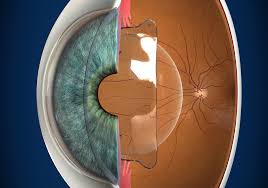
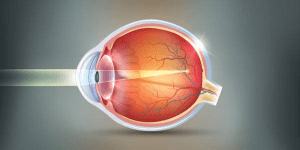
Presbyopia is the gradual loss of the eye’s ability to change focus from far to near. In a young eye, a ring of muscle called the ciliary body contracts to change the shape of the crystalline lens inside the eye, letting you pull focus from a distant mountain to a page of text in a fraction of a second. This is called accommodation. From around age 40, the crystalline lens begins to stiffen, and the same muscle contraction no longer produces the same lens shape change. By 50, most eyes have lost enough accommodation that reading glasses become a daily necessity.
Crucially, none of this is happening in the cornea. The cornea’s job is to provide most of the eye’s baseline focusing power, and its shape determines refractive error — myopia, hyperopia, and astigmatism. Presbyopia is a different system breaking down, and the fix has to target that system.
Why a Corneal Laser Cannot Fix a Lens Problem
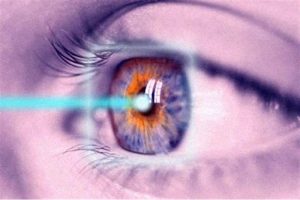
WaveLight Plus InnovEyes is a ray-tracing-guided corneal laser. It uses the InnovEyes Sightmap to build a full biometric model of the eye, then delivers a customised ablation pattern to the corneal surface using the Alcon EX500 excimer laser.
Every one of those steps acts on the cornea. The laser does not pass through the pupil and reshape the lens; it cannot, because the excimer wavelength is absorbed at the surface. No amount of diagnostic sophistication changes the basic fact that the beam is reshaping a structure that is not the cause of presbyopia. This is also why no other corneal laser platform — LASIK, Contoura, SMILE Pro, Trans-PRK — cures presbyopia either. The limitation is not WaveLight’s; it is inherent to corneal refractive surgery.
What WaveLight Plus InnovEyes Can Offer Over-40s
This is where the nuance lives. For a 42-year-old with −4.50 D of myopia and mild astigmatism, WaveLight Plus InnovEyes can deliver clear distance vision using the same precision ray-traced ablation it offers any younger patient. The procedure does not prevent presbyopia, but it removes the need for distance spectacles and leaves a cleaner optical starting point for managing near vision later.
For a closer look at what the platform does well in this cohort, see our piece on the clinical benefits of WaveLight Plus InnovEyes. The point worth internalising is this: treating coexisting refractive error at 42 is a separate decision from treating presbyopia at 50, and one does not replace the other.
The Monovision Workaround — Honest Limits
Monovision is the one strategy that lets a corneal laser do anything meaningful about near vision. The surgeon deliberately under-corrects the non-dominant eye by roughly −1.00 to −1.50 D of residual myopia, so that it handles near vision while the dominant eye is set for distance. The brain learns to use whichever eye is sharper for a given task. WaveLight Plus InnovEyes can deliver this kind of planned asymmetry with precision.
But monovision is a compromise, not a cure. About one in five patients struggles to adapt and finds the depth-perception penalty unacceptable.
The Procedures That Actually Treat Presbyopia
Three lens-based procedures genuinely address the underlying accommodative loss:
Refractive Lens Exchange (RLE)
RLE replaces the ageing crystalline lens with a synthetic intraocular lens, typically a multifocal or extended-depth-of-focus design. Because the procedure removes and replaces the structure at the root of presbyopia, it eliminates the condition rather than working around it. Our comparison of Refractive Lens Exchange versus LASIK explains when each makes sense.
Multifocal IOLs
When a patient needs cataract surgery, the implanted replacement lens can be a multifocal design that restores near, intermediate, and distance focus in a single eye. For patients who have already had a corneal laser procedure, biometry calculations are slightly more involved — our article on multifocal IOL after LASIK covers the specifics.
Corneal Inlays
Small lens-like implants placed inside the cornea to create a pinhole effect were once offered for presbyopia, but most major brands (KAMRA, Raindrop) have been withdrawn from many markets due to mixed long-term outcomes. They are mentioned here for completeness; they are rarely the right answer now.
When a Combined Plan Makes Sense
For many patients the realistic path is sequential, not all-at-once. Treat distance vision now with a corneal laser like WaveLight Plus InnovEyes while the cornea is healthy and the prescription is stable, enjoy glasses-free distance vision for ten to fifteen years, and plan for a lens-based procedure later when presbyopia becomes disruptive or a cataract appears. This is a pragmatic plan, not a compromise — and it is more common than the “one surgery solves everything” framing that marketing often suggests. Patients who already had LASIK and are now developing near-vision complaints should read our guide on correcting presbyopia after LASIK for the specifics.
Conclusion
WaveLight Plus InnovEyes cannot directly correct presbyopia — no corneal laser can, because presbyopia is a lens-level condition. What the platform can do is deliver precise distance correction, accommodate monovision strategies for patients who adapt well to asymmetric focus, and set up a clean optical baseline for whatever lens-based intervention may be appropriate later. If you are over 40 and weighing your options for near and distance vision honestly, book a consultation at Visual Aids Centre for a full accommodative assessment and a realistic treatment map.
Frequently Asked Questions (FAQs)
Can WaveLight Plus InnovEyes correct presbyopia?
No. It treats corneal refractive errors such as myopia and astigmatism. Presbyopia is caused by stiffening of the internal crystalline lens, which a corneal laser cannot reach.
Will I still need reading glasses after WaveLight Plus InnovEyes?
If you are over 40, probably yes — unless your surgeon plans a monovision correction. Distance vision is cleared by the procedure, but near-focus accommodation is separate from corneal shape.
What’s the best surgery for presbyopia?
Refractive Lens Exchange with a multifocal or EDOF intraocular lens is the main lens-based solution. Multifocal IOLs at the time of cataract surgery are another definitive route.
Can I combine WaveLight Plus InnovEyes with a lens procedure later?
Yes. Many patients have distance corrected with a corneal laser in their 40s and then a lens procedure later. Biometry calculations for the later lens procedure require careful recalibration.
What is monovision LASIK and is it the same as presbyopia correction?
Monovision sets one eye for distance and the other for near vision. It’s a workaround, not a cure for presbyopia, and only about 80% of patients adapt comfortably to it.
Are corneal inlays a good option for presbyopia?
They were once promoted for this, but the major products have been withdrawn from many markets due to mixed long-term results. Lens-based procedures are the standard now.
👁️ MEDICALLY REVIEWED BY
Padmashree Dr. Vipin Buckshey
Optometrist & Presbyopia Management Specialist | AIIMS Graduate, 1977 | Padma Shri Honouree
Presbyopia counselling is one of the most nuanced conversations in refractive practice, and one where patient expectations frequently outpace what any single procedure can deliver. Dr. Vipin Buckshey walks every over-40 patient through the cornea-versus-lens distinction before any procedural recommendation is made, and builds treatment plans that sequence corneal and lens interventions realistically across a patient’s decade rather than oversimplifying the problem. An AIIMS alumnus, former President of the Indian Optometric Association, official optometrist to the President of India, and Padma Shri recipient, Dr. Buckshey founded Visual Aids Centre in 1980 and introduced Delhi’s first private LASIK laser in 1999. Read more about the clinic’s individualised treatment-planning approach in our story.