Most laser eye surgery marketing promises the same three things: clear vision, fast recovery, and minimal discomfort. Wavelight Plus InnovEyes delivers all three — but what genuinely distinguishes it from standard laser procedures is what happens before the laser fires. The diagnostic system that maps your eye, builds a personalised 3D model of it, and translates that model into a surgical plan is where the real clinical innovation lives. Understanding that distinction is what separates an informed patient from one who is simply choosing between procedure names.
This guide from Visual Aids Centre explains the specific, clinically meaningful benefits of Wavelight Plus InnovEyes — what the technology actually does, what outcomes it delivers compared to standard laser correction, and which patients benefit most from its capabilities.
Key Takeaways
- Wavelight Plus InnovEyes is the only laser vision correction system that builds a personalised 3D “eyevatar” of your eye before surgery — correcting not just your prescription but the unique optical imperfections of your individual cornea.
- Up to 82% of patients achieve 6/5 vision — sharper than the 20/20 standard — with some patients reaching 6/4 “Eagle Eye” visual acuity.
- The procedure corrects higher-order aberrations that standard LASIK cannot address, improving contrast sensitivity, depth perception, and low-light visual quality beyond what glasses or contacts can achieve.
- Ray tracing technology allows the system to predict exactly how changes in your corneal shape will affect light focusing — enabling a level of precision that population-average correction algorithms cannot match.
- The integrated single-system workflow reduces manual data transfer steps, which is one of the underappreciated sources of error in multi-device surgical pathways.
Benefit 1: The Eyevatar — Personalised 3D Surgical Planning
The term “personalised” is used loosely across laser eye surgery marketing. In most procedures, personalisation means adjusting laser parameters based on your measured prescription — a meaningful improvement over one-size-fits-all ablation profiles, but still fundamentally derived from population-average optical models. Wavelight Plus InnovEyes takes a fundamentally different approach.
Before any surgery is planned, the InnovEyes Sightmap diagnostic system builds what the technology describes as an “eyevatar” — a comprehensive 3D model of your specific eye that integrates corneal topography, wavefront aberrometry, optical biometry, and infrared imaging into a single structural model. This model represents not just your prescription but the precise three-dimensional optical character of your cornea, including irregularities and aberrations that are unique to your eye and invisible to standard measurement tools.
The surgical plan is then derived from this model — not from a database average. Understanding how the 3D eyevatar is used in treatment planning helps clarify why this level of diagnostic depth produces different outcomes from standard correction — and why patients whose visual complaints have never been fully resolved by their best glasses prescription are often ideal candidates for this approach.
Benefit 2: Higher-Order Aberration Correction
Your spectacle prescription addresses two types of optical error: sphere (the blur from myopia or hyperopia) and cylinder (astigmatism). These are the first-order and second-order aberrations — the obvious, measurable errors that standard lenses and standard laser procedures correct. Beyond them is a category of optical imperfections called higher-order aberrations — coma, trefoil, spherical aberration, and others — that cause glare, reduced contrast, double vision, difficulty in low-light conditions, and night halos that glasses and standard laser procedures cannot resolve.
Wavelight Plus InnovEyes corrects both categories simultaneously. For patients who have worn optimal glasses prescriptions for years but still experienced poor night vision, glare sensitivity, or reduced contrast in certain lighting conditions, higher-order aberrations may have been the cause all along. The InnovEyes system is specifically designed to address these aberrations as part of the surgical correction, which is the mechanism behind many patients reporting better post-operative vision than their best pre-operative corrected vision in glasses.
Benefit 3: Supranormal Vision Outcomes
The benchmark for acceptable laser eye surgery outcomes is typically 20/20 — 6/6 in metric notation. Wavelight Plus InnovEyes consistently exceeds this benchmark in published clinical data. Up to 82% of patients achieve 6/5 vision — sharper than the clinical norm — and a subset of patients reach 6/4 “Eagle Eye” visual acuity. The procedure’s success rate across its full treatment range is backed by consistent outcomes data — our dedicated page on the success rate of Wavelight Plus InnovEyes breaks down what percentage of patients achieve each visual acuity level.
Supranormal outcomes are not a marketing claim disconnected from mechanism — they are a predictable consequence of correcting higher-order aberrations that were degrading visual quality beyond what the standard prescription addressed. Patients who were fully corrected to 6/6 with glasses but could not read fine print in low light, or who found night driving with optimal lenses still difficult, often discover that post-operative vision at 6/5 or better resolves those specific complaints because the underlying optical imperfections have been addressed for the first time.
Benefit 4: Ray Tracing Technology
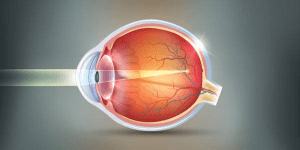
Ray tracing in the context of optical systems means directing thousands of individual light beams at the eye and measuring precisely how each one is refracted as it passes through the corneal and lens optics. This generates a far more detailed picture of the eye’s optical behaviour than conventional aberrometry, which measures aggregate wavefront distortion rather than individual ray paths.
The practical clinical benefit is predictability. The ray tracing model can simulate, before surgery, exactly how a proposed change in corneal shape will affect the path of light through your specific eye — allowing the surgical plan to be refined until the simulated post-operative optics match the target outcome. For complex cases — patients with higher-order aberrations, irregular astigmatism, or previous surgical history — this predictive modelling advantage is the difference between a satisfying outcome and a residual complaint. Our detailed page on how ray tracing technology creates precise corneal ablation profiles explains the physics behind this in practical, accessible terms.
Benefit 5: Treatment Speed and Efficiency
The WaveLight laser operates at 500 Hz — 500 laser pulses per second — completing the treatment component of the procedure in approximately 10 to 15 seconds per eye. This is among the fastest treatment speeds available in clinical practice today. The practical consequence for patients is less time under the laser, reduced eye movement management demands, and a less psychologically demanding procedure experience overall. Most patients can expect to know the full details of how long the Wavelight Plus InnovEyes procedure takes from preparation through discharge before committing to a surgical date.
Speed also has indirect clinical benefits. Faster treatment means less corneal surface dehydration during the procedure — an underappreciated source of ablation inaccuracy in slower laser systems where the cornea begins drying meaningfully during longer treatment sessions. The WaveLight system’s speed reduces this variable, contributing to the precision and predictability of the final correction.
Benefit 6: Reduced Human Error Through Automation
Traditional laser refractive procedures involve multiple points at which data is manually transferred — from diagnostic instruments, to treatment planning software, to the laser system. Each transfer is a potential source of transcription error or parameter mismatch. The Wavelight Plus InnovEyes system automates this data pathway: diagnostic measurements flow directly into the treatment planning algorithm, which generates the ablation profile without manual re-entry of parameters.
During surgery, the system’s active eye tracking compensates for involuntary eye movement faster than any surgeon can manually adjust — detecting and correcting for displacement in milliseconds. This real-time tracking ensures the laser continues to ablate at the intended corneal coordinates even when the eye drifts slightly, which is a normal occurrence that standard laser systems manage less precisely. Our dedicated resource on how the system minimises human error in treatment planning covers the automation steps in detail.
Benefit 7: Single-System Integrated Workflow
Wavelight Plus InnovEyes is a fully integrated platform — diagnostic imaging, treatment planning, and laser delivery all operate within a single connected system rather than across separate devices from different manufacturers. This integration is more clinically significant than it might appear. When data moves between separate devices, it passes through export and import steps that can introduce rounding errors, coordinate system differences, and compatibility inconsistencies that affect the precision of the final treatment plan.
A single integrated system eliminates these inter-device translation steps entirely. The 3D model of your eye built by the InnovEyes Sightmap is the same model that generates the ablation profile and guides the WaveLight laser — with no conversion, no re-entry, and no compatibility gap in between. If you want to understand the full range of what this integrated approach covers technically, our overview of the key features of Wavelight Plus InnovEyes details every component of the platform.
Benefit 8: Real-World Quality of Life Improvements
The clinical metrics — 6/5 acuity, higher-order aberration correction, ray tracing precision — matter because of what they translate to in daily life. Patients who achieve supranormal visual acuity after Wavelight Plus InnovEyes consistently describe qualitative changes that go beyond simply not needing glasses. Improved contrast sensitivity changes how food looks, how faces read in different lighting, and how confident patients feel at night. Reduced glare changes the driving experience at night from cautious to comfortable. Corrected higher-order aberrations improve the clarity of fine print, digital text, and distant details in ways that the best glasses prescription never did.
Freedom from glasses and contact lenses is not trivial either. The approximately 99% patient satisfaction rate at the 12-month mark reflects both the optical quality of the results and the lifestyle impact of eliminating the daily apparatus of correction. If you are wondering whether this procedure corrects astigmatism specifically — a common concern — our dedicated page on whether Wavelight Plus InnovEyes corrects astigmatism addresses both regular and irregular astigmatism cases in detail.
Who Benefits Most From Wavelight Plus InnovEyes?
The procedure’s benefits are not evenly distributed across all patients. The patients who gain the most clinically distinctive outcomes from Wavelight Plus InnovEyes are those with significant higher-order aberrations identified on wavefront diagnostic mapping, irregular astigmatism that standard lenses cannot fully correct, previous refractive surgery leaving residual aberrations, or demanding visual performance requirements — pilots, surgeons, professional drivers, or athletes in precision sports where acuity and contrast sensitivity matter beyond the 6/6 standard.
For patients with straightforward myopia and regular astigmatism on normal corneas, the benefits are real but may be less decisive relative to other well-validated options. The only way to know whether your eye’s optical profile places you in the category that benefits most is a comprehensive pre-operative assessment. Our page on who is an ideal candidate for Wavelight Plus InnovEyes covers every parameter evaluated during the pre-operative assessment and why each one matters for predicting your likely outcome. And if you are weighing this procedure directly against SMILE Pro, our comparison page on Wavelight Plus InnovEyes vs SMILE Pro gives a clear head-to-head breakdown of both procedures across every key clinical dimension.
Conclusion
The benefits of Wavelight Plus InnovEyes are specific, mechanistically grounded, and clinically measurable — not marketing language. The eyevatar 3D mapping, higher-order aberration correction, ray tracing predictability, and integrated single-system workflow combine to produce outcomes that standard laser procedures cannot replicate for patients whose eyes carry optical complexity beyond a straightforward prescription.
For patients who have managed their vision for years with glasses or lenses that were “as good as it gets” — but whose visual quality in demanding conditions still fell short — Wavelight Plus InnovEyes may represent the first genuine solution to complaints that correction alone was never going to address. To find out whether your corneal profile and visual requirements make you an ideal candidate, book a consultation at Visual Aids Centre and get a definitive pre-operative assessment based on your actual eye measurements — not a general estimate.
Frequently Asked Questions (FAQs)
What makes Wavelight Plus InnovEyes different from standard LASIK?
The fundamental difference is diagnostic depth. Standard LASIK corrects your prescription (sphere and cylinder). Wavelight Plus InnovEyes corrects your prescription plus higher-order aberrations — corneal optical imperfections invisible to standard measurement — using a personalised 3D eye model called an eyevatar. This produces sharper, higher-quality vision than prescription correction alone can achieve.
Can Wavelight Plus InnovEyes really give me better than 20/20 vision?
For many patients, yes. Clinical data shows up to 82% of patients achieving 6/5 vision (better than 20/20), and some reaching 6/4. This is a direct consequence of correcting higher-order aberrations that standard procedures leave unaddressed. Individual outcomes depend on your corneal optics profile — a diagnostic assessment will indicate where you are likely to land.
Who is the ideal candidate for Wavelight Plus InnovEyes?
Patients with measurable higher-order aberrations, irregular astigmatism, or demanding visual performance requirements gain the most distinctive benefit. Patients with straightforward myopia or regular astigmatism on normal corneas still achieve excellent outcomes but may not experience the full differentiation from standard laser correction that complex-aberration patients do.
How long does the Wavelight Plus InnovEyes procedure take?
The laser treatment takes approximately 10–15 seconds per eye. The full in-clinic procedure — including preparation, anaesthetic drops, treatment, and initial post-operative check — typically takes under 30 minutes for both eyes. Most patients return to normal daily activities the following day.
Is Wavelight Plus InnovEyes available in Delhi?
Yes. Visual Aids Centre offers Wavelight Plus InnovEyes in Delhi, including the full InnovEyes Sightmap pre-operative diagnostic assessment. Pre-operative mapping, candidacy determination, and surgical planning are all performed on-site before a procedure date is confirmed.
Does Wavelight Plus InnovEyes correct astigmatism?
Yes — both regular and irregular astigmatism. This is one of the procedure’s specific advantages over standard LASIK for complex cases. Regular astigmatism (cylindrical) is corrected by standard laser procedures; irregular astigmatism (non-cylindrical, not correctable by spectacle lenses) requires the aberrometry-guided approach that Wavelight Plus InnovEyes provides.
👁️ MEDICALLY REVIEWED BY
Padmashree Dr. Vipin Buckshey
BS Ophthalmology | AIIMS Graduate, 1977 | Padma Shri Honouree | Clinical Lead, Advanced Diagnostic Refractive Surgery, Visual Aids Centre
Adopting a new surgical technology is not a marketing decision — it is a clinical one, and it requires evidence. Dr. Vipin Buckshey’s decision to integrate Wavelight Plus InnovEyes into the refractive surgery programme at Visual Aids Centre followed a rigorous evaluation of the system’s diagnostic depth, aberration correction capabilities, and published outcomes data. Over four decades of refractive surgery practice, Dr. Buckshey has personally witnessed the gap between what patients expect from their best spectacle correction and what their visual system is actually capable of — and the Wavelight Plus InnovEyes platform addresses that gap directly. An AIIMS alumnus, Padma Shri honouree, and former President of the Indian Optometric Association, Dr. Buckshey’s clinical endorsement of this technology is grounded in the same evidence-based rigour he applies to every procedure offered at Visual Aids Centre. Learn more about the values and clinical standards that guide our surgical decisions.