
You can pick up your phone for brief, careful use about 24 hours after LASIK, but that number needs the right footnotes. The first 24 hours belong to strict screen rest — eyes closed, shield in place, drops on schedule. Between days 2 and 4 you can check messages in short bursts of 5–10 minutes. Full screen life returns for most patients by the end of the first week. This is not an over-cautious recommendation; it reflects the fact that LASIK involves a corneal flap that needs those opening hours to seal firmly, and extended phone use during that window dries the surface and increases the temptation to rub.
This guide from Visual Aids Centre walks through the specific day-by-day phone timeline for LASIK (which differs slightly from flapless procedures), the phone settings that actually help rather than hurt, the habits that make the first week easier, and the symptoms that mean you should put the phone down and call your surgeon.
Key Takeaways
- Give your eyes complete rest for the first 24 hours — no phone, no TV, no computer.
- Brief phone use (5–10 minutes at a time) becomes safe after 24 hours with drops and breaks.
- Full phone use typically returns by days 7–10 as the flap seals and tear film stabilises.
- Reduced brightness, larger font size, and the 20-20-20 rule ease recovery noticeably.
Why the First 24 Hours Are Screen-Free
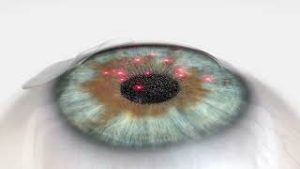
LASIK reshapes the cornea after the surgeon creates a thin hinged flap on its surface. That flap relies on natural adhesion and surface tension during the first 12–24 hours to settle flat and begin sealing. The flap is fragile during this window in a way it will not be again — a single hard blink, a brief rub, or sustained near-focus strain can each influence how evenly it seals. This is why day-one phone use specifically is a bad idea in a way that would not apply after, say, the fifth day.
Screens compound the risk in three compounding ways. First, focused phone-staring reduces blink rate by up to 60%, drying the fresh ocular surface precisely when it needs maximum lubrication. Second, mild post-operative light sensitivity means that a bright phone screen a few inches from your face feels harsher than usual, often triggering reflex tearing, squinting, and a strong urge to rub. Third, holding a phone requires fine motor coordination that drains any residual sedation and fatigue — you are better off sleeping. For detail on what proper pre-operative screen prep looks like, see our article on the ideal no-screening time after LASIK.
Day-by-Day Phone Use Timeline
Day 0 — Surgery Day
No phone use whatsoever. Go home, sleep if you can, keep your eyes closed as much as possible, use prescribed drops on schedule, and wear the protective shield provided. If you need distraction, audiobooks or podcasts are ideal — zero visual demand.
Day 1 — First 24 Hours
Continue screen rest for a full 24 hours from surgery. Brief essential phone use (sending a quick message, receiving an urgent call) is not catastrophic, but make each session 30 seconds, not 15 minutes. Most patients find their eyes cannot sustain longer in any case.
Days 2–3
Short phone sessions of 5–10 minutes are now reasonable, separated by 30-minute breaks. Reduce brightness, increase font size, use preservative-free lubricating drops before and after each session. Mild blur or ghosting on the screen is normal — tear film is still stabilising. Do not squint; step away and rest if clarity isn’t improving with blinking.
Days 4–7
Session length can stretch to 15–20 minutes with breaks. Reply to messages, navigate with maps, short video calls are generally fine. Heavy scrolling, games, and video streaming should still wait.
Week 2 Onward
Phone use returns to normal for most patients. Residual dryness may make long sessions slightly less comfortable for another month or two, and consistent drop use is worth maintaining until that settles. For context on the related question of extended computer use, see our article on why the computer screen looks blurry after LASIK, and for gaming, playing video games after LASIK covers the specific timeline.
Phone Settings That Protect Recovery
A few setting changes genuinely reduce visual strain during the first two weeks:
- Brightness at around 40–50%. High brightness indoors forces pupil constriction and increases glare — neither helps a recovering eye.
- Font size increased two or three steps. Larger text reduces focusing effort and squinting.
- Night mode or warm colour shift enabled 24/7 for the first week. Reduces aggressive blue-light exposure that can feel sharper post-LASIK.
- Auto-brightness disabled temporarily. Rapid brightness swings force the pupil to compensate more than it should during healing.
- Distance of arm’s length (roughly 40–50 cm). Holding a phone 15 cm from your face, which is normal habit, forces near-focus strain that a healing cornea does not need.
On the broader question of whether phone radiation itself affects healing eyes, our article on mobile radiation and LASIK covers the evidence.
How This Differs from Flapless Procedures
If you know someone who had SMILE, SMILE Pro, or Trans-PRK and picked up their phone slightly sooner, the reason is flap-related rather than cosmetic. Flapless procedures don’t create the thin corneal flap that LASIK does, so the strict 24-hour flap-protection window doesn’t apply in the same way. Our sister article on phone use after SMILE walks through the parallel timeline for that procedure — shorter, slightly more permissive. For LASIK specifically, the flap is the reason for the stricter opening window. This is also why rubbing restrictions are stricter after LASIK than after flapless procedures for the first few days.
When to Stop and Call Your Surgeon
Stop phone use and close your eyes for 10–15 minutes if any of the following appear:
- Persistent blur that does not clear with blinking and lubricating drops
- Sharp stinging or grittiness worsening rather than settling
- Sudden onset of halos or star-bursts around bright points of light
- A sensation of something stuck under the lid that persists past five minutes of drops and blinking
- Strong light sensitivity that was not present the previous day
None of these is emergency-room in itself, but all of them deserve a same-day call to your clinic. Early flap issues are far easier to manage than late ones. Related reading: reading after LASIK covers the same principles for books and documents, and watching movies after LASIK covers the longer-form screen-use question.
Long-Term Screen Habits After Recovery
The 20-20-20 rule — every 20 minutes, look at something 20 feet (6 metres) away for 20 seconds — stays useful well beyond recovery. Consistent hydration, preservative-free lubricating drops as needed, proper monitor distance, and a blink-conscious habit protect your long-term comfort with screens. Patients who adopt these during the first two weeks of recovery often keep them permanently because the difference in end-of-day eye fatigue is genuine. LASIK corrected your refractive error, but it didn’t change the reality that phones and screens remain demanding on tear film and focus.
Conclusion
The phone-after-LASIK answer is simple once you separate the urgency from the biology: 24 hours of complete screen rest on surgery day, short 5–10 minute sessions from days 2–3, moderate use in the middle of week one, and normal screen life by the second week. Use lubricating drops generously, keep brightness and font size adjusted, and pause if anything feels off. If you are recovering from LASIK at Visual Aids Centre and want personalised guidance on your screen-heavy job or a follow-up visit, book an appointment at Visual Aids Centre.
Frequently Asked Questions (FAQs)
Can I use my phone the day of LASIK?
Ideally no. The first 24 hours belong to eye rest. Brief essential use (30 seconds) won’t ruin your surgery, but sustained phone use on day zero is a bad idea.
How long should I stay off screens after LASIK?
Fully screen-free for 24 hours, then short sessions with breaks for the first week. Normal screen use returns around day 7–10 for most patients.
Will my phone damage my LASIK results?
No — not in any lasting way. Phones don’t affect the final refraction or flap healing. They can cause temporary dryness and strain that make recovery less comfortable if overused too early.
Should I use blue light filters or night mode after LASIK?
Yes. Both reduce pupil strain and ease eye fatigue during the first two weeks. Built-in phone settings work as well as dedicated apps for most users.
When can I go back to my screen-heavy desk job?
Most patients return to desk work 3–5 days after LASIK with frequent breaks and drops. A fully unrestricted work schedule is usually comfortable by the end of week two.
Is phone use worse than TV or computer use after LASIK?
Slightly, because phones are held closer, demanding more near-focus work, and held in positions that strain eye muscles more. Larger screens at arm’s-length distance are gentler.
👁️ MEDICALLY REVIEWED BY
Padmashree Dr. Vipin Buckshey
Optometrist & Screen-Heavy Recovery Specialist | AIIMS Graduate, 1977 | Padma Shri Honouree
Screen-timeline questions are among the most common concerns patients raise at the 24-hour LASIK follow-up at Visual Aids Centre. Dr. Vipin Buckshey and the clinical team have counselled thousands of students, IT professionals, and executives — people who cannot be away from screens for long — through structured recovery plans that respect both flap biology and real-world work demands. An AIIMS alumnus, former President of the Indian Optometric Association, official optometrist to the President of India, and Padma Shri recipient, Dr. Buckshey founded Visual Aids Centre in 1980 and introduced Delhi’s first private LASIK laser in 1999. Learn more in our story.