
No — as alarming as it looks, a subconjunctival hemorrhage after LASIK is just a harmless broken blood vessel on the eye’s surface. It has zero effect on your vision or your results, and it clears on its own within 1–4 weeks.
Most pages stop at “it’s just suction pressure, don’t worry” — that’s not the full story. Here’s the actual docking mechanism behind why some patients get a dramatic red patch and others get none at all, real incidence numbers instead of vague reassurance, and the one situation — unrelated to LASIK entirely — where a red eye like this genuinely deserves a doctor’s attention.
Key Takeaways
- It’s a broken surface blood vessel, not an eye injury — blood pools under the clear conjunctiva, causing a bright red patch with zero effect on vision or LASIK outcomes.
- The suction method used to create your flap matters — conjunctiva-docking systems are linked to hemorrhage in up to 69% of eyes in one study; cornea-docking systems, far less. Technique (slow, controlled suction) matters too.
- A pre-op vasoconstrictor eye drop can reduce the odds — one clinical dataset showed a modest drop from ~15% to ~12% with pretreatment.
- Resolution follows a predictable color pattern — bright red fades to orange or yellow before clearing completely, usually within 1–4 weeks.
- Recurrent or unexplained hemorrhages — with or without LASIK — can warrant bloodwork, especially if you’re on blood thinners. This one detail is missing from almost every LASIK-specific page on this topic.
- The “cold compress speeds healing” advice you’ve probably read is a myth — neither AAO nor Mayo Clinic backs it; artificial tears for comfort is the only self-care actually recommended.
The Facts, Verified
Here’s what the published literature says, not just generic reassurance.
| Verified fact | Why it matters for you |
|---|---|
| Suction systems docking onto the conjunctiva/sclera (e.g., IntraLase) were linked to hemorrhage in up to 69% of eyes in one study, vs. markedly lower rates with cornea-docking systems (e.g., VisuMax) | This is the real reason hemorrhage rates vary so much between patients and clinics — it’s about docking mechanism, not just “suction happens” |
| In one clinical dataset, roughly 15% of femtosecond LASIK patients developed a petechial-or-larger hemorrhage without any pretreatment; a vasoconstrictor eye drop beforehand brought that down to about 12% | A modest, real, measurable prevention option — not a guarantee, but not nothing either |
| Slow, controlled suction application with proper centration also reduces SCH risk, independent of which platform is used | Almost no patient-facing page mentions this — prevention isn’t only about equipment |
| Up to 40% of these hemorrhages in older adults have no identifiable cause at all (idiopathic), separate from any surgery | If yours doesn’t have an obvious trigger, that’s actually common and not a sign anything went wrong |
| Recurrent hemorrhage, especially in someone on anticoagulant medication, is a recognized reason for a doctor to check clotting levels or run a bleeding-disorder workup | The one scenario where this “harmless” finding is worth a real conversation with a doctor — true for any red eye, not just a post-LASIK one |
Sources: J Cataract Refract Surg (Rosman et al., 2013); touchOPHTHALMOLOGY clinical review; vasoconstrictor prophylaxis data; EyeWiki.
Why Does It Happen to Some Patients and Not Others?
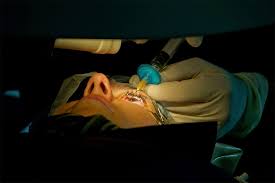
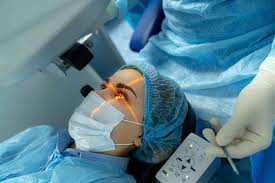
Every LASIK procedure uses a suction ring to stabilize your eye and create the corneal flap — that part is true everywhere. What actually determines your odds of a hemorrhage is where that suction ring makes contact. Systems that dock onto the conjunctiva and sclera — the tissue right where fragile surface blood vessels sit — put direct pressure on exactly the vessels most likely to burst. Systems that dock onto the cornea itself, further from that vessel network, show meaningfully lower rates in published comparisons.
This explains why your friend’s LASIK left no mark while you woke up with a bright red patch, even with similar healing otherwise — it isn’t about how careful your surgeon was, it’s largely the platform and docking method used. A history of high blood pressure or being a diabetic patient can also make surface vessels more fragile to begin with.
What Does Your Situation Actually Mean?
| What you’re seeing | What it means | Action |
|---|---|---|
| Small red patch, no pain, normal vision | ✅ Classic, harmless subconjunctival hemorrhage | None needed — it will fade on its own |
| Larger patch covering more of the white | ✅ Still harmless, just more visible | May take closer to 3–4 weeks instead of 1–2 |
| Persistent redness lasting well past a month | ⚠️ Possibly a different cause | Worth ruling out other causes of lingering redness after LASIK |
| Recurrent episodes, no trauma, especially on blood thinners | ❌ Worth a real evaluation | Mention it to your doctor — this applies whether or not you’ve had LASIK |
Source: EyeWiki clinical reference; general ophthalmology guidance on subconjunctival hemorrhage evaluation.
If you’re specifically comparing this to what happens after SMILE Pro rather than LASIK, the pattern and causes are similar enough that our page on red eye after SMILE surgery covers the procedure-specific differences.
When Should You Actually Worry?
Almost never, for a straightforward case tied to your surgery — but it helps to know exactly where the boundary sits instead of a vague “don’t worry.” A single hemorrhage right after LASIK, with no pain and no vision change, is common, self-limited, and unrelated to your visual outcome.
| Day / week | What you’ll typically see | What to expect |
|---|---|---|
| Day 1–3 | Bright red, may look more dramatic than it feels | Peak appearance — usually the most alarming point |
| Week 1–2 | Color shifts to orange or yellow-brown | Normal reabsorption pattern beginning |
| Week 2–4 | Fading to a faint tinge, then gone | Complete resolution for most cases |
| Past 4 weeks, or a new one starts | Still visibly red, or recurring | Worth mentioning to your surgeon |
Source: EyeWiki clinical reference on subconjunctival hemorrhage resolution.
The genuine exception, missing from most LASIK-specific content: if this keeps happening — not once, but repeatedly, weeks or months apart, without a trigger — that pattern is a recognized reason for a doctor to check for a bleeding tendency or, if you’re on warfarin, confirm your levels are controlled. This isn’t LASIK-specific; it’s general ophthalmology guidance for anyone with recurring hemorrhages.
What Actually Helps It Heal — And What’s Just a Myth?
Plenty of advice online suggests cold or warm compresses “speed up” reabsorption. Here’s the honest comparison against what AAO and Mayo Clinic actually recommend.
| What you’ve probably read | What the evidence actually shows |
|---|---|
| “Cold compress speeds up healing” | Not supported — a subconjunctival hemorrhage isn’t a skin bruise, and neither AAO nor Mayo Clinic recommends compresses for faster reabsorption |
| “Warm compress improves circulation to heal it faster” | Same issue — this is a common home-remedy claim, not medical guidance for this specific condition |
| “Avoid blood-thinning painkillers like aspirin unless your doctor prescribed them” | This part is accurate and genuinely worth following |
| “Use artificial tears if it feels irritated” | The one intervention actually recommended by AAO and Mayo Clinic — for comfort, not for faster healing |
Sources: American Academy of Ophthalmology; Mayo Clinic.
Beyond that, there’s nothing to actively do — avoid rubbing the eye and let it resolve on its own. For the broader healing-window routine, general post-LASIK healing guidance covers what’s actually useful day to day.
Bottom Line
A red patch after LASIK looks alarming but is rarely more than a burst surface vessel from suction — one clean hemorrhage, fading over a few weeks, zero bearing on your vision. Rest your eyes, skip blood-thinning painkillers unless your surgeon says otherwise, and reach out to your clinic only if it recurs or comes with pain or vision changes.
FAQs
Can I wear makeup to cover it while it heals?
It’s on the white of the eye, not the skin, so makeup won’t cover it — but see when eye makeup is safe again generally.
Does sneezing during LASIK cause this?
Sudden strain can briefly raise pressure in surface vessels, though the suction ring itself is the far more common cause. See what actually happens if you sneeze mid-procedure.
Should I stop wearing contact lenses because of it?
The hemorrhage itself doesn’t change your contact lens timeline — that’s governed separately by your normal pre- and post-LASIK contact lens schedule.
Is dry eye redness the same thing as this?
No — dry eye causes a diffuse, irritated look, while a subconjunctival hemorrhage is a sharply-bordered red patch from a burst vessel. See how dry eye redness differs if unsure.
Will resting my eyes help it heal faster?
It won’t speed up reabsorption, but reducing eye strain generally supports your overall recovery in the same window.
Does this happen with every LASIK platform equally?
No — rates differ by suction/docking method, from well under 20% to as high as 69% in published comparisons. Ask your surgeon which system they use.
👁️ MEDICALLY REVIEWED BY
Padmashree Dr. Vipin Buckshey
Optometrist & Laser Vision Correction Specialist | AIIMS Graduate, 1977 | Padma Shri Honouree | Official Optometrist to the President of India | Former President, Indian Optometric Association | Founder, Visual Aids Centre
A red patch on the eye after LASIK is one of the most common reasons patients call in during their first week of recovery, and reassurance backed by an actual explanation tends to help more than reassurance alone. Dr. Vipin Buckshey founded Visual Aids Centre in 1980, and in 1999 it became the first eye centre in Delhi to introduce LASIK. The centre reports over 250,000 Laser Vision Correction procedures to date. This article reflects published clinical literature on subconjunctival hemorrhage and is general information rather than medical advice — contact your surgeon directly if your hemorrhage is unusually large, recurrent, or accompanied by pain or vision changes. Read more at our story.