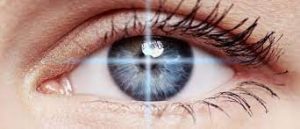
Most post-LASIK redness resolves within 2–4 weeks. Red eye persisting at 3 months is clinically meaningful — not part of normal healing. The most common cause is dry eye syndrome: LASIK severs corneal nerves during flap creation, reducing tear production for 3–6 months during nerve regeneration. But red eye at 3 months can also signal infection, inflammatory conditions, or allergic conjunctivitis — each requiring a different response. This guide explains each cause, how to tell them apart, and exactly what to do.
Key Takeaways
- Redness in the first 2–4 weeks is expected — from surgical instrumentation and conjunctival irritation. Red eye at 3 months is not part of normal LASIK recovery.
- The most common cause is dry eye syndrome — LASIK reduces corneal nerve density by approximately 50–70% at 1 month. Tear production recovers as nerves regenerate over 3–6 months, but recovery is incomplete in some patients beyond 12 months.
- Dry eye affects approximately 28–40% of LASIK patients in the early months post-surgery, with severity proportional to pre-existing dry eye status and the depth of ablation.
- Vasoconstrictor “redness-relief” drops (naphazoline, tetrahydrozoline) should NOT be used post-LASIK — they cause rebound redness and are toxic to the healing corneal epithelium.
- Red eye at 3 months accompanied by pain, discharge, or worsening vision requires same-day surgeon review — these symptoms suggest infection or serious inflammation, not dry eye.
- SMILE Pro causes less dry eye than flap-based LASIK — it preserves more corneal nerve integrity. Relevant for patients with ongoing nerve-related symptoms at 3 months.
6 Causes of Red Eye 3 Months After LASIK
Listed in approximate order of clinical frequency at the 3-month mark:
| Cause | Why It Happens After LASIK | Distinguishing Features | Urgency |
|---|---|---|---|
| Dry eye syndrome | LASIK reduces corneal nerve density by ~50–70% at 1 month; reflex tear production falls during the 3–6 month nerve regeneration period. May be incomplete beyond 12 months in some patients. | Diffuse pink redness; gritty/burning; worse with screens, wind, air con; improves with lubricating drops. No discharge, no pain. | Not urgent — but needs management. Our guide on dry eyes 2 years after LASIK explains the long-term picture. |
| Allergic conjunctivitis | Post-LASIK eyes are more sensitive to allergens; existing allergies may present more visibly during corneal recovery. | Bilateral redness; intense itching (hallmark of allergic, not dry eye); watery discharge; seasonal pattern | Not urgent unless vision affected — consult surgeon before using antihistamine drops post-LASIK |
| Episcleritis | Episcleral inflammation — idiopathic in most cases; may link to autoimmune conditions in predisposed individuals. | Sectoral (localised) redness in one segment; mild ache; no discharge; normal vision | Non-urgent — self-limiting in 2–4 weeks; NSAIDs if uncomfortable; surgeon review within 1 week |
| Subconjunctival hemorrhage | At 3 months, this is a NEW event (original surgical hemorrhage resolves in 1–2 weeks). Caused by eye rubbing, straining, or valsalva manoeuvre. | Flat bright-red patch; well-demarcated; no pain, no discharge, no vision change; alarming but usually harmless | Non-urgent unless recurrent — recurrent cases warrant blood pressure check and bleeding disorder screening |
| Late-onset infectious keratitis | Atypical (NTM) keratitis specifically has a delayed post-LASIK presentation — symptoms appear weeks to months after surgery, unlike standard bacterial keratitis which presents acutely. | Red eye + pain + photophobia + discharge + white/grey flap-interface opacity; vision deteriorating; does not improve with lubricating drops | Emergency — same-day review. Can cause severe vision loss without prompt treatment. Only prescribed antibiotic drops once infection suspected. |
| Persistent post-surgical inflammation | Prolonged low-grade inflammatory response; more likely with pre-existing inflammation or inadequate post-op steroid coverage. | Diffuse redness; correlates with stopping steroid drops; slight vision reduction; improves with topical steroids | Moderate — surgeon review in 1–3 days; may require resuming steroid drops under supervision |
LASIK Red Eye Timeline — Normal vs Concerning
| Timeframe Post-LASIK | Expected | Concerning |
|---|---|---|
| Day 1–3 | Subconjunctival hemorrhage from suction ring; conjunctival hyperemia; mild foreign body sensation | Severe pain; sudden vision loss; flap displacement signs |
| Week 1–2 | Hemorrhage fading; diffuse redness settling; mild grittiness improving with drops | DLK (granular interface haze); signs of infection (pain + discharge + photophobia) |
| Weeks 3–8 | Redness largely resolved; residual mild dryness; corneal nerves beginning to regenerate | Redness not improving; new pain or discharge; vision worsening rather than improving |
| Month 3 | Eyes white at rest; mild intermittent dryness in adverse conditions still possible | Any visible redness at rest; grittiness or burning not resolving with drops; any pain or discharge. Red eye at 3 months warrants evaluation — not reassurance. If redness persists, our guide on red eyes 6 months after LASIK covers the extended timeline. |
Dry Eye Treatment Ladder — From Drops to Advanced Options
If dry eye is confirmed, treatment escalates stepwise by severity. Most patients at 3 months are in Stage 1–2. For dry eye persisting long-term, our guide on dry eyes 10 years after LASIK covers advanced options.
| Stage | Severity | Treatment | What to Expect |
|---|---|---|---|
| Stage 1 | Mild — intermittent redness; resolves with drops; no significant daily impact | Preservative-free tears (4–6×/day); warm compresses (5 min, twice daily); 20-20-20 rule for screen use; omega-3 supplements (1,000–2,000 mg/day EPA+DHA) | Significant improvement in 4–8 weeks as tear film stabilises and nerve regeneration continues |
| Stage 2 | Moderate — persistent redness and burning most of the day; mild vision fluctuation; drops provide only temporary relief | Preservative-free drops + carbomer gels (night); punctal plugs (FDA-approved; increase tear retention); cyclosporine 0.05% (Restasis) or 0.09% (Cequa) for nerve-related inflammation | Punctal plugs: improvement in 2–4 weeks; cyclosporine: 3–6 months for full benefit |
| Stage 3 | Severe — significant daily impact; meibomian gland dysfunction (MGD) co-existing; inadequate response to Stages 1–2 | IPL therapy for MGD; serum tears (autologous); scleral lenses if corneal irregularity; systemic omega-3 under supervision | IPL: typically 4 sessions; 3–6 months to full benefit; managed as a chronic condition in severe cases |
Symptom Checker — What Does Your Red Eye Mean Right Now?
Find your symptom combination below for an immediate indication of the likely cause and next step. This is a triage guide — not a diagnosis. When in doubt, see your surgeon.
| Your Symptoms | Most Likely Cause | Urgency | What to Do First |
|---|---|---|---|
| Diffuse redness + burning/grittiness + worse on screens/wind + no pain or discharge | Dry eye syndrome (most common at 3 months) | Not urgent | Preservative-free tears 4–6×/day; follow-up if not improving in 2 weeks |
| Redness + intense itching + watery eyes + no pain | Allergic conjunctivitis | Not urgent | Avoid triggers; cold compress for itch; ask surgeon before antihistamine drops post-LASIK |
| Localised redness (one section) + mild ache + no discharge + normal vision | Episcleritis | Within 1 week | Follow-up within 1 week; typically resolves in 2–4 weeks; NSAIDs if uncomfortable |
| Flat bright-red patch under conjunctiva + no pain + normal vision | Subconjunctival hemorrhage (new event, not from original surgery) | Not urgent (first time); review if recurrent | Do not rub; resolves in 1–2 weeks; check blood pressure if recurrent |
| Redness + eye PAIN + photophobia + discharge or white spot on cornea + vision worsening | Possible infectious keratitis — including atypical (NTM) keratitis, which can present weeks to months post-LASIK | 🚨 Emergency — same day | Contact your surgeon immediately — do NOT use any drops except those prescribed; atypical keratitis requires specialist microbiological assessment and targeted antibiotic therapy |
| Redness + vision fluctuating + improved with steroid drops + worse after stopping | Persistent post-surgical inflammation; steroid-responsive condition | Within 1–3 days | Urgent surgeon review — may need to resume topical steroids; do not restart steroids independently |
Conclusion
Red eye at 3 months is not normal recovery — it signals an underlying condition. Dry eye syndrome is the most common cause at this timeframe and responds well to a structured treatment ladder. Allergic conjunctivitis and episcleritis are manageable. Infectious keratitis — particularly atypical (NTM) keratitis with its delayed post-LASIK presentation — is rare but serious; same-day review is essential if pain or discharge is present. Use the symptom checker above, and do not use vasoconstrictor redness drops post-LASIK.
Still experiencing red eye 3 months after LASIK? Book a post-LASIK review at Visual Aids Centre — comprehensive slit lamp and tear film assessment included.
Frequently Asked Questions
Is red eye normal 3 months after LASIK?
No — visible redness at rest is not part of normal LASIK recovery at 3 months. Initial redness (subconjunctival hemorrhage, conjunctival irritation) resolves within 2–4 weeks. Persistent redness at 3 months indicates an underlying condition — most commonly dry eye syndrome — requiring evaluation, not reassurance.
Most common cause of red eye 3 months after LASIK?
Dry eye syndrome from corneal nerve severance during flap creation. LASIK reduces corneal nerve density by ~50–70% at 1 month; tear production recovers as nerves regenerate over 3–6 months. Dry eye affects ~28–40% of LASIK patients in the early post-operative months.
Can I use over-the-counter redness drops after LASIK?
No — vasoconstrictor drops (naphazoline, tetrahydrozoline) cause rebound redness and are toxic to the healing corneal epithelium. Use only preservative-free artificial tears as recommended by your surgeon. If redness persists despite lubricating drops, see your surgeon.
When is red eye after LASIK an emergency?
Red eye + pain + photophobia + discharge + white/grey spot on cornea = same-day emergency. These symptoms suggest infectious keratitis — including atypical (NTM) keratitis, which can present weeks to months post-LASIK. Vision loss from keratitis can be rapid without prompt treatment. Do not wait for a scheduled appointment.
How long does dry eye last after LASIK?
Most patients see significant improvement by 6 months as corneal nerves regenerate. Some experience persistent dry eye beyond 12 months, particularly with pre-existing dry eye, high prescriptions, or incomplete nerve regeneration. With treatment (drops, punctal plugs, cyclosporine), most cases are well-managed; severe cases may need IPL therapy.
👁️ MEDICALLY REVIEWED BY
Padmashree Dr. Vipin Buckshey
BS Ophthalmology | AIIMS Graduate, 1977 | Padma Shri Honouree | Post-LASIK Recovery and Dry Eye Management Specialist, Visual Aids Centre
Corneal nerve density reduction (~50–70% at 1 month), dry eye incidence (~28–40% of LASIK patients early post-op), and nerve regeneration timeline (3–6 months; incomplete beyond 12 months in some patients) are sourced from published refractive surgery literature including Levinson et al. and subsequent corneal nerve regeneration studies. Punctal plug FDA-approval and the stepwise dry eye treatment ladder (drops → gels → punctal plugs → cyclosporine → IPL → serum tears) reflect published dry eye management guidelines. Factual correction from original page: DLK presents within days to 2 weeks of LASIK — not at 3 months. Red eye at 3 months from infection is more consistent with atypical (NTM) keratitis, which has a documented delayed post-LASIK presentation. The vasoconstrictor drop advice reflects published BAK toxicity data and naphazoline/tetrahydrozoline rebound effects. Patients at Visual Aids Centre with persistent post-LASIK redness receive comprehensive slit lamp and tear film assessment. An AIIMS alumnus, Padma Shri honouree, and former President of the Indian Optometric Association. Read more at our story.