
Dry eyes after LASIK are expected — corneal nerves are cut during flap creation, temporarily disrupting reflex tear production. For most patients this improves within 3–6 months. For some, dry eye persists at 2 years. This is not a sign LASIK has failed. It means corneal nerve recovery is incomplete, and ongoing management is needed rather than further waiting. This guide explains what is happening at 2 years, why some patients remain symptomatic, and the full range of treatment options.
Key Takeaways
- 50–75% of LASIK patients experience some dry eye in the first month; most improve by 6 months. Approximately 5–10% develop chronic dry eye persisting at 2+ years.
- Driven by incomplete corneal nerve regeneration — nerve density may remain ~50–70% of baseline, reducing the reflex arc that drives tear production.
- At 2 years, most nerve regeneration has occurred — persistent dry eye at this stage is unlikely to resolve spontaneously; active treatment needed, not further waiting.
- Artificial tears alone are often insufficient — cyclosporine, lifitegrast, punctal plugs, autologous serum drops, and scleral lenses are evidence-based escalation options.
- Dry eye at 2 years does not affect your visual correction — refractive outcome and dry eye status are clinically independent.
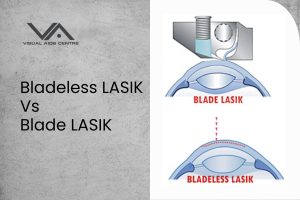
- SMILE Pro preserves significantly more corneal nerves than LASIK flap creation — lower post-operative dry eye risk for future procedures.
Why 2 Years Is a Significant Marker
The 2-year mark is approximately the outer boundary of the primary nerve regeneration window. Most corneal nerve regrowth — particularly in the sub-basal nerve plexus — occurs in the first 6–12 months post-LASIK; recovery plateaus after 12–18 months. The treatment approach then shifts to actively managing dry eye as a long-term condition. Our guide on whether corneal nerves regrow after LASIK explains the regeneration biology and timeline.
Corneal Nerve Recovery After LASIK — Stage by Stage
| Time After LASIK | Nerve Status | Dry Eye Expectation | Clinical Action |
|---|---|---|---|
| Week 1–4 | Nerve density ~50–70% below baseline; sub-basal plexus severely disrupted | Symptoms most severe; virtually all patients have some dryness; tear film unstable | Preservative-free artificial tears QID–6×/day; Lotepred taper; avoid dry environments |
| Month 1–3 | Nerve regeneration begins — sprouting from cut endings; early sub-basal plexus fibres appearing | Significant improvement for most; reflex tearing improving as nerve function partially returns | Lubricating drops; warm compresses for meibomian gland support; omega-3 supplementation |
| Month 3–12 | Primary regeneration window — by 12 months, ~60–80% of pre-operative baseline in most patients | Most patients see substantial improvement; minority still significantly symptomatic | Cyclosporine 0.05% considered for ongoing symptoms; punctal plug assessment at 6+ months if drops insufficient |
| Year 1–2 | Recovery plateauing — density may stabilise at 50–70% of baseline in incomplete regenerators | ~5–10% remain significantly symptomatic; burning, grittiness, fluctuating vision persist | Full dry eye evaluation; escalation to prescription treatments; advanced options for moderate-severe cases |
| Beyond 2 Years | Recovery largely complete — ~30–50% reduced nerve density possible indefinitely in incomplete regenerators | Dry eye unlikely to improve spontaneously; chronic management needed | Long-term management protocol; annual review; scleral lenses for severe cases |
Why Some Patients Still Have Dry Eye at 2 Years
| Risk Factor | Mechanism | Likelihood of Improvement Beyond 2 Years |
|---|---|---|
| Incomplete corneal nerve regeneration | Sub-basal plexus may never fully recover — permanently reduced sensitivity weakens the corneal-lacrimal reflex arc; less nerve stimulation = less reflex tear production | Unlikely to improve spontaneously; manage as chronic condition |
| Pre-existing undiagnosed dry eye | Subclinical dry eye before LASIK becomes apparent post-surgery; LASIK does not cause this but can unmask or amplify it | Treatable — improvement possible; underlying condition pre-dates LASIK |
| Meibomian gland dysfunction (MGD) | MGD — poor quality oily tear film layer — commonly coexists; untreated MGD prevents resolution regardless of nerve recovery | Treatable — warm compresses, IPL therapy, eyelid hygiene often significantly improve MGD symptoms even at 2+ years |
| High pre-operative myopia (deep ablation) | Deeper ablation cuts more nerve fibres; greater initial nerve damage = slower, more incomplete recovery | Reduced likelihood of full recovery — deficit more pronounced with high myopia corrections |
Treatment Options for Chronic Post-LASIK Dry Eye
For chronic dry eye at 2 years, treatment escalates beyond lubricating drops alone. Our guide on autologous serum eye drops for dry eye after LASIK explains how blood-derived growth factors support corneal nerve healing in persistent cases.
| Treatment | How It Works | Best For |
|---|---|---|
| Preservative-free artificial tears | Supplements deficient aqueous layer; stabilises tear film. Preservative-free essential for chronic use (≥4×/day) to avoid preservative toxicity | All patients; first-line; concurrent with all other treatments |
| Cyclosporine 0.05% / Lifitegrast 5% | Anti-inflammatory drops reducing T-cell mediated ocular surface inflammation that perpetuates dry eye after nerve injury. Cyclosporine: 3–6 months for full effect; lifitegrast onset slightly faster | Moderate-severe chronic dry eye; not improving on lubricating drops alone; inflammation signs on slit lamp |
| Punctal plugs | Small silicone devices in tear drainage puncta reducing tear outflow — increasing tear film volume. Reversible and safe long-term | Moderate-severe aqueous-deficient dry eye; effective combined with anti-inflammatory drops |
| Omega-3 fatty acid supplements | EPA and DHA reduce meibomian and lacrimal gland inflammation; improve TBUT (tear break-up time). Supported by meta-analyses. | All patients as a baseline supplement; particularly helpful for MGD component |
| Autologous serum eye drops | Patient’s own blood serum at 20% dilution — contains EGF, vitamin A, fibronectin, and immunoglobulins supporting corneal nerve and epithelial healing | Moderate-severe; neurotrophic component; not responding to standard prescription drops |
| Scleral lenses | Large-diameter GP lenses vaulting over the cornea, creating a constant liquid reservoir — cornea continuously bathed in saline. Our guide on scleral lenses for patients with dry eyes covers candidacy and fitting | Severe, refractory dry eye unresponsive to other treatments |
My Dry Eye at 2 Years — What to Do Now
| Your Situation | What It Means | Next Step |
|---|---|---|
| Mild dryness — manageable with lubricating drops | Adequate but incomplete nerve recovery — tear film slightly below normal; compensated by lubrication | Continue preservative-free lubricating drops. Add omega-3 supplements. Annual review. Escalate to cyclosporine if symptoms increase. |
| Moderate dry eye — drops insufficient; affecting screen use or driving | Active chronic dry eye; likely inflammatory component perpetuating the condition | Assessment for cyclosporine/lifitegrast prescription; punctal plug evaluation; MGD screening. At 2 years, do not continue waiting for spontaneous improvement. |
| Severe dry eye — persistent pain, blurred vision, significant impairment | Significant neurotrophic component; may include MGD and inflammatory dry eye simultaneously; standard treatments likely insufficient | Specialist referral for autologous serum eye drops and scleral lens evaluation. Comprehensive dry eye workup needed. |
| Fluctuating dry eye — worse in AC or wind | Environmental triggers amplifying borderline tear production deficiency; marginal nerve recovery vulnerable to challenging conditions | Humidifier; wraparound glasses outdoors; avoid fan/AC directly on face. Lubricating drops before challenging environments. Omega-3 supplements. Review if not improving within 3 months. |
Conclusion
Dry eyes at 2 years means most spontaneous nerve recovery has occurred — active long-term management is needed, not further waiting. The root cause is incomplete corneal nerve regeneration reducing the reflex arc that drives tear production. From anti-inflammatory drops and punctal plugs to autologous serum and scleral lenses, there are evidence-based options at every severity level. Dry eye at 2 years does not affect your LASIK visual correction.
Still experiencing significant dry eye 2 years after LASIK? Book a dry eye assessment at Visual Aids Centre — comprehensive tear film analysis, corneal nerve assessment, and personalised treatment plan included.
Frequently Asked Questions
Is it normal to have dry eyes 2 years after LASIK?
Uncommon but documented — ~5–10% of LASIK patients develop chronic dry eye persisting at 2+ years, reflecting incomplete sub-basal nerve plexus recovery. At 2 years, most nerve recovery has plateaued; further spontaneous improvement is unlikely without active treatment.
Will dry eyes after LASIK go away at 2 years?
For most patients, dry eye resolves within 6–12 months. Still symptomatic at 2 years? Complete spontaneous resolution is less likely — corneal nerve density may remain permanently below baseline. Prescription treatments can achieve a functional state where daily life is not significantly impaired.
What treatments work for chronic dry eye 2 years post-LASIK?
Cyclosporine 0.05% or lifitegrast 5% for inflammation; punctal plugs to retain tear volume; autologous serum eye drops for neurotrophic dry eye; scleral lenses for severe refractory cases. Omega-3 supplements and warm compresses for meibomian gland dysfunction should run alongside all treatments.
Does dry eye 2 years after LASIK affect vision?
Chronic dry eye causes fluctuating vision — blurring when the tear film is unstable, improving with blinking — not a change in your LASIK correction. Persistent severe dry eye can cause corneal surface changes affecting best-corrected visual acuity, making proactive treatment important.
Can long-term dry eyes after LASIK be prevented?
Pre-operative dry eye screening (TBUT, Schirmer’s, meibomian gland evaluation) identifies high-risk patients for pre-LASIK treatment or SMILE Pro consideration. Post-operatively, consistent lubricating drops, omega-3 supplements, and avoiding dry environments during the first 6–12 months helps optimise nerve recovery outcomes.
👁️ MEDICALLY REVIEWED BY
Padmashree Dr. Vipin Buckshey
BS Ophthalmology | AIIMS Graduate, 1977 | Padma Shri Honouree | Post-LASIK Dry Eye Specialist, Visual Aids Centre
Post-LASIK dry eye incidence (~50–75% first month; ~5–10% chronic beyond 2 years), corneal nerve density reduction (~50–70% immediately post-LASIK), sub-basal nerve plexus as the primary affected structure, primary regeneration window (6–12 months), plateau at ~50–70% of pre-operative baseline in incomplete regenerators, and 2-year clinical significance (most regeneration complete; active management required) — all reflect published confocal microscopy and nerve regeneration studies. Treatment evidence (FDA approval of cyclosporine/lifitegrast; punctal plug efficacy; autologous serum drop EGF/vitamin A/fibronectin evidence; scleral lens outcomes; omega-3 meta-analysis support) reflects published dry eye management literature. SMILE Pro’s superior nerve preservation reflects published SMILE vs LASIK nerve density comparison studies. At Visual Aids Centre, patients receive pre-operative dry eye screening, post-LASIK tear film analysis, and escalated treatment including autologous serum and scleral lens assessment where indicated. An AIIMS alumnus, Padma Shri honouree, and former President of the Indian Optometric Association. Read more at our story.