
If you sneeze during LASIK, it won’t affect your results — the laser is designed to handle exactly this. But there’s a more interesting, specific answer hiding behind this common worry: for a genuinely large share of patients, sneezing during LASIK isn’t just a random possibility, it’s a documented response to the bright light the procedure involves. This guide covers why that connection is real, what actually happens if you do sneeze, and how to plan ahead if this applies to you.
Key Takeaways
- Sneezing during LASIK does not affect your results — the laser automatically pauses and resumes precisely if you move.
- Bright light exposure genuinely triggers sneezing in a large share of the population, a documented, inherited response called the photic sneeze reflex.
- Published estimates put photic sneeze reflex prevalence between 18% and 35%, meaning it’s a common trait, not a rare quirk.
- Ophthalmic procedures involving bright light are specifically documented as a trigger for patients with this reflex.
- Telling your surgeon in advance if this applies to you is a simple, useful step, not an unusual request.
- The eye-tracking technology behind this reassurance is a deeper topic on its own, worth understanding beyond just “don’t worry.”
Why Sneezing During LASIK Is More Common Than You’d Think
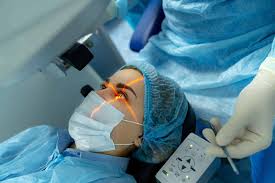
Most reassurance about sneezing during LASIK treats it as a random, unlikely event. That misses something genuinely interesting: for a specific, well-documented group of people, bright light exposure itself directly triggers sneezing. It’s called the photic sneeze reflex, sometimes referred to by the deliberately cheeky acronym ACHOO syndrome, and it’s a real, inherited, involuntary response — not a coincidence or nervous habit. LASIK involves sustained exposure to a bright fixation light and surgical microscope illumination, which is exactly the kind of stimulus documented to trigger this reflex in susceptible patients.
Common Photic Sneeze Triggers — Does This Sound Like You?
If you’ve never specifically thought about this, a quick check against common real-world triggers can help you recognise it.
| Situation | Common Photic Sneeze Trigger? |
|---|---|
| Stepping outside into bright sunlight | ✅ The most commonly reported trigger |
| Walking from a dark room into a bright one | ✅ The sudden light-intensity change is a documented trigger pattern |
| Camera flash or sudden artificial bright light | ⚠️ Reported by some, less consistently than natural sunlight |
| Eye exams involving bright instrument lighting | ✅ Specifically documented in ophthalmology literature |
If any of these sound familiar, there’s a reasonable chance the photic sneeze reflex applies to you specifically — and knowing that in advance turns “what if I sneeze” from a vague worry into a specific, plannable detail.
It’s Not Always Photic — Allergies Are a Separate Cause
Bright light isn’t the only reason someone might be more prone to sneezing on surgery day. Seasonal allergies, a lingering cold, or general nasal sensitivity are a completely separate, equally common cause, and worth distinguishing from the photic reflex specifically. If you deal with allergies regularly, it’s worth reading our dedicated guide on getting LASIK if you have allergies, since active allergy symptoms can affect more than just your likelihood of sneezing — they can influence timing and candidacy considerations your surgeon will want to discuss directly.
Verified Data: How Common Is the Photic Sneeze Reflex?
This isn’t a fringe phenomenon — published estimates put it at a meaningful share of the general population.
| Data Point | Figure | Source |
|---|---|---|
| General population prevalence | 18%–35% (commonly cited around 24–25%) | Cross-referenced peer-reviewed studies, including a large Swedish blood donor survey |
| Inheritance pattern | Autosomal dominant — roughly 50% chance if one parent has it | Genetic literature |
| Documented relevance to ophthalmic procedures | Specifically noted as a trigger during slit-lamp exams, ophthalmoscopy, and surgical microscope use | Peer-reviewed ophthalmology literature, Indian Journal of Ophthalmology |
That last row is the most directly relevant: this isn’t a general theory about light and sneezing loosely applied to LASIK — ophthalmology literature specifically documents bright procedural lighting as a recognised trigger, which is exactly the exposure LASIK involves.
Verified Data: The Genetics Behind Photic Sneeze Reflex
This isn’t just an observed pattern — the genetic basis has been independently identified and replicated across different populations, which is a genuinely strong form of scientific confirmation.
| Data Point | Finding | Source |
|---|---|---|
| Original genetic marker identified | SNP rs10427255, near the ZEB2 gene (chromosome 2) | 23andMe genome-wide association study, 5,390 participants |
| Independent replication | Same SNP confirmed in a separate population, plus a novel second locus identified | Chinese population GWAS, 3,417 participants |
| Increased odds per gene copy | 1.3x to 1.68x higher odds, depending on population studied | Both studies above |
Having the same genetic marker independently identified in two separate, unrelated population studies is a meaningfully strong form of confirmation in genetics research — it’s not a one-off finding, but a reproducible one. The leading theory for the underlying mechanism involves cross-talk between the optic nerve and a branch of the trigeminal nerve, where light-triggered signals essentially “spill over” into the nerve pathway responsible for triggering a sneeze. This is a genuinely different phenomenon from light sensitivity as a post-operative symptom — one is a sneeze-triggering reflex some people are born with, the other is a healing-related sensitivity most patients experience temporarily regardless of whether they’re photic sneezers at all.
What Actually Happens If You Sneeze, Blink, or Flinch
Modern LASIK platforms use high-speed eye-tracking technology specifically built to handle involuntary movement, sneezing included. If you sneeze, the laser detects the movement and pauses automatically, then resumes precisely where it left off once you’ve settled. This isn’t a workaround or a lucky outcome — it’s a core, expected part of how the system is designed to function. The same logic applies to related involuntary reactions: our guides on whether you can blink during LASIK and what happens if you flinch during the procedure cover the same eye-tracking safeguard applied to those specific scenarios, since sneezing is really just one example of a broader category your surgical team is prepared for. Our in-depth guide on what being awake during LASIK actually involves covers the underlying eye-tracking mechanics in far more technical detail, including exactly how fast and precisely this tracking operates, if you want the fuller picture beyond this specific scenario.
Planning Ahead If This Applies to You
If you already know bright light makes you sneeze — stepping outside on a sunny day, for instance — it’s worth mentioning to your surgeon before your procedure, not because it changes whether you’re a candidate, but because it’s simply useful context going into surgery day. This is a genuinely common enough trait that surgical teams are well accustomed to planning around it, and knowing in advance means nobody is caught off guard if it happens.
Bottom Line
Sneezing during LASIK is more common than most reassurance admits, precisely because bright light exposure is a genuine, documented trigger for a large share of the population — and it doesn’t matter either way, since the procedure’s eye-tracking technology is specifically built to handle exactly this kind of involuntary movement without affecting your outcome.
Have a specific concern about your own surgery day? Book a consultation at Visual Aids Centre — mentioning things like this directly is exactly what a pre-surgery consultation is for.
Frequently Asked Questions
What if I sneeze during LASIK?
It won’t affect your results. The laser’s eye-tracking system detects the movement, pauses automatically, and resumes precisely once you’ve settled.
Why does bright light make some people sneeze?
It’s called the photic sneeze reflex, a documented, inherited response affecting an estimated 18% to 35% of the population, triggered by sudden or sustained bright light exposure.
Is sneezing from bright light during eye procedures actually documented?
Yes. Ophthalmology literature specifically notes bright light from slit lamps, ophthalmoscopy, and surgical microscopes as a recognised trigger for patients with the photic sneeze reflex.
Should I tell my surgeon if I know I sneeze in bright light?
It’s a good idea to mention it during your consultation. It doesn’t affect your candidacy, but it’s useful context for your surgical team going into the procedure.
Is the photic sneeze reflex rare?
No, it’s fairly common — published estimates place it between 18% and 35% of the general population, making it a widely shared trait rather than an unusual condition.
Can coughing or blinking during LASIK also be handled safely?
Yes, the same eye-tracking technology accounts for other involuntary movements too, not just sneezing specifically.
👁️ MEDICALLY REVIEWED BY
Padmashree Vipin Buckshey
BS Optometry | AIIMS Graduate, 1977 | Padma Shri Honouree | Official Optometrist to the President of India | Laser Vision Correction Specialist & Founder, Visual Aids Centre
Patients are often relieved to learn there’s a genuine physiological reason behind their sneeze-prone reaction to bright light, and Vipin Buckshey’s team finds that naming the photic sneeze reflex directly, rather than dismissing the concern, tends to put nervous patients at ease faster than general reassurance alone. He founded Visual Aids Centre in 1980 — the first eye centre in Delhi to introduce LASIK surgery in 1999 — and has overseen 250,000+ Laser Vision Correction procedures across a 45-year career. The research cited in this article reflects published ophthalmology and genetics literature, not a proprietary claim. Read more at our story.