Yes — LASIK is fully accepted for IAS and all other civil services recruited through the UPSC. There is no rule in the Civil Services (Medical Examination) guidelines that disqualifies a candidate for having undergone refractive eye surgery. If your post-operative vision meets the prescribed standards and your eyes are healthy, your LASIK history will not count against you. This article walks you through the exact medical eye standards, the conditions you need to satisfy after LASIK, and how to plan your surgery timeline around the UPSC selection process.
This is one of the most persistent myths in the UPSC aspirant community — the belief that LASIK automatically disqualifies you from IAS, IPS, or IFS. It does not. The confusion likely stems from stricter defence service rules (where specific post-LASIK requirements exist for roles like fighter pilots), but the civil services medical framework is far more accommodating. What matters is your current visual acuity on the day of the medical exam, not how you achieved it.
Key Takeaways
- LASIK is permitted for IAS and all UPSC civil services — there is no disqualification for having undergone refractive surgery.
- The medical exam requires corrected or uncorrected visual acuity of 6/6 in the better eye and 6/9 in the worse eye.
- Your surgery must be at least 6 months old with stable refraction and a healthy retina at the time of the medical board examination.
- Candidates with degenerative myopia or unstable post-operative results may be declared unfit regardless of the procedure.
UPSC Civil Services Medical Eye Standards
The medical examination for IAS and allied civil services is conducted after the interview stage, and it evaluates a candidate’s overall physical fitness for government service. The eye component checks visual acuity, colour vision, field of vision, and the health of the retina and cornea.
For IAS (and most Group A civil services), the prescribed visual acuity standard is 6/6 or 6/9 in both eyes — with or without correction. This “with or without correction” clause is the key detail: it means the medical board does not care whether your 6/6 vision is natural, achieved with spectacles, achieved with contact lenses, or achieved through refractive surgery such as LASIK, SMILE, or ICL. All correction methods are explicitly accepted.
The medical board will also assess binocular vision, check for squint (which is generally acceptable for IAS unless it impairs function), and examine the retina for degenerative changes. Night blindness alone is not a ground for rejection in civil services, though it may be relevant for certain defence allocations.
Post-LASIK Requirements for IAS Candidates
While LASIK itself is permitted, you still need to satisfy a few clinical benchmarks by the time the medical board examines you. These are not arbitrary bureaucratic requirements — they exist to confirm that your surgery was successful and your vision is stable.
Minimum Healing Period
Your LASIK procedure should be at least six months old at the time of the medical examination. This ensures sufficient corneal healing and confirms that your refraction has stabilised. If you had surgery recently — say, two or three months ago — you may be asked to return for a re-examination after the six-month mark.
Stable Refraction
Your prescription should not have changed since the surgery. If there is residual refractive error or evidence of regression (power returning), the medical board may flag this. Candidates with a history of progressive myopia should ensure their prescription was genuinely stable before undergoing LASIK — our guide on prescription stability requirements covers how this is evaluated clinically.
Healthy Cornea and Retina
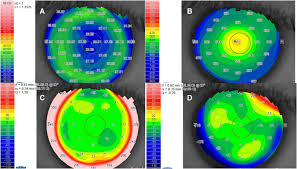
The medical board will examine your cornea for any post-surgical complications (haze, ectasia, flap issues) and your retina for degenerative changes, tears, or lattice degeneration. A normal post-operative cornea with no complications is expected. If you had high myopia before LASIK, ensure your retina has been thoroughly examined and cleared by your ophthalmologist — ideally with a dilated fundus examination and corneal topography to document your post-operative corneal health.
Documentation to Carry
Bring your pre-operative eye records (showing the original prescription), surgical summary from your LASIK centre, and at least one post-operative check-up report confirming stable vision. This documentation is not always formally required, but having it ready pre-empts any questions the medical board might raise about your surgical history.
When to Schedule LASIK Around UPSC Preparation
Timing matters more than most aspirants realise. The ideal approach is to get LASIK done well before your expected medical examination date — ideally 8–12 months in advance. This gives your eyes plenty of time to heal, your refraction to stabilise, and you to build a clean post-operative record with follow-up visits.
If you are still in the early stages of UPSC preparation (before Prelims), getting LASIK now gives you the added benefit of studying without glasses or contact lenses — many aspirants report reduced eye strain and headaches after surgery, especially during long reading sessions. If you are curious about how age factors into your decision, our article on the best age for LASIK covers the 20–30 age bracket that most UPSC aspirants fall into.
Avoid scheduling LASIK too close to the interview or medical exam. If complications arise — even minor ones like prolonged dryness or slow visual recovery — you do not want them coinciding with the most critical stage of your selection process.
Which LASIK Procedure Is Best for UPSC Aspirants?
All FDA-approved refractive procedures — standard LASIK, Femto LASIK, Contoura Vision, SMILE, and SMILE Pro — are accepted by the UPSC medical board. The board does not distinguish between procedure types; it only evaluates your final visual acuity and eye health.
That said, your choice of procedure should be guided by your prescription, corneal thickness, and lifestyle. Contoura Vision offers topography-guided precision that can deliver particularly sharp post-operative acuity — useful if you want to confidently clear the 6/6 benchmark. SMILE and SMILE Pro are flapless, which means no flap-related complications for the medical board to detect. For a detailed comparison, our guide on choosing the right procedure helps you match your eye profile to the ideal technology.
At Visual Aids Centre, we have evaluated hundreds of civil services aspirants and government job candidates. The procedure recommendation is always based on your corneal anatomy and refractive error — not on which exam you are preparing for.
What Can Actually Disqualify You?
LASIK itself is not a disqualifying factor, but certain underlying eye conditions can be — whether or not you have had surgery. Conditions that may result in a “unfit” declaration include degenerative myopia with macular changes (even if corrected by LASIK), active corneal disease or ectasia, retinal detachment or significant lattice degeneration, and any condition causing visual field defects.
The critical distinction: it is not the surgery that disqualifies you — it is the underlying disease. A candidate with –3.00 myopia who gets LASIK and achieves stable 6/6 vision with a healthy cornea and retina is fully fit. A candidate with –12.00 degenerative myopia whose retina shows macular degeneration may be declared unfit regardless of whether they had LASIK or not. If you are in the higher myopia range and concerned about your candidacy, our article on LASIK eligibility for IPS discusses how the stricter IPS visual standards compare — and even those allow LASIK.
LASIK Rules for IPS, IFS, and Allied Services
Different services recruited through UPSC have slightly different visual standards. IPS candidates face stricter requirements than IAS — they need higher uncorrected acuity standards and must meet colour vision thresholds. However, even IPS explicitly permits LASIK-corrected vision, provided the six-month healing period and stable refraction criteria are met.
For candidates targeting defence-adjacent services through UPSC (such as the Indian Police Service or Indian Revenue Service), the same principle applies: the board evaluates your current visual function, not your surgical history. If you are also considering the Combined Defence Services pathway, our article on LASIK acceptance in CDS covers the defence-specific nuances. And for candidates preparing specifically for the UPSC medical exam overall, we have a dedicated guide that covers every service allocation.
Conclusion
LASIK is unambiguously allowed for IAS and all UPSC civil services. The medical board evaluates your visual acuity and eye health — not whether you wore glasses in the past or had surgery to correct your vision. Plan your LASIK at least 6–8 months before your expected medical exam, choose a procedure suited to your corneal anatomy, and maintain clear documentation of your surgical history. To get a personalised assessment of your eligibility and procedure options, book a consultation at Visual Aids Centre — we have guided hundreds of UPSC aspirants through the process with zero medical board rejections.
Frequently Asked Questions (FAQs)
Will the UPSC medical board know I had LASIK?
A trained ophthalmologist on the medical board can detect signs of previous refractive surgery during a slit-lamp examination. This is not a problem — LASIK is permitted, so detection does not lead to disqualification.
How soon before the IAS medical exam should I get LASIK?
At least 6 months before the medical examination. Ideally, plan for 8–12 months to allow complete stabilisation and build a post-operative follow-up record.
Can I get LASIK during my UPSC preparation?
Yes. Most LASIK patients return to reading within 24–48 hours. The surgery itself takes minutes and does not require significant downtime from study.
Is SMILE or Contoura Vision also accepted for IAS?
Yes. The UPSC medical board accepts all approved refractive procedures — LASIK, Femto LASIK, Contoura Vision, SMILE, SMILE Pro, and ICL. Only your final visual acuity matters.
What vision standard do I need for IAS?
You need corrected or uncorrected visual acuity of 6/6 in the better eye and 6/9 in the worse eye, with no degenerative retinal changes or active corneal disease.
👁️ MEDICALLY REVIEWED BY
Padmashree Dr. Vipin Buckshey
Optometrist & Government Service Vision Specialist | AIIMS Graduate, 1977 | Padma Shri Honouree
With more than four decades of clinical experience and over 250,000 laser vision correction procedures supervised at Visual Aids Centre, Dr. Vipin Buckshey has evaluated and treated hundreds of UPSC, SSC, and defence service aspirants — ensuring each candidate meets the visual acuity benchmarks required by their target service. An AIIMS alumnus, former President of the Indian Optometric Association, and official optometrist to the President of India, Dr. Buckshey personally reviews complex candidacy cases where high myopia, borderline corneal thickness, or retinal concerns require careful surgical planning. Learn more about our centre’s legacy.