Yes — candidates who have undergone LASIK are eligible for commissioning through AFCAT across all branches of the Indian Air Force, including flying duties. But that eligibility comes with specific conditions regarding your pre-surgery prescription, post-operative corneal thickness, and the time gap between your procedure and the medical examination.
If you are preparing for the Air Force Common Admission Test and have a refractive error, LASIK can remove the barrier — provided you meet the IAF’s medical criteria precisely. This guide breaks down the exact vision standards the Air Force applies to LASIK candidates, the disqualifying factors you need to know about, the optimal surgery timeline for AFCAT aspirants, and the procedure options that align best with defence requirements. If you are also considering other branches of the armed forces, our guide on LASIK eligibility for the Indian Air Force covers the broader military context.
Key Takeaways
- LASIK is accepted for all AFCAT branches — flying, ground duty (technical), and ground duty (non-technical).
- Pre-surgery refractive error must not exceed ±6.0 dioptres; surgery must be performed after age 20.
- A minimum 12-month gap between surgery and the IAF medical examination is mandatory.
- Post-operative corneal thickness must be ≥450 microns; axial length must be ≤26 mm.
- Radial keratotomy (RK) is not accepted — only modern procedures like Femto LASIK, Contoura Vision, and SMILE Pro qualify.
AFCAT Vision Standards for LASIK Candidates
The Indian Air Force’s medical standards are among the most stringent in the country — and for good reason. Pilots and air crew operate in environments where split-second visual decisions determine mission success and personal safety. For flying branch candidates, the uncorrected distant vision requirement is 6/6 in each eye. Ground duty branches allow some correctable refractive error, but the standards remain demanding.
The IAF officially recognises keratorefractive surgeries — including LASIK, PRK, and lenticule extraction — as acceptable methods for meeting these vision benchmarks. This means that a candidate with myopia or astigmatism who was previously ineligible can now qualify after successful laser vision correction, provided every post-operative parameter falls within the specified range. The acceptance of LASIK reflects the procedure’s established safety profile and the consistency of outcomes with modern platforms. For context on what the pre-operative evaluation involves, we have a detailed guide covering every diagnostic step.
The Exact Eligibility Criteria You Must Meet
Pre-Surgery Refractive Error Limit
Your spectacle power before LASIK must not have exceeded ±6.0 dioptres (sphere or cylinder). Candidates who had a prescription above this threshold — even if their post-operative vision is now 6/6 — are disqualified. This limit exists because higher corrections require more corneal tissue removal, which the IAF considers a structural risk factor for duties involving pressure changes and G-forces. If you are unsure whether your prescription falls within the treatable range, our article on the power limit for LASIK surgery explains where the boundaries are.
Minimum Age and Surgery Timeline
LASIK must not have been performed before the candidate turned 20 years of age. Additionally, at least 12 months must have elapsed between the surgery date and the IAF medical board examination. This waiting period ensures that your cornea has fully stabilised and any transient post-operative changes — fluctuating refraction, residual dryness, or mild haze — have resolved completely. Rushing surgery to meet a deadline can backfire if healing is still in progress during the medical.
Post-Operative Corneal and Ocular Measurements
The IAF medical board will verify two specific measurements. First, your corneal thickness after surgery must be at least 450 microns — this confirms that adequate stromal tissue remains to withstand the physical demands of flying. Second, the axial length of each eye must be 26 mm or less, ruling out candidates with pathologically elongated eyeballs (a marker for progressive high myopia that may regress after correction).
Residual Refraction
For branches that accept correctable errors, post-surgery residual refraction must not exceed ±1.0 dioptre (sphere or cylinder). For the flying branch, the expectation is essentially zero residual error — 6/6 unaided vision in both eyes.
When Should You Get LASIK Before AFCAT?
Timing is everything for defence aspirants. The ideal approach is to have LASIK at least 15–18 months before your anticipated IAF medical board date. This gives you the mandatory 12-month stabilisation window plus a comfortable buffer for any follow-up appointments, minor prescription adjustments, or dry eye management that may be needed.
If you are currently in your final year of graduation and planning to appear for AFCAT immediately after, work backwards from the exam cycle. Most AFCAT aspirants find it optimal to have surgery during their third year of college, when their prescription has been stable for at least a year and they are past the minimum age of 20. Your surgeon at Visual Aids Centre can help you plan the exact timeline based on your AFCAT target date and prescription stability history.
Which Laser Procedure Is Best for Defence Aspirants?
The IAF accepts all modern keratorefractive procedures — but not all procedures are equally suited to candidates who will face high-G environments, ejection seat forces, and rapid pressure changes at altitude.
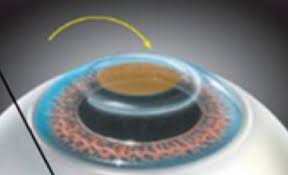
Femto LASIK is the most widely performed option and delivers excellent visual outcomes within 24 hours. However, it involves a corneal flap, which — while extremely safe in civilian life — raises theoretical concerns about flap integrity under extreme physical forces.
SMILE Pro is increasingly popular among defence aspirants because it is entirely flapless. The VisuMax 800 laser creates a small lenticule inside the intact cornea and extracts it through a 2–4 mm keyhole incision, preserving significantly more corneal biomechanical strength than flap-based procedures. For pilots and para-military personnel, this structural advantage is meaningful.
Contoura Vision offers topography-guided precision that maps 22,000 elevation points on the cornea, delivering what many surgeons consider the sharpest possible visual acuity — a real advantage when your career depends on visual performance in demanding conditions.
Your surgeon will recommend the best option based on your corneal anatomy, prescription, and the specific branch you are targeting.
What Will Disqualify You?
Certain conditions result in automatic disqualification, regardless of how well your surgery went. Radial keratotomy (RK) — an older procedure that makes radial incisions in the cornea — is not accepted under any circumstance. Previous cataract surgery also disqualifies candidates from flying duties. A pre-surgery refractive error exceeding ±6.0 dioptres is grounds for rejection even with perfect post-operative acuity.
Beyond the surgery itself, the IAF medical board checks for conditions that could compromise long-term visual stability: signs of post-LASIK ectasia, abnormal corneal topography patterns, evidence of retinal pathology in highly myopic eyes, and unresolved dry eye that affects visual quality. Ensuring your pre-operative evaluation is thorough enough to rule out these risk factors before you ever enter the operating room is the best way to avoid problems at the medical board later. This is why your initial consultation matters as much as the surgery itself.
How to Prepare for the IAF Medical After LASIK
Preparation begins long before you sit in front of the medical board. Keep every piece of documentation from your LASIK journey — the pre-operative refraction records, corneal topography and pachymetry maps, the surgical report, and all post-operative follow-up notes at one week, one month, three months, six months, and twelve months. The IAF board may ask for any or all of these.
In the months before your medical, maintain your eye health diligently. Continue using lubricating drops if your surgeon has recommended them, attend your scheduled follow-up appointments, and avoid any activity that could compromise your cornea — no rubbing, no swimming without goggles, and no skipping your UV protection outdoors. If you had your surgery at Visual Aids Centre, our team provides a comprehensive post-operative documentation package specifically designed for candidates appearing before armed forces medical boards.
Conclusion
LASIK is fully accepted for AFCAT candidates across all three branches — flying, ground duty (technical), and ground duty (non-technical). The key requirements are a pre-surgery prescription within ±6.0 dioptres, surgery after age 20, a minimum 12-month gap before the medical board, post-operative corneal thickness of at least 450 microns, and axial length within 26 mm. Modern procedures like SMILE Pro and Contoura Vision offer both the visual outcomes and structural integrity that defence careers demand. The most important step is getting your surgery done early enough, at a centre with documented experience in preparing defence candidates, so your cornea is fully stabilised and your paperwork is complete when the medical board comes. If you are an AFCAT aspirant with a refractive error, book a consultation at Visual Aids Centre — we will map out a surgery and recovery timeline aligned precisely with your exam schedule.
Frequently Asked Questions (FAQs)
Is LASIK accepted for the AFCAT flying branch?
Yes. Candidates who have undergone LASIK can apply for the flying branch, provided the pre-surgery power was within ±6D, surgery was done after age 20, and at least 12 months have passed before the medical board.
What is the minimum corneal thickness required after LASIK for AFCAT?
Post-operative corneal thickness must be at least 450 microns. This is verified during the IAF medical examination using pachymetry.
How long before the AFCAT medical should I get LASIK?
At least 12 months before your medical board date. We recommend 15–18 months to allow a comfortable buffer for complete stabilisation and documentation.
Is SMILE Pro better than LASIK for defence candidates?
SMILE Pro’s flapless design preserves more corneal strength, which is advantageous for roles involving high-G forces and ejection scenarios. Both are accepted, but SMILE Pro offers a structural edge for flying branch aspirants.
Can I join the Air Force if my power was above 6 dioptres before LASIK?
No. Candidates with pre-surgery refractive error exceeding ±6.0 dioptres are disqualified, even if post-operative vision is 6/6.
Is radial keratotomy (RK) accepted for AFCAT?
No. RK is explicitly disqualified. Only modern procedures — LASIK, PRK, SMILE, and their variants — are accepted by the IAF.
👁️ MEDICALLY REVIEWED BY
Padmashree Dr. Vipin Buckshey
Optometrist & Defence Vision Assessment Specialist | AIIMS Graduate, 1977 | Padma Shri Honouree
With more than four decades of clinical experience and over 250,000 laser vision correction procedures performed at Visual Aids Centre, Dr. Vipin Buckshey has guided thousands of defence aspirants — including AFCAT, NDA, CDS, and SSC candidates — through the refractive surgery process, ensuring their post-operative parameters meet armed forces medical board requirements. An AIIMS alumnus, former President of the Indian Optometric Association, and official optometrist to the President of India, Dr. Buckshey personally evaluates defence candidates at the centre to recommend the procedure and timeline best suited to their specific branch and examination schedule. Learn more about our team and legacy.