
You have booked your LASIK surgery date, sorted your post-operative drops, and arranged a lift home from the clinic. Then a simple, practical question surfaces: can you wear your earrings? It sounds like a minor detail — and in the grand scheme of a procedure that permanently corrects your vision, it is. But it is also one of those details that surgical teams consistently have to address on the day, usually because nobody told the patient clearly beforehand.
This guide from Visual Aids Centre answers the earrings question directly, explains the clinical logic behind the day-of dress code, and gives you a complete pre-operative checklist so you arrive at your LASIK appointment prepared — without having to remove a stud at the front desk.
Key Takeaways
- No jewellery of any kind — earrings, rings, necklaces, bracelets — should be worn to your LASIK surgery appointment. Leave it all at home rather than removing it at the clinic.
- The restriction on jewellery is not arbitrary. It relates to infection control, equipment safety, and the ability of surgical staff to position and monitor you without physical interference.
- Makeup, perfume, cologne, lotions, and hairsprays must also be avoided on surgery day — particularly around the eye and face area.
- Wear clean, comfortable, preferably button-up clothing. Avoid anything that needs to be pulled over your head after surgery.
- These restrictions apply to surgery day only. Once your post-operative check confirms safe healing, normal personal items are progressively permitted again.
Can You Wear Earrings During LASIK Surgery? The Direct Answer
No. Do not wear earrings — or any other jewellery — to your LASIK surgery appointment. This applies to all jewellery: stud earrings, hoops, rings, necklaces, bracelets, bangles, anklets, and facial piercings. The instruction is consistent across every reputable LASIK centre, and the reason behind it is more substantive than you might expect.
If you wear jewellery habitually and are concerned about leaving a piercing unattended, the safest approach is to remove everything the night before your surgery and store it securely at home. Removing jewellery at the clinic immediately before surgery — while it works — introduces a brief moment of handling that is better avoided in the pre-operative setting.
Why No Jewellery — The Clinical Reasoning
The prohibition on jewellery during LASIK surgery is not a stylistic preference. It is a clinical protocol grounded in three specific concerns.
Infection Control
The LASIK surgical environment is a controlled-sterile zone. Jewellery — particularly rings and bracelets — accumulates bacteria in the settings and crevices around stones and metal joints. In a procedure where the corneal surface is briefly open to the environment, minimising bacterial load in the immediate vicinity of the patient is a basic infection control measure. Earrings present a lower direct risk than hand jewellery, but maintaining a consistent no-jewellery protocol eliminates the need for case-by-case decisions.
Equipment and Positioning
During LASIK, your head is positioned precisely beneath the laser system using a chin rest and head restraint. Earrings — particularly large hoops or dangling styles — can press against the head restraint or catch on positioning equipment, creating discomfort or interrupting the precise positioning needed for accurate laser delivery. Even small studs can cause a minor positioning issue if they press against a cushioned headrest.
Emergency Protocol Simplicity
In the unlikely event of any complication requiring rapid repositioning of the patient, jewellery-free preparation removes one more variable from a situation that needs to move quickly. Operating teams standardise preparation protocols partly so that emergency responses are not slowed by avoidable items that need to be removed under pressure.
For the complete list of what to avoid in the days and hours leading up to surgery — not just on surgery day — our guide on what not to do before LASIK surgery covers every pre-operative restriction with clinical context. And for a full positive preparation guide, our resource on how to prepare for LASIK surgery maps out everything to do before your procedure date.
Full Day-of LASIK: What Not to Wear or Use?
Jewellery is only one item on the surgery-day restriction list. Arriving prepared means knowing the full picture.
Makeup and Eye Products
No eye makeup of any kind — mascara, eyeliner, eyeshadow, kajal — on the day of surgery. Eye makeup particles can contaminate the eye surface during the procedure and increase infection risk. Face makeup (foundation, powder, blush) should also be avoided, particularly anything that produces fine particles that could drift toward the eye during surgery.
Perfume, Cologne, and Body Sprays
Fragrance products contain aerosol compounds that can interfere with the laser equipment’s calibration. The WaveLight laser used in advanced LASIK systems is calibrated for a clean ambient environment — strong volatile compounds in the air near the laser can affect performance. This is one of the less intuitive restrictions, but it is clinically meaningful.
Lotions, Creams, and Skincare Products
Heavy moisturisers, sunscreens, or skincare products applied to the face and neck area should be avoided on surgery morning. Clean, bare skin around the eye area is the target. Basic soap-and-water face washing is fine.
Hairsprays and Styling Products
Hairspray in particular can drift toward the eye and create a film on the ocular surface. Wash your hair the night before or on the morning of surgery, and leave it unstyled or tied back without product.
Contact Lenses
If you wear soft contact lenses, these must be removed for a specified period before your pre-operative assessment — typically a minimum of two weeks for extended wear lenses. On surgery day itself, arrive without contact lenses in place.
What You Should Wear to Your LASIK Surgery?
The positive version of the dress code is straightforward: clean, comfortable, practical clothing that does not require you to pull anything over your head after the procedure.
- Top: A button-up shirt, zip-up hoodie, or anything with a front opening. Pulling a tight jumper or T-shirt over your head immediately post-surgery — when your eyes are protected by shields and drops are still settling — is awkward and avoidable.
- Lower half: Whatever is comfortable for a clinic visit. No restrictions apply below the waist.
- Footwear: Practical and easy to walk in. You will likely be resting for a short period after the procedure before being discharged.
- Sunglasses: Bring a pair of wrap-around UV-blocking sunglasses to wear on the way home. Light sensitivity is one of the most consistent immediate post-operative experiences, and outdoor light on the drive or walk home is uncomfortable without protection.
Understanding what happens at each stage of the LASIK eye surgery procedure helps explain why these preparation requirements exist and what the surgical team needs from you during the procedure itself.
What LASIK Surgery Actually Involves on the Day?
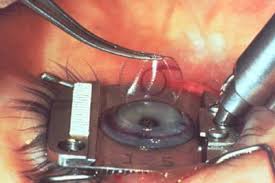
LASIK (Laser-Assisted In Situ Keratomileusis) reshapes the cornea to correct how it focuses light onto the retina — permanently correcting myopia, hyperopia, and astigmatism without glasses or contact lenses. On surgery day, a femtosecond laser creates a thin hinged corneal flap, which is lifted to expose the stromal tissue beneath. An excimer laser then removes a precise volume of stromal tissue according to your personalised treatment plan, and the flap is repositioned. The entire treatment phase takes under 15 minutes for both eyes combined.
The procedure is performed under topical anaesthetic drops — no injections, no sedation, and no general anaesthesia. You remain awake and cooperative throughout. This is partly why preparation protocols — including the no-jewellery, no-makeup rules — matter: a calm, properly prepared patient who is physically and psychologically ready for the experience produces better outcomes than one who is surprised by the environment or physically uncomfortable from restrictive clothing or jewellery.
Who Is Eligible for LASIK?
LASIK eligibility depends on several clinical factors — not simply whether you wear glasses. The most commonly evaluated criteria include:
- Age: most surgeons recommend a minimum of 18–21 years, with prescription stability as the key underlying requirement rather than age alone
- Stable prescription for at least 12 consecutive months
- Adequate corneal thickness to safely accommodate flap creation and ablation
- No active corneal disease, keratoconus, or significant dry eye
- No systemic health conditions that significantly impair wound healing
Our dedicated resource on LASIK surgery age limits explains the age and prescription stability requirements in clinical detail — useful reading for anyone who is younger or whose prescription has been changing recently.
What Vision Problems Does LASIK Correct?
LASIK works by correcting refractive errors — conditions where the shape of the cornea causes light to focus incorrectly. The three primary conditions it addresses are:
- Myopia (nearsightedness): Light focuses in front of the retina, causing distant objects to appear blurred. LASIK flattens the cornea to move the focus point back onto the retina. Our guide specifically on LASIK for myopia covers the prescription range treatable and what outcomes to expect.
- Hyperopia (farsightedness): Light focuses behind the retina, making near objects blurred. LASIK steepens the cornea to bring the focus point forward.
- Astigmatism: An irregular corneal shape causes light to focus at multiple points, producing blurred or distorted vision at all distances. LASIK reshapes the cornea to a more regular geometry.
LASIK does not treat presbyopia (age-related near focus loss) or conditions unrelated to corneal shape — such as cataracts, glaucoma, or retinal disease. And as the original article correctly notes, LASIK also cannot treat migraines, which are a neurological rather than a refractive condition. If you are exploring the full cost picture of LASIK before deciding, our resource on LASIK eye surgery cost in Delhi gives a transparent breakdown of what the investment involves.
Conclusion
The earrings question has a simple answer — no — but the reasoning behind it sits within a broader pre-operative preparation framework that genuinely affects your surgery day experience and outcome. No jewellery, no makeup, no fragrance, no contact lenses, and comfortable button-up clothing: these are not arbitrary rules. They are the practical conditions under which a LASIK surgical team can work efficiently and safely on your behalf.
If you are at the stage of planning your LASIK surgery and want to understand exactly what the full process involves — from pre-operative assessment through to recovery — book a consultation at Visual Aids Centre and get a personalised pre-operative briefing from our surgical team.
Frequently Asked Questions (FAQs)
Can I wear stud earrings to LASIK surgery?
No. All jewellery — including small studs — should be left at home on LASIK surgery day. Remove everything the night before rather than at the clinic to avoid any last-minute handling.
Can I wear makeup to my LASIK surgery appointment?
No. Eye makeup must not be worn on surgery day — mascara, eyeliner, eyeshadow, and kajal all present infection and contamination risk. Face makeup should also be avoided, particularly anything that produces fine particles near the eye area.
Why can’t I wear perfume to LASIK surgery?
Perfume and aerosol fragrance products release volatile compounds that can interfere with laser equipment calibration. The surgical environment requires clean ambient air, and strong scents near the laser affect performance parameters.
What should I wear to LASIK surgery?
Clean, comfortable clothing with a front opening — button-up shirt or zip-up top — so you do not need to pull anything over your head post-procedure. Bring wrap-around sunglasses for the journey home.
Can I wash my hair before LASIK surgery?
Yes, and it is recommended. Wash your hair on the morning of surgery without styling products or hairspray. Tie it back away from the face. Hairspray in particular must be avoided as it can drift toward the eye surface.
How soon after LASIK can I wear jewellery and makeup again?
Most surgeons permit jewellery from the day after surgery once you are no longer in the immediate post-operative phase. Eye makeup typically requires a longer wait — usually one to two weeks — to avoid contamination of the healing corneal surface. Your surgeon will confirm specific timelines at your post-operative review.
👁️ MEDICALLY REVIEWED BY
Padmashree Dr. Vipin Buckshey
BS Ophthalmology | AIIMS Graduate, 1977 | Padma Shri Honouree | Patient Preparation Specialist, Visual Aids Centre
In Dr. Vipin Buckshey’s experience, the questions patients ask about what to wear, what to bring, and what to avoid on surgery day reflect a genuine desire to be good participants in their own care — and patients who arrive well-prepared have measurably better procedure experiences than those who encounter the preparation requirements for the first time at the clinic. At Visual Aids Centre, pre-operative briefing is treated as a clinical responsibility rather than an administrative step — because a prepared patient is also a calmer patient, and a calmer patient produces better outcomes. The practical guidance in this article reflects decades of pre-operative counselling across more than 250,000 laser vision correction procedures. An AIIMS alumnus, Padma Shri honouree, and former President of the Indian Optometric Association. Learn more about the team at our story.