The most practical question any laser eye surgery patient can ask is not “how good will my vision be?” but “how long will it stay that way?” A procedure that delivers 6/5 vision for three years and then begins to drift is a fundamentally different proposition from one that maintains its correction for decades. Wavelight Plus InnovEyes is designed for the second category — but understanding exactly why, and where the honest limits lie, is what this guide is about.
This article from Visual Aids Centre walks you through the clinical evidence on result longevity after Wavelight Plus InnovEyes — what makes the correction stable, which factors influence how long it holds, what natural processes the procedure cannot prevent, and what the healing period realistically looks like before stability is achieved.
Key Takeaways
- The corneal reshaping achieved by Wavelight Plus InnovEyes is permanent — the ablated tissue does not regenerate, and the structural correction does not reverse.
- Wavelight Plus InnovEyes uniquely accounts for future epithelial remodelling in its ablation profile — one of the few laser systems to incorporate this predictive element into the treatment plan.
- Vision stabilises for most patients within three to six months of surgery; this is not regression but the cornea completing its healing response.
- Mild regression at the upper end of the prescription range can occur in a small minority of patients, as with all laser refractive procedures.
- Wavelight Plus InnovEyes does not prevent presbyopia or cataracts — these are age-related biological processes that occur independently of corneal laser correction.
Is the Correction Permanent? Understanding Corneal Reshaping
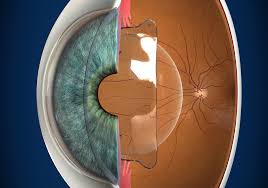
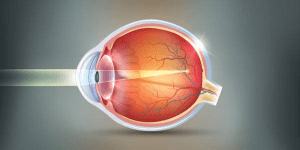
Wavelight Plus InnovEyes works by permanently reshaping the cornea — removing a precise volume of stromal tissue to change how the corneal surface focuses light onto the retina. The tissue that is removed does not grow back. The structural change made to your cornea on the day of surgery is an architectural change, not a chemical or pharmacological one. In that specific sense, the correction is permanent.
What “permanent” does not mean is “unchanged for life regardless of what happens to the rest of the eye.” The cornea is living tissue that continues to respond to biological stimuli — hydration levels, inflammation, pressure, and cellular activity — throughout your lifetime. The correction itself holds, but the optical environment around it continues to evolve. Understanding this distinction is what separates realistic expectations from disappointment five or ten years post-surgery.
The Wavelight Plus InnovEyes system is specifically designed to address this challenge through a suite of features that distinguish it from standard LASIK. Our overview of the key features of Wavelight Plus InnovEyes explains how AI-driven planning, ray tracing, and the 3D eyevatar model work together to build a correction that accounts for the eye’s evolving optical behaviour — not just its current state.
The Epithelial Prediction Factor — What Makes Wavelight Plus InnovEyes Unique
The corneal epithelium — the outermost cellular layer — is constantly renewing itself. After laser surgery, it undergoes a process called epithelial remodelling: the cells redistribute themselves across the reshaped stromal surface, and this redistribution can subtly alter the optical properties of the corneal surface over the months and years following surgery. In standard laser procedures, this is one of the primary mechanisms behind mild regression — the prescription appears to shift slightly back toward its pre-operative level as the epithelium fills in the ablation profile.
Wavelight Plus InnovEyes incorporates a predictive algorithm that anticipates this epithelial redistribution and compensates for it in the initial ablation profile. Rather than creating the “ideal” correction for today’s cornea, the system creates the ablation that will produce the ideal optical result after the predictable component of epithelial remodelling has occurred. This predictive component is one of the most clinically meaningful distinctions between Wavelight Plus InnovEyes and standard LASIK — and it is the primary reason the procedure’s regression rate is lower than population averages for comparable prescriptions.
The AI system driving this calculation is the same one that automates prescription correction. Our page on how Wavelight Plus InnovEyes uses AI to correct specs power explains the mechanism in detail — particularly how automated data pathways reduce the human variability that traditionally introduced imprecision into long-term outcome prediction.
Factors That Influence How Long Results Remain Stable
While the structural correction is permanent and the epithelial prediction reduces regression, several patient-specific factors influence the real-world stability of the result over time.
Prescription Level at Surgery
Patients with higher pre-operative prescriptions — particularly myopia above -6.00 D — experience slightly higher regression rates than moderate myopes, as with all laser procedures. Greater tissue removal creates a larger epithelial remodelling response, and even with predictive compensation, the regression component at the upper end of the treatment range is measurably higher than for mild to moderate corrections. The accuracy data across the procedure’s prescription range is covered in our clinical resource on the accuracy rate of Wavelight Plus InnovEyes in correcting specs power.
Pre-Operative Prescription Stability
Patients whose prescriptions were fully stable for at least 12 months before surgery consistently show better long-term stability than those who were on the borderline of the stability criterion. This is the strongest patient-controlled factor in long-term outcome durability. If the underlying refractive error was still changing at the time of surgery, the correction addresses a prescription that was never the endpoint — and some drift is predictable.
Post-Operative Habits and Follow-Up Compliance
Eye rubbing after surgery creates mechanical stress on the healing flap and the corneal stroma beneath it, potentially accelerating epithelial remodelling in ways that diverge from the predicted profile. UV exposure without adequate protection can affect corneal tissue quality over years. And skipping follow-up appointments means that early changes in visual quality — which are often highly treatable when caught promptly — go undetected until they are more entrenched. These are entirely patient-controllable variables.
The Healing Period — What Happens Before Stability Is Achieved
The permanence of the structural correction does not mean vision is immediately stable after surgery. The cornea, like any biological tissue that has undergone surgical intervention, requires a healing window before its optical properties settle into a consistent state. For most Wavelight Plus InnovEyes patients, this window is three to six months — with many patients experiencing functional, clear vision within days of surgery but finding that the full and stable correction is not confirmed until the three-month review.
During the healing period, patients typically experience some fluctuation — vision that varies between morning and evening, between high-humidity and low-humidity environments, or between long screen days and rested eyes. This is not regression. It is the tear film and epithelium completing their adaptation to the new corneal geometry, and it follows a consistent arc toward stability rather than a progressive deterioration.
Managing this period well significantly influences the final outcome. Our detailed guide on the recovery time after Wavelight Plus InnovEyes maps the week-by-week progression of the healing arc — including what normal fluctuation looks like at each stage, when to expect clarity to consolidate, and what symptoms would warrant a call to your surgeon rather than patient reassurance.
Natural Ageing — What the Procedure Cannot Change
Two age-related changes consistently cause patients to incorrectly attribute natural biological ageing to laser surgery regression — and understanding the distinction matters for managing long-term expectations honestly.
Presbyopia
Presbyopia is the gradual loss of near-focus ability that develops in virtually everyone from their mid-forties onward. It is caused by stiffening of the crystalline lens — the internal lens of the eye — not by any change in the corneal correction. Wavelight Plus InnovEyes reshapes the cornea; it does not affect the lens. A patient who had their distance correction treated at 35 and develops presbyopia at 47 has not experienced regression — they have experienced a separate, inevitable biological process. Our page on whether Wavelight Plus InnovEyes can correct presbyopia explains this distinction precisely and addresses what options exist for patients managing both distance correction and near-vision loss simultaneously.
Cataracts
Cataract development — clouding of the crystalline lens — is another age-related change that is entirely independent of corneal laser correction. Patients who develop cataracts after Wavelight Plus InnovEyes will need cataract surgery, which involves replacing the clouded lens with an artificial one. This surgery accounts for the fact that the patient has had prior corneal laser surgery when selecting lens power — making accurate pre-operative documentation of the Wavelight Plus InnovEyes procedure clinically important for future cataract surgeons.
Flap-Based Limitations and Long-Term Considerations
Wavelight Plus InnovEyes is a flap-based procedure. A thin flap of corneal tissue is created, the ablation is performed beneath it, and the flap is repositioned. This flap never fully fuses with the surrounding corneal tissue with the biomechanical integrity of uncut tissue — it is held in position by natural adhesion. For most patients in normal daily life, this creates no practical vulnerability. But two categories of patients deserve specific long-term consideration.
First, patients in occupations or sports with elevated eye trauma risk face a theoretical long-term flap displacement vulnerability that does not exist after flapless procedures. Second, patients with significant pre-existing dry eye find that the corneal nerve disruption from flap creation tends to prolong dry eye symptoms more than flapless alternatives. For a complete clinical picture of every long-term risk category, our guide to the risks and side effects of Wavelight Plus InnovEyes covers each category with clinical detail.
For patients whose lifestyle, corneal anatomy, or dry eye history makes the flap architecture a concern, a comparison of the flapless alternative is a genuinely useful next step. Our guide on Wavelight Plus InnovEyes versus SMILE Pro gives a direct, evidence-based comparison of how both procedures compare on longevity, dry eye risk, structural resilience, and outcomes data.
When Enhancement Procedures Are Needed
Wavelight Plus InnovEyes’ predictive epithelial compensation significantly reduces the likelihood of needing an enhancement procedure compared to standard LASIK. However, enhancements remain possible — particularly for patients with high initial prescriptions, those whose epithelial remodelling pattern diverged from the predicted profile, or those whose natural corneal ageing produced changes over a decade or more that gradually shifted the refraction.
Enhancement candidacy depends on residual corneal thickness. Because Wavelight Plus InnovEyes is flap-based, the flap tissue is available for lifting in a subsequent procedure — which is technically feasible for many patients who need enhancement years after the original surgery. The clinical assessment for enhancement is the same as for the original procedure: precise corneal thickness mapping, refraction measurement, and confirmation that adequate stromal bed remains for safe re-treatment.
Conclusion
Wavelight Plus InnovEyes results are designed to last a lifetime — and for the great majority of patients with stable prescriptions, good corneal health, and compliant post-operative habits, they do. The permanent structural correction, combined with the system’s unique predictive epithelial compensation, gives this procedure a long-term stability profile that standard laser procedures cannot fully replicate. The honest limitations — mild regression at high prescription levels, the inevitable biology of presbyopia and cataracts, and the flap’s theoretical long-term vulnerability in high-risk lifestyles — are real, but they are manageable and for most patients, never clinically significant.
The starting point for understanding how these factors apply to your specific eye is a comprehensive pre-operative assessment. Book a consultation at Visual Aids Centre and find out what your individual corneal profile, prescription, and lifestyle mean for the long-term stability of your results — before you commit, not after.
Frequently Asked Questions (FAQs)
Are Wavelight Plus InnovEyes results permanent?
The corneal reshaping is structurally permanent — the ablated tissue does not regenerate. However, “permanent” does not mean “immune to any change ever.” Natural ageing, epithelial remodelling, and changes in the rest of the eye (such as presbyopia or cataracts) occur independently of the correction and can affect vision over time.
How long before my vision fully stabilises after Wavelight Plus InnovEyes?
Most patients achieve functionally clear vision within days of surgery, but full and consistent stability typically takes three to six months. Fluctuations during this window are part of the normal healing arc rather than a sign of regression.
Will my vision regress after Wavelight Plus InnovEyes?
Regression is possible but uncommon, and less frequent than with standard LASIK due to the procedure’s epithelial remodelling prediction. It is most likely in patients at the upper end of the prescription range. Mild regression, if it occurs, can often be addressed with an enhancement procedure provided sufficient corneal thickness remains.
Does Wavelight Plus InnovEyes prevent presbyopia?
No. Presbyopia develops in the crystalline lens, not the cornea. Wavelight Plus InnovEyes corrects corneal refractive error but does not affect the lens. Patients corrected at 35 who develop presbyopia at 47 have experienced normal biological ageing, not surgical regression.
What factors most affect long-term stability?
The three most significant factors are: pre-operative prescription level (higher prescriptions carry a slightly higher regression risk), prescription stability at the time of surgery (unstable prescriptions at surgery predict less stable long-term outcomes), and post-operative compliance (avoiding eye rubbing, protecting from UV, attending follow-up appointments).
Can I have an enhancement if my vision changes years after Wavelight Plus InnovEyes?
Often yes, provided adequate corneal thickness remains. Because Wavelight Plus InnovEyes creates a flap, re-lifting the existing flap for an enhancement is technically feasible. A full pre-operative assessment for enhancement will determine whether your cornea has sufficient residual thickness for safe re-treatment.
👁️ MEDICALLY REVIEWED BY
Padmashree Dr. Vipin Buckshey
BS Ophthalmology | AIIMS Graduate, 1977 | Padma Shri Honouree | Long-Term Refractive Outcomes Specialist, Visual Aids Centre
Claims about how long laser eye surgery results last are easy to make and difficult to verify without long patient follow-up data. Dr. Vipin Buckshey has been following refractive surgery patients at Visual Aids Centre across multi-decade timeframes — tracking where stability holds, where it does not, and what clinical and lifestyle factors predict which outcome. His long-term outcomes perspective is the clinical basis for the honest longevity picture this article presents. Over four decades of post-operative patient reviews have given him an evidence base that no clinical trial of three-to-five-year duration can replicate. An AIIMS alumnus, Padma Shri honouree, and former President of the Indian Optometric Association, Dr. Buckshey’s review ensures that claims about Wavelight Plus InnovEyes longevity in this article are grounded in real patient trajectories — not only in procedure design. Read more about our long-term approach to patient care at our story.