When a procedure advertises 98% of patients achieving 6/6 vision, it is easy to focus on the outcome and skip past the question of what the remaining 2% experienced — or what the patients who got 6/6 went through to get there. That is not pessimism; it is the clinical due diligence that informed consent requires. Wavelight Plus InnovEyes is a genuinely advanced laser vision correction procedure with impressive outcomes data. It is also a flap-based technique, and that single architectural fact generates a specific set of risks that every potential patient deserves to understand clearly before making a decision.
This guide from Visual Aids Centre gives you that honest breakdown — what the procedure does, what can go wrong, how those risks compare to flapless alternatives, and which patients are not good candidates regardless of how strongly they want surgical correction.
Key Takeaways
- Wavelight Plus InnovEyes is a flap-based laser procedure — its primary risk category (flap complications) does not exist in flapless alternatives like SMILE Pro.
- Dry eye is the most consistently reported side effect and is more pronounced and longer-lasting after flap-based procedures than after flapless surgery.
- Night vision disturbances — halos, glare, starbursts — are common in the first weeks and resolve for most patients; in a minority, they persist beyond six months.
- Corneal ectasia risk, while rare, is higher after flap-based procedures in patients with thinner or irregular corneas.
- The procedure’s strength — its highly personalised AI-guided correction using InnovEyes Sightmap diagnostics — does not eliminate the structural risks inherent to flap creation.
What Is Wavelight Plus InnovEyes?
Wavelight Plus InnovEyes is a form of Contoura Vision laser correction — sometimes described as the first fully individualised laser refractive treatment. It uses the InnovEyes Sightmap diagnostic system to create a precise 3D model of each patient’s cornea, measuring not just the standard refractive error but also higher-order aberrations — subtle optical imperfections in the corneal surface that standard laser procedures do not address. This map guides the WaveLight laser to deliver a correction that is genuinely custom to your eye rather than a population-average algorithm applied to your prescription.
The clinical outcomes are genuinely impressive. Studies report that 98% of patients achieve 6/6 vision or better, with many patients achieving supranormal visual acuity — better than their best-corrected vision in glasses before surgery. The technology behind the key features of Wavelight Plus InnovEyes — including the InnovEyes Sightmap diagnostics system — is among the most sophisticated currently available for corneal mapping. What it does not change is the fundamental surgical architecture: Wavelight Plus InnovEyes creates a corneal flap. And that decision carries consequences that the precision of the diagnostic system cannot entirely offset.
Risk 1: Flap-Related Complications
How the Flap Creates Unique Risk
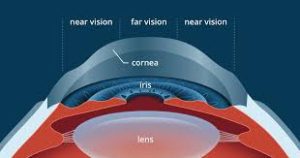
During Wavelight Plus InnovEyes, a microkeratome or femtosecond laser creates a thin hinged flap on the corneal surface. The laser then reshapes the stromal tissue beneath it, and the flap is repositioned. This flap never fully re-adheres with the biomechanical strength of uncut corneal tissue — it is held in place by natural adhesion and the pressure of the tear film, which is sufficient under normal circumstances but creates a category of vulnerability that does not exist in flapless procedures.
Specific Flap Complications
- Flap dislocation: Physical trauma to the eye — a direct blow, aggressive eye rubbing, or even intense water pressure from a shower — can displace the flap in the first weeks after surgery, and in rare cases, years later. This requires urgent clinical repositioning.
- Flap striae (wrinkles): Microscopic folds can develop in the flap during healing, creating irregular astigmatism and visual distortion that may require the flap to be lifted and smoothed under clinical conditions.
- Epithelial ingrowth: Epithelial cells can migrate under the flap edge and proliferate, causing irritation, visual irregularity, and in significant cases, corneal melting requiring intervention.
None of these complications are common — their combined incidence in clinical literature is in the low single-digit percentages. But none of them are possible in procedures that create no flap at all, which is why the comparison to flapless alternatives is a clinically meaningful one rather than a marketing point. A detailed look at how risky flap-based laser eye surgery is compared to flapless alternatives helps patients understand what they are actually weighing when they choose between them.
Risk 2: Reduced Corneal Strength and Ectasia
Creating a corneal flap removes the contribution of the anterior corneal stroma — the strongest part of the cornea — from the eye’s load-bearing architecture. In the majority of patients with normal corneal thickness and no pre-existing irregularity, this reduction in biomechanical strength has no clinically significant consequence over a lifetime. In a small subset of patients — those with thinner corneas, lower residual stromal bed thickness after ablation, or subclinical topographic irregularities that pre-operative assessment does not catch — the weakening can progress to corneal ectasia.
Ectasia is a progressive bulging and thinning of the cornea that develops months to years after surgery, causing increasingly irregular astigmatism and vision that cannot be corrected by glasses or standard contact lenses. It is rare — reported in approximately 0.04–0.6% of LASIK cases in the literature, depending on the screening criteria of the centre — but it is the most serious specific complication of flap-based laser procedures. Patients with borderline corneal thickness, irregular topography, or a family history of keratoconus face a meaningfully higher relative risk and should discuss this explicitly during their pre-operative consultation. Our overview of the causes of corneal ectasia after laser eye surgery covers the screening parameters that identify patients at elevated risk before a procedure is offered.
Risk 3: Dry Eye Syndrome
Dry eye is the most common side effect of Wavelight Plus InnovEyes — and of all flap-based laser procedures. Creating the corneal flap severs a significant number of corneal nerve fibres. These nerves are responsible not only for sensation but for the neural feedback loop that triggers reflex tear secretion. When corneal sensitivity drops post-operatively, tear production decreases, and the tear film becomes unstable.
Most patients experience dry eye symptoms in the first one to three months — grittiness, intermittent blurring, light sensitivity, and end-of-day fatigue with screen use. For many patients, these symptoms are manageable with lubricating drops and resolve as corneal nerves regenerate over three to six months. A clinically significant minority — estimated at 20–40% of LASIK patients in some studies — experience dry eye symptoms lasting beyond six months. Patients who already have dry eye before surgery, wear contact lenses, or are in low-humidity environments are at higher risk for prolonged symptoms. Our guide to treating dry eyes after laser surgery covers the management pathways available when lubricating drops are not sufficient to manage persistent symptoms.
Risk 4: Night Vision Disturbances
Halos around lights, glare from oncoming headlights, and starburst patterns around point sources of light are among the most commonly reported visual side effects in the first weeks after Wavelight Plus InnovEyes. They result from the transition zone at the edge of the ablation profile — where the treated corneal tissue meets the untreated periphery — creating optical irregularity that the brain perceives as light scatter.
For most patients, these disturbances are most pronounced in weeks one through four and diminish progressively as the cornea heals and the pupil’s interaction with the ablation zone normalises. By three to six months, the majority of patients no longer find night vision a practical concern. A subset of patients — particularly those with larger pupil diameters in dim light, or those who received treatment at the upper end of their correction range — may experience persistent halos or glare that affects driving confidence at night. This is not a complication that Wavelight Plus InnovEyes’ advanced diagnostics fully eliminate — the InnovEyes Sightmap improves centration accuracy and addresses higher-order aberrations, but the optical physics of the ablation zone transition remain.
Risk 5: Incomplete Correction or Regression
Under-correction — landing at a prescription short of the intended target — occurs in a small percentage of cases and is more common at the higher end of the treatment range. Enhancement procedures can address residual refractive error once the cornea has fully stabilised, typically after three to six months. Regression — a gradual drift of the prescription back toward its pre-operative level — can occur over years, particularly in patients whose prescriptions were not fully stable at the time of surgery, or in those with high myopia where greater tissue removal was required.
Enhancement candidacy depends on adequate residual corneal thickness after the original procedure. Patients who have had maximum tissue removed in the primary procedure may not have enough remaining cornea for safe enhancement — a constraint that is more common after flap-based procedures due to the additional tissue consumed by flap creation itself.
Risk 6: Post-Surgical Infection
Infectious keratitis following Wavelight Plus InnovEyes is rare — reported at approximately 0.01–0.02% of procedures in large series — but it is a more serious concern than post-operative infection after flapless procedures because the flap interface provides an additional potential space for bacterial proliferation. Diffuse lamellar keratitis (DLK), a non-infectious inflammatory response at the flap interface, is more common than true infection but requires prompt clinical recognition and treatment to prevent vision loss. Both risks are minimised by strict sterile surgical technique, meticulous post-operative antibiotic compliance, and attendance at scheduled follow-up appointments. Skipping prescribed antibiotic drops or missing early follow-up reviews is the patient-side factor most consistently associated with delayed detection of these complications.
Risk 7: Visual Aberrations
Higher-order aberrations — including coma, trefoil, and spherical aberration — can be introduced by any laser refractive procedure if the ablation is not precisely centred on the visual axis or if the corneal healing response creates irregular surface topography. Wavelight Plus InnovEyes’ use of InnovEyes Sightmap and wavefront guidance is specifically designed to reduce rather than introduce higher-order aberrations, and published outcomes data supports its effectiveness in this regard. However, individual healing variability means that a minority of patients experience increased aberrations post-operatively — most mild and temporary, a small number persistent and visually significant. Symptoms include ghost images, decreased contrast sensitivity, and difficulty in complex lighting conditions.
Who Is Not a Suitable Candidate
Wavelight Plus InnovEyes is not appropriate for every patient who presents requesting it. The following patient profiles face either elevated risk or clear contraindication.
- Patients with thin or irregular corneas — insufficient tissue for safe flap creation and residual stromal bed maintenance, or topographic patterns suggesting keratoconus or subclinical ectasia.
- Patients with significant pre-existing dry eye — flap-based surgery will worsen existing dry eye; these patients may be better candidates for flapless alternatives or non-laser options.
- Pregnant or breastfeeding patients — hormonal fluctuations affect corneal hydration and refractive stability, making surgical outcomes unpredictable during this period.
- Patients with autoimmune conditions — impaired healing response increases infection and poor recovery risk.
- Patients with unstable prescriptions — surgery on a prescription that is still changing produces outcomes that regress; stability for at least twelve months is the standard pre-operative requirement.
A comprehensive pre-operative assessment determines candidacy with precision. Our guide to the tests done before laser eye surgery outlines every parameter evaluated during this assessment process and explains why each one matters for predicting outcomes.
How Wavelight Plus InnovEyes Compares to Flapless Alternatives
| Risk Category | Wavelight Plus InnovEyes | SMILE Pro (Flapless) |
|---|---|---|
| Flap complications | Yes — dislocation, striae, ingrowth | None — no flap created |
| Dry eye severity | Higher, longer duration | Lower, faster resolution |
| Corneal strength post-op | Reduced (flap weakens anterior stroma) | Better preserved |
| Ectasia risk | Low-moderate (higher in thin corneas) | Lower |
| Personalisation level | Very high (InnovEyes Sightmap + wavefront) | High (AI-guided, automated centration) |
| Higher-order aberration correction | Yes — key clinical advantage | Standard correction |
The comparison is not one-sided. Wavelight Plus InnovEyes’ ability to map and correct higher-order aberrations is a genuine clinical advantage for patients with complex corneal irregularities that standard laser procedures cannot address. For patients with straightforward myopia or astigmatism on normal corneas, however, the personalisation advantage may not outweigh the additional structural risks of flap creation. The right procedure depends entirely on your individual corneal profile and visual requirements — a determination that requires examination, not preference.
Conclusion
Wavelight Plus InnovEyes is a high-precision, clinically validated laser vision correction procedure with genuinely impressive outcomes for appropriate candidates. Its risks are real — flap complications, dry eye, ectasia risk in vulnerable corneas, night vision disturbances — and they are the direct consequence of its flap-based architecture, not of any deficiency in its technology. Understanding those risks clearly is what makes informed consent meaningful rather than procedural.
For patients with complex corneal aberrations that standard laser procedures cannot address, Wavelight Plus InnovEyes may be the strongest clinical option available. For patients with straightforward prescriptions, pre-existing dry eye, thinner corneas, or active lifestyles where flap integrity is a concern, flapless alternatives may serve them better. The only way to know which category you fall into is a comprehensive pre-operative assessment. Book a consultation at Visual Aids Centre to find out which procedure your corneal profile and visual goals make you the best candidate for.
Frequently Asked Questions (FAQs)
What is the most serious risk of Wavelight Plus InnovEyes?
Corneal ectasia — progressive bulging and thinning of the cornea — is the most serious potential complication, though it is rare (below 1% in well-screened populations). It is specifically associated with the flap-based technique and is more likely in patients with thin, irregular, or borderline corneas who should have been identified and excluded during pre-operative screening.
How long does dry eye last after Wavelight Plus InnovEyes?
For most patients, dry eye peaks in the first four to eight weeks and resolves within three to six months as corneal nerves regenerate. A meaningful minority of patients experience symptoms beyond six months, particularly those with pre-existing dry eye before surgery. Preservative-free lubricating drops are the primary management tool during this period.
Can the corneal flap be dislodged after surgery?
Yes — flap dislodgement is possible from direct eye trauma, aggressive rubbing, or water pressure impact. It is most vulnerable in the first weeks but remains theoretically possible for years. This risk does not exist after flapless procedures. If dislodgement occurs, the flap can typically be repositioned clinically if treatment is prompt.
Are night vision problems permanent after Wavelight Plus InnovEyes?
For the majority of patients, halos and glare are temporary and resolve within three to six months. A minority of patients — particularly those with larger pupils or higher prescriptions — experience persistent night vision disturbances beyond this period. InnovEyes Sightmap’s precision reduces but does not eliminate this risk.
Is Wavelight Plus InnovEyes safer than standard LASIK?
The core safety profile is similar because both are flap-based procedures. Wavelight Plus InnovEyes’ advanced diagnostics improve precision and reduce the risk of higher-order aberrations compared to standard LASIK, but the flap-related risk category remains unchanged. Flapless procedures like SMILE Pro eliminate the flap risk category entirely.
Who should avoid Wavelight Plus InnovEyes?
Patients with thin or irregular corneas, significant pre-existing dry eye, unstable prescriptions, autoimmune conditions affecting healing, or active lifestyles involving contact sports or activities where eye trauma is possible are not ideal candidates. Pregnant and breastfeeding patients should also wait until hormonal stability returns before undergoing any laser refractive procedure.
👁️ MEDICALLY REVIEWED BY
Padmashree Dr. Vipin Buckshey
BS Ophthalmology | AIIMS Graduate, 1977 | Padma Shri Honouree | Senior Clinical Advisor on Refractive Surgery Risk Counselling
Informed consent is not a form — it is a conversation. Over four decades of refractive surgery practice at Visual Aids Centre, Dr. Vipin Buckshey has refined the clinical language for discussing surgical risk in ways that patients genuinely understand and retain. His approach to pre-operative counselling — particularly for flap-based procedures where the risk categories are specific and consequential — prioritises patient comprehension over reassurance. The risk framework described in this article reflects the precise language Dr. Buckshey uses in clinical consultations: accurate, proportionate, and designed to support genuinely informed decision-making. An AIIMS alumnus, Padma Shri honouree, and former President of the Indian Optometric Association, Dr. Buckshey has the clinical depth to explain not just what the risks are, but why they exist and how to evaluate them relative to alternatives. Learn more about our evidence-based approach to patient care at Visual Aids Centre.