Only for about 35 seconds, during surgery. After SMILE your readings actually run 4 to 5 mmHg lower, and steroid drops can raise real pressure in a few patients.
A “normal” pressure reading after SMILE can be misleading. In one study, readings fell from 15 to 10 mmHg within 3 months simply because the cornea got thinner, which can hide a real rise. Steroid drops raised true pressure in 4 of 360 patients. Here is what to know and ask.
Key Takeaways
- During surgery: pressure rises for about 35 seconds.
- After surgery: thinner cornea, so readings run low.
- The real risk: steroid drops.
- Your job: say “I had SMILE” at every future eye test.
The Facts, Verified
| Verified fact | What it means for you |
|---|---|
| During SMILE, suction raises pressure to about 70 to 80 mmHg for roughly 35 seconds, low enough that circulation and vision are maintained. | A brief, planned rise. |
| On a newer laser, creating the lenticule averaged about 10 seconds across 473 eyes. | Newer lasers shorten the exposure. |
| Measured pressure fell from 15.0 to 11.0 mmHg at 1 month and 10.0 at 3 months, as the cornea thinned from 546 to 478 microns. Nerve fibre and ganglion cell thickness did not change. | Your cornea is thinner, so readings fall. |
| Several studies find that standard tonometers underestimate pressure after SMILE. | Ask which test is used. |
| In 640 SMILE eyes (360 patients), 7 eyes in 4 patients had a steroid-related pressure rise. | Steroid drops are the real pressure risk. |
| Each 1 diopter of short sight raises open-angle glaucoma risk by about 20%. | Keep screening, even after SMILE. |
Sources: Eye & Vision 2014; ESCRS 2018 and 2024; J Ophthalmol 2020; Ophthalmology 2021.
Does Eye Pressure Rise During SMILE?
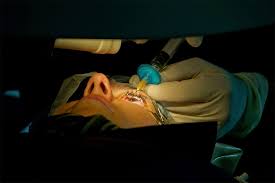
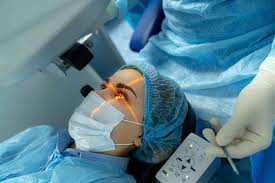
Yes, because a suction ring holds the eye still. The rise is short and lower than in femtosecond LASIK.
| What | What the data shows | What it means |
|---|---|---|
| SMILE suction | ⚠️ About 70 to 80 mmHg for about 35 seconds on the older laser | Brief. See how the lenticule is removed |
| Femtosecond LASIK, for comparison | ⚠️ About 89 mmHg for 40 seconds, then 119 mmHg for 53 seconds while cutting | SMILE peaks lower. See SMILE vs femto LASIK |
| Optic nerve afterwards | ✅ No change in nerve fibre or ganglion cell thickness at 3 months in 25 patients | Reassuring, but a small study. See can SMILE damage the optic nerve? |
Sources: Eye & Vision 2014; Clin Ophthalmol 2018; J Ophthalmol 2020; JCRS; AAO EyeWiki.
Why Do Your Pressure Readings Drop After SMILE?
SMILE removes a lens-shaped piece of cornea, so it is thinner and softer. Tonometers estimate pressure from how the cornea flattens, so they read low, by about 5 mmHg at 450 microns.
| Study | Before | After | What it means |
|---|---|---|---|
| 25 patients | 15.0 mmHg | ⚠️ 11.0 at 1 month, 10.0 at 3 months | Cornea 546 to 478 microns. See SMILE and thin corneas |
| 101 patients, Goldmann-style reading | 16.0 mmHg | ⚠️ 10.8 at 1 month | A drop of about 5 mmHg |
| Same patients, compensated reading | 16.2 mmHg | ✅ 13.8 at 1 month | A smaller drop of about 2 mmHg |
Sources: J Ophthalmol 2020; Guoji Yanke Zazhi 2018; AAO EyeWiki.
Which Pressure Test Can You Trust After SMILE?
| Test | After SMILE |
|---|---|
| Air-puff and Goldmann | ❌ Read low, so pressure can be underestimated |
| Corneal-compensated reading (ORA) | ⚠️ Changes less, but can still read low |
| Pentacam with the Shah formula | ✅ Matched before-surgery readings in one study of 49 patients |
| Dynamic contour tonometry | ✅ Almost unaffected by corneal changes |
Sources: BMC Ophthalmol 2016 and 2022; Front Bioeng Biotechnol.
Can Steroid Drops Raise Your Eye Pressure?
This is the pressure risk that matters most, and the one competitors skip.
| Fact | Why it matters |
|---|---|
| ⚠️ 4 of 360 patients (about 1 in 90) had a steroid pressure rise, in one clinic’s records | Uncommon, but real |
| ⚠️ It made far vision 0.5 to 1.5 D more short-sighted until pressure normalised | Blur weeks after SMILE can be pressure. See regression after SMILE |
| ✅ Across all people, 18% to 36% are steroid responders, and pressure usually returns to baseline 1 to 3 weeks after stopping | The rise is reversible |
| ✅ Most patients need steroid drops for only 1 to 2 weeks | Longer courses raise the chance |
| ⚠️ After PRK, no eyes on fluorometholone had a 10 mmHg rise, versus 13 and 15 on betamethasone and loteprednol, peaking near 4 weeks | Ask which drop you get. This was PRK, not SMILE |
| ❌ A falsely low reading can hide a steroid rise | Ask for a corrected check if you are on drops for weeks |
| ❌ Stopping drops on your own | Ask your surgeon about the schedule first |
Sources: ESCRS 2018 poster; PMC steroid trial; AAO EyeWiki; surgeon Q&A.
Does Short Sight Raise Your Glaucoma Risk?
Yes, and that risk came with your short sight, not SMILE. Glaucoma is called the “sneak thief of sight” because it is hard to detect early.
| Your short sight | Glaucoma risk (odds ratio) |
|---|---|
| Low | ✅ 1.5 times |
| Moderate | ⚠️ 1.7 times |
| Moderate to high | ⚠️ 2.3 times |
| High. See SMILE and high myopia | ❌ 4.1 times. Risk climbs faster beyond -6 D |
Sources: Ophthalmology 2021 meta-analysis (24 studies, 514,265 people); RANZCO.
Can You Have SMILE With High Eye Pressure?
It depends on whether the nerve is damaged, so your surgeon decides.
| Your situation | Usual answer |
|---|---|
| Glaucoma | ❌ ZEISS says you cannot be considered. See who is not eligible for SMILE |
| High pressure, healthy nerve and field | ⚠️ Some clinics may consider it with extra monitoring |
| Family history, thin cornea or suspicious nerve | ⚠️ Surface or lens procedures may suit better, so readings stay accurate. See LASIK vs PRK vs SMILE vs ICL |
| Normal pressure, healthy nerve | ✅ Routine candidate |
Sources: ZEISS; Blue Fin Vision; AAO EyeWiki.
How Is Glaucoma Checked When Readings Run Low?
Pressure is only one of several tests.
| Test | What it shows |
|---|---|
| Pressure | ⚠️ Needs a corrected method after SMILE |
| Optic nerve exam | ✅ Looks at the nerve’s shape and colour |
| Nerve fibre scan (OCT) | ✅ Measures nerve thickness, which was unchanged at 3 months after SMILE |
| Visual field test | ✅ Maps any blind spots |
Does Head-Down Yoga Raise Eye Pressure?
Yes, for everyone. I found no study of yoga after SMILE, so follow your surgeon’s exercise advice.
| Pose | Pressure | What to do |
|---|---|---|
| Headstand | ❌ About double, up about 15 mmHg | Ask first. See exercise after SMILE |
| Downward dog | ❌ 17 to 29 mmHg | Highest of four poses tested |
| Legs up the wall | ✅ 17 to 21 mmHg | Lowest rise |
Sources: Ophthalmology 2006 (75 practitioners); PMC 2015 yoga study.
Which Questions Should You Raise Around Your SMILE?
| When | Ask or say |
|---|---|
| Before | ☐ “Is my pressure normal, and is my cornea thick enough?” See who is a SMILE candidate and SMILE requirements |
| After | ☐ “I had SMILE on this date,” at every eye test |
| After | ☐ Your before-surgery pressure, corneal thickness and lenticule thickness |
| After | ☐ Which steroid drops, for how long, and any pressure check |
| Later | ☐ “I had SMILE” before cataract surgery, because axial length needs re-measuring. See cataracts after SMILE |
Which Warning Signs Need a Same-Day Call?
| Sign | Action |
|---|---|
| ❌ Severe eye pain. See eye pain after SMILE | Call the same day |
| ❌ A bad headache with eye discomfort. See headache after SMILE | Call the same day |
| ⚠️ Distance vision gets blurrier on steroid drops. See fluctuating vision | Ask for a pressure check |
| ✅ Comfortable and healing | Keep every follow-up visit |
Bottom Line
Pressure rises briefly during SMILE, then settles. Afterwards your cornea is thinner, so many tests read low, and steroid drops are the real pressure risk. Carry your before-surgery numbers and mention SMILE at every eye test. Book a consultation with Visual Aids Centre if you want your pressure checked.
FAQs
Does SMILE cause glaucoma?
It hasn’t been shown to. See SMILE risks.
Is the pressure rise during surgery painful?
You feel the ring, but vision is maintained. See what to expect after SMILE.
Will my readings return to normal?
Not fully. The cornea stays thinner. See corneal thickness for SMILE.
Can I still have glaucoma tests?
Yes. Tell the doctor you had SMILE so they can use a corrected method.
Does glaucoma cause symptoms early?
Often not, which is why regular checks matter if you were short-sighted.
Is SMILE safe for the eye overall?
It has a good safety record for suitable candidates. See is SMILE safe?
👁️ MEDICALLY REVIEWED BY
Padmashree Dr. Vipin Buckshey
Optometrist & Laser Vision Correction Specialist | AIIMS Graduate, 1977 | Padma Shri Honouree | Official Optometrist to the President of India | Former President, Indian Optometric Association | Founder, Visual Aids Centre
Patients sometimes ask whether the pressure number at a follow-up still means the same thing after SMILE, and the careful answer is that it depends on how it was measured. Dr. Vipin Buckshey founded Visual Aids Centre in 1980, and in 1999 it became the first eye centre in Delhi to introduce LASIK. The centre reports over 250,000 Laser Vision Correction procedures to date. This article is general information rather than medical advice, and your own surgeon’s instructions always take priority. Read more at our story.