It is probably the first question that crosses your mind after a successful SMILE Pro eye procedure — what if my number comes back? You have invested in clear vision, and the idea of waking up one day back to squinting at a screen or fumbling for glasses is genuinely unsettling. The good news is that the chances are low, but the honest answer is a little more layered than a simple “no, never.”
This guide from Visual Aids Centre walks you through exactly what the research says about vision regression after SMILE Pro, which patient factors matter most for long-term stability, and what to do if your vision does shift after the procedure. Understanding the full picture helps you set realistic expectations — and take the small steps that protect your results for years to come.
Key Takeaways
- Complete vision regression to your pre-surgery prescription is rare after SMILE Pro — far less common than after older laser procedures.
- SMILE Pro’s flapless, minimal-disturbance design is a key reason long-term corneal stability is higher than LASIK in most studies.
- Partial regression can occur, particularly in patients with very high prescriptions or unstable vision at the time of surgery.
- Age-related changes such as presbyopia and cataracts are natural processes that SMILE Pro does not prevent — they are not regression.
- Enhancement procedures exist for genuine regression cases, provided adequate corneal tissue remains.
How SMILE Pro Corrects Vision — and Why Regression Is Uncommon
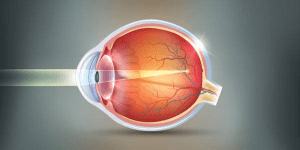
SMILE Pro corrects refractive errors by removing a precise disc of corneal tissue — the lenticule — through a keyhole incision of just 2–3 millimetres. This permanently reshapes the cornea to focus light correctly on the retina. Because the corneal structure is not opened wide, the biomechanical integrity of the eye is better preserved compared to flap-based procedures like LASIK.
Regression in the context of laser eye surgery means the cornea gradually reverts toward its original shape over time. With SMILE Pro, this process is considerably less pronounced because the closed architecture maintains greater corneal rigidity post-operatively. The tissue removal is permanent — your surgeon cannot “un-remove” the lenticule — but the surrounding tissue can, in rare cases, subtly remodel itself if the eye was not sufficiently stable before the procedure.
This is precisely why candidate screening matters so much. Before any procedure, our surgeons assess corneal thickness, topography, and prescription stability over time. Patients who are good candidates for SMILE Pro surgery on clinical grounds are those whose eyes are already stable — which is one of the strongest predictors of lasting results.
Temporary Changes in Vision After SMILE Pro
Not everything that looks like regression actually is regression. In the first days and weeks after SMILE Pro, most patients notice fluctuating vision — sometimes sharper, sometimes slightly hazy, varying between morning and evening. This is normal. The cornea is healing, the tear film is recalibrating, and the epithelium is settling into its new shape.
These temporary visual fluctuations typically resolve within four to eight weeks. Dry eye, which is common in the early recovery period, is a major contributor — it creates an unstable tear film that makes your measured vision look worse than your actual corneal correction. Using your prescribed preservative-free lubricating drops consistently during this window makes a meaningful difference to both comfort and clarity.
If vision at six weeks is still noticeably blurry, that warrants a clinical assessment rather than patient reassurance. Early detection of any refractive surprise — an under-correction or over-correction — is far easier to address than changes that are identified months later. This is why your follow-up appointment schedule is not optional.
Factors That Affect Long-Term Visual Stability
Several variables influence whether your corrected vision holds steadily over the years following SMILE Pro. None of them should alarm you — but understanding them helps you make sense of your own outcome.
Pre-Operative Prescription Level
Patients with very high myopia — say, -8.00 D or above — have a statistically higher chance of mild regression than those with moderate prescriptions. This is not a failure of the procedure; it reflects the greater tissue removal required and the additional remodelling response that can follow. Your surgeon will discuss your specific prescription and what degree of long-term stability to expect in your individual case. A detailed look at SMILE eye surgery for high myopia explains how treatment parameters are adjusted for patients at the higher end of the prescription range.
Age at the Time of Surgery
Younger patients whose prescriptions are still changing are not ideal candidates, and responsible pre-screening catches this. Once the prescription has been stable for at least twelve months — the standard clinical threshold — regression risk drops considerably. Older patients in their late thirties and beyond are generally excellent candidates for long-term stability, though they need to understand that presbyopia will still develop naturally with age.
Systemic Health Conditions
Diabetes, autoimmune conditions, and certain hormonal changes can affect corneal healing and long-term refractive stability. Patients with controlled diabetes can often have SMILE Pro safely, but their post-operative trajectory needs closer monitoring. If you have any underlying health condition, full disclosure during your consultation is essential — not a barrier to surgery, but a planning tool.
Post-Operative Habits
Consistent eye rubbing after surgery, poor UV protection, and skipping follow-up appointments all contribute to suboptimal outcomes. Wearing good UV-blocking sunglasses outdoors is a simple, permanent habit that protects your corneal integrity for life — not just during recovery. Our guide on how to take care of your eyes after SMILE Pro surgery covers the long-term habits that make the biggest difference to lasting results.
Long-Term Outcomes: What the Evidence Shows
Clinical data on SMILE Pro — and its predecessor SMILE — is reassuring. Published studies show that over 90% of patients achieve 20/40 vision or better, which is the standard required for driving without correction. More than 80% reach 20/20 or close to it. Regression rates beyond one dioptre are reported in a small minority of patients, predominantly those with high initial prescriptions.
Importantly, SMILE Pro does not protect against the natural ageing of the eye. Presbyopia — the gradual loss of near-focus ability that affects almost everyone from their mid-forties — is not a side effect of the surgery. It is biology. Similarly, cataracts develop with age regardless of whether you have had laser vision correction. These are not your number “coming back” — they are separate conditions that can be addressed with their own dedicated treatments when the time comes.
The distinction between regression and age-related change matters because it affects the pathway to addressing it. Understanding how presbyopia is corrected after laser eye surgery early means you are never caught off-guard when reading glasses become relevant later in life.
Addressing Changes in Vision Post-Surgery
If a genuine refractive change is confirmed at a follow-up appointment — not fluctuation, not dry eye, but a real shift in your measured prescription — there are pathways to address it.
Enhancement procedures, sometimes called touch-ups, are an option when adequate corneal tissue remains. Because SMILE Pro preserves more tissue than LASIK, many patients who experience mild regression do retain enough corneal thickness to be candidates for an enhancement. The decision is made on a case-by-case basis after detailed corneal mapping and is never a routine recommendation — it is a clinical one.
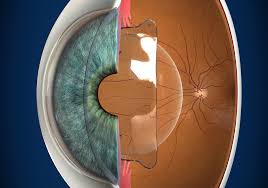
For patients who are not enhancement candidates due to corneal thickness constraints, options such as ICL lens implantation may be appropriate depending on the degree of residual prescription. This is why the relationship with your eye care team does not end on discharge day — it is an ongoing clinical partnership that adapts to how your vision evolves over time.
When to Consult Your Ophthalmologist
Routine follow-ups at one week, one month, three months, and twelve months post-SMILE Pro are the standard schedule at Visual Aids Centre. Beyond that, any of the following warrant an unscheduled visit rather than waiting for the next routine appointment.
If your vision deteriorates progressively over several weeks rather than stabilising, book an assessment. If you notice new glare, halos, or double vision that was not present in earlier months of recovery, that needs evaluation. If glasses or contact lenses start feeling necessary again for tasks you were managing comfortably, that is a change worth documenting with a measurement rather than assuming. And if you have any history of corneal conditions, our guide on whether keratoconus patients can get SMILE Pro surgery explains the specific monitoring requirements for more frequent long-term follow-up.
The rule is straightforward: early changes caught early have far more options than changes that have been quietly progressing for a year.
Conclusion
Your number is very unlikely to fully return after SMILE Pro surgery. The procedure permanently reshapes the cornea, the flapless design preserves structural integrity, and rigorous pre-operative screening ensures only stable prescriptions are treated. Mild shifts can occur — particularly in patients with very high initial prescriptions — but complete regression to your original number is rare, and when partial regression does happen, enhancement options often exist.
The most important things on your side are a stable prescription before surgery, honest health disclosure during consultation, consistent post-operative care, and attending every follow-up appointment. If you would like to know whether your current prescription and corneal profile make you a strong long-term candidate for SMILE Pro, book a consultation with the Visual Aids Centre team — a thorough pre-operative assessment is where lasting results begin.
Frequently Asked Questions (FAQs)
Can my full prescription come back after SMILE Pro?
Complete regression to your original prescription is very rare. SMILE Pro permanently removes corneal tissue, making full reversal essentially impossible. Mild partial regression in a small subset of high-prescription patients is documented, but this is very different from “your number coming back.”
How long do SMILE Pro results last?
For the majority of patients, results are stable for life. Long-term clinical studies tracking patients over ten or more years show that the corneal correction achieved with SMILE procedures remains consistent, with only minor changes in a small percentage of cases.
Is regression more likely with SMILE Pro than LASIK?
No — regression rates after SMILE Pro are generally comparable to or lower than LASIK, particularly for moderate myopia. The flapless design and smaller incision help preserve corneal biomechanical stability, which is a key factor in long-term refractive outcomes.
What is the difference between regression and presbyopia?
Regression is a change in your distance prescription returning toward its pre-operative level. Presbyopia is the age-related loss of near-focus ability that affects everyone from their mid-forties. SMILE Pro addresses distance and astigmatism — it does not prevent presbyopia, which is a completely separate and natural process.
Can I have an enhancement procedure if my number comes back?
If adequate corneal tissue remains — which SMILE Pro’s tissue-preserving design makes more likely than LASIK — an enhancement may be possible. This decision requires a detailed clinical evaluation including corneal thickness mapping and is made on an individual basis by your surgeon.
How do I know if my vision change is regression or just dry eye?
Dry eye causes fluctuating vision that varies across the day and improves with lubricating drops. True regression produces a consistent, measurable shift in your refraction that does not change with drops. A simple clinical refraction at your follow-up appointment distinguishes the two clearly.
👁️ MEDICALLY REVIEWED BY
Padmashree Dr. Vipin Buckshey
BS Ophthalmology | AIIMS Graduate, 1977 | Padma Shri Honouree | Former President, Indian Optometric Association
With more than four decades of clinical experience and over 250,000 laser vision correction procedures performed at Visual Aids Centre, Dr. Vipin Buckshey brings surgical authority and evidence-based precision to every clinical recommendation. An AIIMS alumnus, former President of the Indian Optometric Association, and official optometrist to the President of India, Dr. Buckshey ensures all patient-facing content reflects real clinical outcomes — not marketing. Learn more about our story.