
Here is the first thing to know, because it gets mis-explained constantly online: your “eye power” does not weaken after LASIK because you stopped exercising your eyes. Eyes are not muscles that atrophy with disuse. If your vision drifts in the years after laser surgery, it is almost always for one of three specific biological reasons — mild corneal remodelling, continued underlying myopia progression, or age-related presbyopia after 40 — and the strategies that actually help are entirely different from the “do eye exercises” advice that dominates Google results.
The good news is that for most LASIK patients, vision stays stable for decades. Large outcome registries consistently show 90%+ of properly screened patients maintain their corrected vision at 10 years without needing a second procedure. This guide from Visual Aids Centre explains the real causes of post-LASIK power drift, the habits that genuinely protect stability, the myths to ignore, and when a gentle enhancement procedure makes sense if small drift does occur.
Key Takeaways
- Post-LASIK vision is usually stable — roughly 90% of patients keep their corrected power at 10 years.
- Regression causes are biological (corneal remodelling, progressive myopia, presbyopia), not behavioural — “eye exercises” do not prevent them.
- UV protection, screen discipline, hydration, and annual check-ups genuinely support long-term stability.
- If small drift does occur, a LASIK enhancement (touch-up) can restore sharp vision in most cases.
The Biggest Myth to Unlearn First
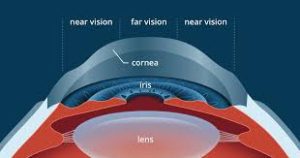
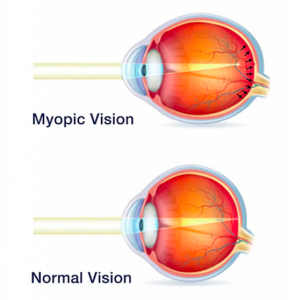
The “eye exercise” myth is everywhere — articles insist that if you don’t use your eyes for near and far focusing after LASIK, your vision will weaken like an unused muscle. This is biologically inaccurate. Your refractive error comes from the shape of your cornea, the length of your eyeball, and the flexibility of your natural lens — none of which respond to “exercise.” The ciliary muscle inside your eye does adjust focus and can become fatigued, but that’s accommodation, not refractive error. No amount of looking-at-near-then-far drills will keep a cornea from reshaping itself if it was going to do so.
Believing the myth wastes effort on things that don’t work while distracting from the habits that actually matter. The Internet’s repeated advice to “exercise your eyes regularly” after LASIK is the kind of content this article is designed to replace.
The Real Causes of Post-LASIK Power Drift
Corneal Remodelling (Mild Regression)
The cornea is living tissue. In a small percentage of LASIK patients, keratocytes very gradually rebuild tissue that the laser removed, producing mild regression of 0.25 to 0.75 dioptres over years. This is more common in patients who had higher initial prescriptions. Our article on what causes regression after LASIK covers the specific biology in depth.
Continued Underlying Myopia Progression
LASIK corrects the current refractive error but doesn’t halt the biological processes that created the myopia in the first place. If you had LASIK before your eye had fully stabilised — or if you’re in a lifestyle pattern (heavy near work, low outdoor time) that continues to lengthen the eyeball — new myopia can develop on top of the LASIK correction. This is why surgeons require prescription stability before operating.
Age-Related Presbyopia
After 40, the natural lens inside your eye becomes less flexible, making near focus progressively harder. This is unrelated to LASIK — it happens to everyone — but it catches post-LASIK patients by surprise because they assumed LASIK “fixed” their eyes forever. Our guide on whether you need reading glasses after LASIK explains why this is an entirely separate issue, and whether LASIK can fix ageing eyes covers the specific options.
Normal Fluctuation in the First Year
In the first 6–12 months, minor fluctuations of 0.25–0.50 dioptres are normal as the cornea fully stabilises. This is not regression — it’s completion of healing. For context on expected patterns, see whether laser eye surgery lasts forever.
What Actually Helps Keep Your Power Stable
Lifetime UV Protection
Chronic UV exposure is associated with accelerated corneal surface remodelling and earlier cataract formation — both of which can shift refraction. Wearing UV-blocking sunglasses outdoors is the single most evidence-backed habit for long-term stability.
Screen Discipline
Heavy near-focus work does not cause refractive error itself, but eye strain and dryness from long screen hours can produce fluctuating vision that feels like your power has changed. Use the 20-20-20 rule, adjust screen height and distance, and blink consciously during long sessions.
Consistent Hydration and Lubrication
Tear film quality directly affects visual clarity, and an unstable tear film can feel indistinguishable from changed refraction. Drink enough water, use preservative-free lubricating drops if you’re dryness-prone, and treat any chronic dry eye proactively. This single factor accounts for a surprising amount of what patients perceive as “power drift.”
Annual Eye Exams
Schedule a comprehensive eye exam once a year — not just for refraction, but for corneal topography, tear film assessment, and retinal health. Early detection of drift allows earlier, smaller interventions if needed. This is the second-most important long-term habit after UV protection.
Protect Your Eyes from Physical Trauma
Contact sports, martial arts, and high-risk outdoor activities should involve protective eyewear. Direct impact to the eye can, rarely, shift corneal biomechanics in ways that influence refraction.
Healthy Lifestyle Fundamentals
Balanced diet, omega-3 rich foods, adequate sleep, not smoking — these support overall ocular health and, indirectly, refractive stability. Not dramatic effects, but genuine ones.
What Doesn’t Help — Despite the Internet
- “Eye exercises” to strengthen vision — no evidence they prevent regression of refractive error.
- Pencil push-ups, palming, or focus drills — these target convergence and accommodation issues, not refractive stability.
- Eye yoga and vision training apps — same category; entertaining but not clinically protective against regression.
- Restrictive diets or megadose supplements — a balanced diet with ocular nutrients is fine; megadoses of specific vitamins have no proven protective role for LASIK stability.
- Avoiding reading or close work — explicitly counter-productive. The source outline’s suggestion to “avoid reading for six weeks” is wrong once initial healing is complete.
Anything that claims to “retrain” your eyes back to lower power is selling a premise that isn’t biologically supported. If your prescription is genuinely changing post-LASIK, eyesight weakening after LASIK happens for reasons that exercise won’t address.
Early Signs Your Power Is Drifting
Watch for these subtle changes that may indicate regression beginning and warrant an earlier-than-annual eye exam:
- Distance objects gradually getting less crisp over several months, not suddenly
- Night driving feeling harder than it did a year earlier
- Needing to squint or lean forward when reading distant signs
- A feeling that one eye has become noticeably weaker than the other
- Computer work causing more visual fatigue than it used to
None of these is emergency. All of them are worth a check-up sooner rather than later, because early detection means smaller interventions.
If Drift Does Happen — Enhancement Options
For the small percentage of patients who do experience meaningful regression, a LASIK enhancement (commonly called a touch-up) can restore sharp vision. The existing flap is lifted, a small additional laser treatment is applied to correct the residual error, and the flap is replaced. Recovery is typically faster than the original surgery. Eligibility depends on residual corneal thickness and the specific refractive change — not every patient is a candidate, and some are better served by PRK or Trans-PRK. Our article on how to prevent regression after LASIK covers prevention in more depth, and our guide on how often enhancement is required after LASIK gives realistic incidence data across patient populations.
Conclusion
Keeping your eye power constant after LASIK is less about exercises or dramatic lifestyle changes and more about a small number of evidence-backed habits: lifetime UV protection, reasonable screen discipline, consistent hydration, annual eye exams, and physical protection during high-risk activities. The biological causes of post-LASIK regression — corneal remodelling, progressive myopia, presbyopia — are largely not behavioural, which is why most patients remain stable without doing anything heroic. If you notice gradual drift, early assessment is the single most useful response. For a personalised long-term stability plan or a check-up appointment, book a consultation at Visual Aids Centre.
Frequently Asked Questions (FAQs)
Can my eye power come back after LASIK?
In a small percentage of patients, mild regression of 0.25–0.75 dioptres can develop over years. Most LASIK patients remain stable at 10 years; if drift occurs, an enhancement procedure usually restores clarity.
Do eye exercises help keep LASIK results stable?
No. Refractive error depends on corneal and eyeball structure, which do not respond to exercise. Eye exercises may help eye strain or convergence issues, but not refractive stability.
How often should I have an eye exam after LASIK?
Once a year is the standard recommendation, with earlier visits if you notice any vision change. Annual exams catch drift early when smaller interventions are possible.
Does screen time affect post-LASIK vision stability?
Not in the sense of changing refractive error. But heavy screen work can cause dry eye and strain that feels like blurred vision. Managing those symptoms is part of long-term comfort.
Will I still need reading glasses after 40 if I had LASIK?
Most patients will. Presbyopia is an age-related lens-hardening process that occurs regardless of LASIK. Reading glasses, monovision, or blended-vision procedures are the usual solutions.
Can LASIK be repeated if my power changes significantly?
Yes, in many cases. Enhancement is available if residual corneal thickness and other factors are suitable. A pre-enhancement assessment confirms candidacy.
👁️ MEDICALLY REVIEWED BY
Padmashree Dr. Vipin Buckshey
Optometrist & Long-Term Refractive Outcomes Specialist | AIIMS Graduate, 1977 | Padma Shri Honouree
Long-term stability is the question Dr. Vipin Buckshey has fielded most often across four decades of refractive practice — and the one with the most online misinformation. Visual Aids Centre has been tracking post-LASIK outcomes since introducing Delhi’s first private LASIK laser in 1999, giving the clinical team uncommon visibility into what actually drives 10-, 15-, and 20-year stability versus what merely sounds plausible. An AIIMS alumnus, former President of the Indian Optometric Association, official optometrist to the President of India, and Padma Shri recipient, Dr. Buckshey’s approach to stability pairs evidence-based habits with honest patient counselling about what technology can and cannot preserve. Learn more in our story.