It’s one of the most honest questions anyone can ask before choosing LASIK: what if my short-sightedness comes back? You’ve worn glasses or contacts for years, and the idea of going through all of this only to end up back where you started is a genuine concern—not paranoia. The good news is that the vast majority of patients enjoy long-lasting results. The more complete answer, though, is that a small percentage do experience some degree of myopic regression over time, and understanding why—and who is most at risk—is exactly what you need to make an informed decision.
This article explains what LASIK actually does to correct myopia, the biological reasons some patients see a partial return of their prescription, the statistics on how often it happens, and what can be done about it if it does. No false reassurance—just a clear, evidence-based picture.
Key Takeaways
- LASIK corrects myopia by permanently reshaping the cornea—the correction itself does not “wear off,” but the eye can change independently over time.
- Around 6–10% of patients may need a LASIK enhancement within ten years, most commonly those who started with higher prescriptions.
- Age, pre-operative prescription level, lifestyle factors, and post-op care all influence how stable results remain long-term.
- If myopia does return, enhancement procedures are available and typically straightforward.
- Choosing the right procedure type and ensuring prescription stability before surgery significantly reduces regression risk.
What LASIK Actually Does to Correct Myopia
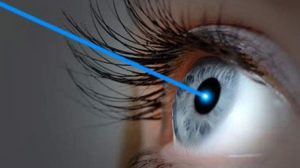
Myopia occurs when the eyeball is slightly too long, causing light to focus in front of the retina rather than directly on it. LASIK addresses this by permanently reshaping the cornea—the clear front surface of the eye—so that it bends light onto the retina correctly. A thin flap is created in the corneal surface, an excimer laser removes a precise amount of tissue from beneath it, and the flap is repositioned. The whole procedure takes roughly 15 minutes for both eyes.
The key word here is permanent: the tissue that was removed does not grow back. The corneal reshaping is a physical, lasting change. What causes the perception of myopia “returning” is not the correction reversing—it’s the eye itself continuing to change after surgery, which is an entirely different mechanism. This distinction matters enormously when thinking about long-term outcomes. For a fuller explanation of how LASIK interacts with ongoing myopia progression, our dedicated article covers the evidence in detail.
Can Myopia Return After LASIK?
The direct answer: yes, it is possible—but for most patients it does not happen to any meaningful degree, and when it does, the shift is usually modest rather than a full return to the pre-surgery prescription.
What clinicians call “myopic regression” is a gradual drift back towards short-sightedness that some patients experience in the years following LASIK. It does not mean the surgery failed. It means the eye—which is a living, changing organ—has shifted slightly in a direction that reintroduces some of the original refractive error. In younger patients, particularly those whose prescription was still fluctuating at the time of surgery, this is more common. It is also more frequently seen in patients who had high pre-operative prescriptions, because a larger corneal correction leaves the eye more susceptible to subtle anatomical change over time.
Why Does Myopic Regression Happen?
Several factors can contribute, and they often interact with each other rather than operating independently.
Age at the Time of Surgery
Prescription stability is one of the core eligibility criteria for LASIK, and it exists precisely because of regression risk. Patients who have their procedure before their myopia has fully stabilised are more likely to see changes post-operatively—not because the surgery didn’t work, but because their eyes were still developing. Most surgeons recommend that the prescription be stable for at least one year before proceeding.
Degree of Pre-Operative Myopia
Patients with mild to moderate myopia typically experience the most durable outcomes. Higher prescriptions require more corneal tissue to be removed, and the greater the structural change, the more scope there is for gradual drift over time. This is one of the reasons why procedure selection matters—advanced techniques like Contoura Vision or wavefront-guided correction can address higher-order aberrations more precisely, potentially contributing to greater long-term stability. For patients at the upper end of the treatable range, our article on degenerative myopia and LASIK is worth reading before making a decision.
Screen Time and Lifestyle
Prolonged near work—particularly extensive screen use—has been consistently associated with myopia development and progression. After LASIK, the same environmental pressures that drove your original prescription still exist. This doesn’t mean screen use will reverse your surgery, but it does mean that patients who spend many hours daily on digital devices may be more susceptible to mild regression than those who don’t. Implementing the 20-20-20 rule (every 20 minutes, look at something 20 feet away for 20 seconds) is a simple, evidence-supported habit worth maintaining.
Natural Ageing and Presbyopia
As patients move into their forties, a separate condition called presbyopia—the age-related loss of near-focusing ability—begins to develop. This is frequently mistaken for myopia returning, but it’s a fundamentally different issue involving the lens of the eye rather than the cornea. Glasses for reading may be needed, but that isn’t regression of the LASIK correction. Our dedicated article on managing presbyopia after LASIK addresses this distinction clearly.
How Likely Is It? Statistics and Evidence
Clinical data paints a reassuring picture for most patients. The American Refractive Surgery Council reports that over 95% of LASIK patients achieve 20/40 vision or better, and approximately 85% achieve 20/20 vision. A 2016 study published in the Journal of Cataract and Refractive Surgery found that roughly 6–10% of LASIK patients required an enhancement procedure within ten years of their initial surgery—suggesting that for the large majority, results remain stable over the long term.
It’s also worth noting that what counts as “regression” in clinical studies is often a very modest shift—moving from, say, 20/20 to 20/40 over a decade, rather than a return to the full original prescription. Most patients who do experience some drift remain functionally spectacle-free or require only mild correction for specific situations.
If Myopia Returns: Enhancement Options
If a meaningful regression does occur, a LASIK enhancement—sometimes called a touch-up procedure—is usually available. This involves lifting or re-treating the original corneal correction and is typically less involved than the initial surgery, as the bulk of the reshaping has already been done.
Not every patient is a candidate for enhancement. Corneal thickness must be adequate to allow for further tissue removal, and the residual prescription needs to fall within a treatable range. Our article on what causes under- and over-correction after LASIK explains the clinical factors surgeons assess before recommending enhancement. For patients wondering about having LASIK a second time more broadly.
How to Protect Your LASIK Results Long-Term
While no approach eliminates the biological possibility of regression entirely, certain habits meaningfully reduce the risk and support long-term visual stability.
- Ensure prescription stability before surgery. This is the single most effective preventive step—not rushing into LASIK while your prescription is still changing. If it has been stable for at least 12 months, your candidacy is significantly stronger.
- Attend all post-operative follow-up appointments. Early detection of any drift allows intervention before a minor change becomes a larger one. Regular check-ups also allow your surgeon to monitor corneal health over time.
- Protect your eyes from UV exposure. Wearing UV-blocking sunglasses outdoors is beneficial for long-term corneal health and reduces cumulative photochemical stress on the eye surface.
- Manage screen time consciously. The 20-20-20 rule, good ambient lighting, and avoiding screens in complete darkness all help reduce the cumulative near-work load on your visual system.
- Eat well for eye health. A diet rich in leafy greens, oily fish, nuts, and citrus supports retinal health and systemic circulation.
- Avoid rubbing your eyes. Chronic eye rubbing has been linked to corneal shape changes and is particularly inadvisable after LASIK, where it can also interfere with long-term flap stability.
Conclusion
Will myopia come back after LASIK? For most patients, the honest answer is no—at least not to any degree that significantly affects daily life. The corneal correction is permanent, and the majority of people who undergo LASIK enjoy stable results for decades. A minority—most commonly those with higher pre-operative prescriptions or procedures performed before full prescription stability—may experience some regression, and for those patients, enhancement options exist. The best protection against any regression is choosing the right procedure, waiting until your prescription is genuinely stable, and maintaining the eye health habits that support long-term outcomes.
At Visual Aids Centre, every LASIK consultation includes a detailed assessment of prescription stability, corneal thickness, and procedure suitability—because matching the right technology to the right patient is what produces results that last. If you’re considering laser vision correction and want expert guidance on your specific profile, book a consultation with our team.
Frequently Asked Questions (FAQs)
Does LASIK permanently fix myopia?
The corneal reshaping performed during LASIK is permanent—removed tissue does not regrow. However, the eye itself can continue to change with age or continued near work, which may cause a modest drift in prescription over time. For most patients, results remain stable long-term.
What percentage of LASIK patients experience regression?
Studies suggest approximately 6–10% of patients require an enhancement procedure within ten years of their initial LASIK surgery. The risk is higher for patients with high pre-operative prescriptions or those who had surgery before full prescription stability.
How long does LASIK last?
For the majority of patients, LASIK results are stable for decades. Some patients experience gradual, mild regression after ten or more years—particularly as natural age-related changes affect the eye. This is separate from the age-related condition presbyopia, which affects near vision in one’s forties and beyond.
Can I have LASIK again if my myopia returns?
In many cases yes, provided there is sufficient residual corneal thickness and the prescription falls within treatable limits. This is assessed individually at a follow-up consultation.
Does a higher prescription mean more regression risk?
Yes. Higher prescriptions require more corneal tissue removal, which can make results less stable over time. Patients with mild to moderate myopia typically enjoy more durable outcomes. Advanced techniques such as Contoura Vision may offer greater precision for patients toward the upper end of the treatable range.
Is blurry vision after LASIK always regression?
Not necessarily. Temporary blurriness in the first few weeks is normal as the cornea heals. Dry eyes—a common post-operative side effect—can also cause fluctuating vision. Regression is a gradual process that develops over months or years, not days.
👁️ MEDICALLY REVIEWED BY
Padmashree Dr. Vipin Buckshey
Optometrist & Post-Operative Care Specialist | AIIMS Graduate, 1977 | Padma Shri Honouree
With more than four decades of clinical experience and over 250,000 laser vision correction procedures performed at Visual Aids Centre, Dr. Vipin Buckshey has developed the patient assessment and long-term follow-up protocols that underpin the centre’s approach to LASIK outcomes—including the management of myopic regression and candidacy for enhancement procedures. An AIIMS alumnus, former President of the Indian Optometric Association, and official optometrist to the President of India, Dr. Buckshey personally reviews all clinical content at Visual Aids Centre to ensure it reflects current evidence rather than generalised assumptions. Learn more about the centre’s history and clinical team at our story.