
You’ve scheduled your LASIK consultation, you’re ready to ditch your glasses for good—and then your surgeon tells you to stop wearing contact lenses for a week or more. It sounds like a minor inconvenience, but there’s a serious clinical reason behind it.
Contact lenses don’t just sit on your eye—they physically reshape your cornea while you wear them. If your surgeon measures a cornea that’s still moulded by a lens, the laser correction will be based on the wrong data. The result? An inaccurate outcome that could leave you with residual refractive error or the need for an enhancement procedure. This guide from Visual Aids Centre explains exactly why contacts must come out before LASIK, how long the lens-free period should be, and what to do in the meantime.
Key Takeaways
- Contact lenses temporarily change your cornea’s natural shape, which directly affects LASIK measurements.
- Soft lenses should be removed at least 7 days before your evaluation; rigid lenses need 2–4 weeks.
- Wearing contacts too close to surgery can lead to overcorrection, undercorrection, or irregular results.
- Switching to glasses during the lens-free period is the safest way to let your cornea return to its true form.
How Contact Lenses Reshape Your Cornea
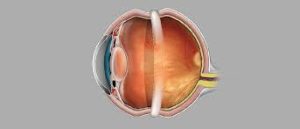
The cornea is a thin, dome-shaped tissue at the front of your eye. It’s flexible enough that any object resting on it for hours every day will gradually alter its curvature. Contact lenses—especially rigid gas-permeable (RGP) and toric varieties—exert constant, low-grade mechanical pressure that flattens or warps the corneal surface over time. Even standard soft lenses create measurable changes in corneal topography.
This warping is temporary; once the lens is removed, the cornea slowly reverts to its natural shape. But “slowly” is the key word. It doesn’t bounce back overnight. The longer and more consistently you’ve worn contacts, the more time the cornea needs to stabilise. Understanding this process is the foundation for every pre-LASIK lens restriction your doctor will set.
Why Accurate Corneal Measurements Matter for LASIK
LASIK works by using an excimer laser to reshape the cornea and correct refractive errors like myopia, hyperopia, and astigmatism. The amount and pattern of tissue removed are calculated from pre-operative diagnostic scans—corneal topography, pachymetry (thickness measurement), wavefront analysis, and keratometry (curvature readings).
If your cornea is still warped from lens wear when these scans are taken, the surgeon is essentially measuring a temporarily distorted surface. The laser programme is then built on inaccurate data, which means the correction applied won’t match your eye’s true optical needs. Even a fraction of a dioptre off can affect your post-surgical visual clarity. Learn more about the diagnostic process at what tests are done before LASIK.
Soft Lenses vs. Rigid Lenses: Different Timelines
Soft Contact Lenses
Standard soft lenses cause the least amount of corneal warping because they’re flexible and conform to the eye’s surface rather than pressing it into a new shape. Most surgeons require you to stop wearing soft lenses at least 7 days before your pre-operative evaluation—not just before surgery day. This gives the cornea enough time to return to baseline in most patients.
Toric Soft Lenses (for Astigmatism)
Toric lenses are thicker and apply slightly more pressure than standard soft lenses, particularly along the astigmatism-correcting axis. Your surgeon may ask for a 10–14 day lens-free period to ensure any meridional warping has fully resolved. If you have significant astigmatism, accurate measurements are even more critical. See how astigmatism interacts with laser surgery at can someone with astigmatism get LASIK.
Rigid Gas-Permeable (RGP) and Hard Lenses
RGP lenses cause the most corneal reshaping because they’re rigid enough to physically press the cornea into a different curvature. If you wear hard or RGP contacts, expect to stop wearing them at least 2–4 weeks before your consultation. Some patients with decades of RGP use may need even longer—your surgeon will monitor topography scans over successive visits to confirm the cornea has stabilised.
Ortho-K (Orthokeratology) Lenses
Ortho-K lenses are specifically designed to reshape the cornea overnight. Because the reshaping effect is intentionally aggressive, most clinics require at least 3–6 months without Ortho-K before considering LASIK candidacy. The cornea needs this extended period to completely return to its pre-Ortho-K form. Learn more at Ortho-K and LASIK.
What Happens If You Don’t Stop Wearing Contacts?
Ignoring the lens-free period is one of the most common reasons for a suboptimal LASIK result. When the laser correction is based on a warped corneal map, several things can go wrong. You may end up with overcorrection or undercorrection, meaning you’ll still need glasses or a touch-up procedure. The laser may treat an irregular surface, leading to higher-order aberrations such as halos, starbursts, or ghosting—visual disturbances that are harder to correct than simple refractive errors.
In some cases, the surgeon may detect the inconsistency during the consultation itself. If topography scans look irregular or don’t match your refraction, a responsible surgeon will postpone the procedure and ask you to extend the lens-free period. This delay protects your outcome, even though it feels frustrating. Understand what a complete pre-surgical evaluation involves at how to prepare for your LASIK consultation.
How Long Before LASIK Should You Stop Wearing Contacts?
The recommended lens-free period depends on the type of lens you wear and how long you’ve been wearing them. Here’s a practical reference:
For daily disposable soft lenses, a minimum of 5–7 days is typical. Extended-wear soft lenses and toric soft lenses generally need 10–14 days. RGP or hard lenses require at least 2–4 weeks, sometimes longer. Ortho-K lenses demand 3–6 months. Your surgeon may adjust these timelines based on your individual topography results. If sequential scans still show lens-induced changes, the waiting period will be extended until the cornea stabilises completely. For a detailed breakdown, see how long before LASIK to stop wearing contacts.
What to Do During the Lens-Free Period
Switching to glasses is the simplest solution during the waiting period. If your glasses prescription is outdated, visit your optometrist for a temporary pair—it doesn’t need to be expensive. The goal is functional vision for daily tasks until your consultation and surgery.
Avoid the temptation to “just wear lenses for one day” during this period. Even a single day of lens use can re-introduce corneal warping and reset the stabilisation clock. If you’re struggling with glasses for specific activities like sports, talk to your surgeon’s team about strategies to manage the transition. For general pre-surgery preparation tips, check what to do before LASIK eye surgery.
Does This Rule Apply to SMILE Pro and Other Procedures Too?
Yes—every refractive procedure that reshapes the cornea requires accurate pre-operative measurements, which means the contact lens restriction applies universally. Whether you’re considering SMILE Pro, Contoura Vision, Femto LASIK, or TransPRK, you’ll need to stop wearing contacts well before your consultation. The specific timelines are similar across procedures because the underlying issue—contact lens-induced corneal warping—is the same regardless of which laser platform corrects it.
Conclusion
The reason you can’t wear contacts before LASIK comes down to measurement accuracy. Contact lenses alter your cornea’s shape, and if the laser correction is calculated on a warped surface, the outcome suffers. Stopping lens wear for the recommended period—whether that’s one week for soft lenses or several weeks for RGP lenses—is a simple step that directly protects the quality of your surgical result. Treat the lens-free period as part of the procedure itself, not an optional inconvenience. If you’re ready to start your journey toward glasses-free vision, book a consultation at Visual Aids Centre and get a personalised pre-operative plan from an experienced team.
Frequently Asked Questions (FAQs)
Can I wear contacts the day before my LASIK consultation?
No. The lens-free period applies before the consultation itself, not just before surgery day. Your cornea needs time to return to its natural shape so the diagnostic scans are accurate.
What if I accidentally wore my contacts for a few hours during the lens-free period?
Inform your surgeon. Even brief lens use can reintroduce corneal warping. Your doctor may extend the waiting period or repeat topography scans to confirm stability before proceeding.
Do daily disposable lenses also affect the cornea?
Yes. While daily disposables cause less warping than extended-wear or rigid lenses, they still alter the corneal surface. A minimum of 5–7 days without them is typically required.
Can I wear coloured contacts before LASIK?
Coloured lenses follow the same rules as regular soft lenses. They must be removed at least 7 days before your evaluation. Some coloured lenses are thicker than standard ones, so your surgeon may advise a longer wait.
Will wearing glasses instead of contacts change my LASIK eligibility?
No. Switching to glasses during the lens-free period doesn’t affect your eligibility. It simply allows your cornea to return to its true shape so that your surgeon can accurately assess your candidacy.
👁️ MEDICALLY REVIEWED BY
Padmashree Dr. Vipin Buckshey
Optometrist & Vision Correction Specialist | AIIMS Graduate, 1977 | Padma Shri Honouree
The pre-operative protocols described in this article reflect the clinical standards followed at Visual Aids Centre under the direct oversight of Dr. Vipin Buckshey. With more than four decades of clinical experience and over 250,000 laser vision correction procedures supervised, Dr. Buckshey routinely encounters patients whose initial topography scans are still distorted by recent contact lens use—and insists on full corneal stabilisation before any laser treatment proceeds.
An AIIMS alumnus, former President of the Indian Optometric Association, official optometrist to the President of India, and Padma Shri recipient, Dr. Buckshey ensures that every refractive surgery patient at the centre undergoes serial topography checks to confirm that the cornea has returned to its natural state, eliminating one of the most preventable sources of measurement error in laser eye surgery.