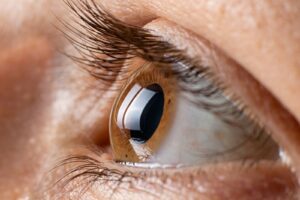

Residual power after LASIK is the small amount of refractive error — myopia, hyperopia, or astigmatism — that remains after surgery, distinct from a fully corrected result. It’s not the same thing as regression, though the two get conflated constantly in generic advice. Residual power means the original correction wasn’t quite complete from day one; regression means vision that was initially clear has drifted back over time. This guide keeps that distinction clear, backs the numbers with actual published data rather than round estimates, and covers correction options beyond the usual short list.
Key Takeaways
- Residual power and regression are different things — one is an incomplete initial correction, the other is a later drift in previously good vision.
- Enhancement rates after LASIK are generally reported between 2% and 5%, rising with higher original prescriptions.
- Published outcomes for enhancement procedures are strong — 86% reach 20/20 or better, and 93% land within ±0.50D of target, in a large study.
- A specific, published risk factor affects enhancement timing — epithelial ingrowth risk rises substantially when enhancement is delayed beyond five years.
- A non-surgical drop-based option exists for low residual myopia specifically, beyond the usual glasses-or-enhancement choice.
- Most residual power is minor and doesn’t meaningfully affect daily life, though higher original prescriptions carry a statistically greater chance of some remaining.
Residual Power vs. Regression — A Distinction Worth Making
These two terms get used almost interchangeably online, but they describe different situations. Residual power means the original LASIK procedure didn’t fully eliminate your refractive error — you walk away from surgery with some small remaining prescription from the start. Regression is different: vision was initially well-corrected, then gradually drifted back toward blur over subsequent months as the cornea’s healing response continued. Both can end up needing similar solutions, but knowing which one applies to your situation changes how your surgeon evaluates and times any further treatment.
Which Applies to You? A Quick Self-Check
Before your next follow-up, this quick comparison helps you describe what you’re actually experiencing more precisely.
| What You’ve Noticed | Likely Category |
|---|---|
| Vision was never quite sharp, even right after surgery | ⚠️ Likely residual power |
| Vision was clear for months, then gradually softened | ✅ Likely regression — a different pattern with its own evaluation path |
| Your follow-up reading was taken within the first few weeks | ⚠️ Too early to call either — healing may still be settling |
Why Some Residual Astigmatism Is Built In, Not a Surgical Miss
This is a genuinely underexplained piece of the picture: some residual astigmatism isn’t a sign the laser undershot its target at all. It’s called ocular residual astigmatism (ORA) — a component of astigmatism that comes from internal optical elements of the eye, not the cornea, meaning corneal-reshaping procedures like LASIK simply can’t reach it no matter how precisely they’re executed.
| Data Point | Finding | Source |
|---|---|---|
| Mean ocular residual astigmatism | 0.75D (± 0.39D), range 0.00–2.00D | Peer-reviewed study, 2,991 eyes |
| Eyes with ORA of 1.00D or more | 46% | Same study |
| Factors associated with lower ORA | Higher myopic sphere, male sex, dominant eye | Same study, statistical analysis |
In plain terms: nearly half of eyes studied carried at least 1.00D of this internal, non-corneal astigmatic component before surgery even began. Surgeons increasingly account for ORA specifically through vector-based planning rather than treating the manifest refraction number alone, which is part of why a specific residual astigmatism reading deserves this context rather than being read as a simple pass-or-fail grade on the surgery itself.
Verified Data: How Common Is Residual Power?
Rather than a general “it’s uncommon” reassurance, here’s what published outcome data actually shows.
| Data Point | Figure | Source |
|---|---|---|
| LASIK enhancement rate, general population | 2–5% | Cross-referenced across multiple clinical sources |
| Vision outcome 12 months after enhancement (20/20 or better) | 86% of eyes | Peer-reviewed study, 901 enhanced eyes |
| Eyes within ±0.50D of target after enhancement | 93% | Same study |
| Overall LASIK complication rate, for context | ~1% | Clinical outcomes reporting |
The consistent theme is that when residual power does occur, addressing it works well — enhancement isn’t a sign the first procedure failed, it’s a documented, predictable fine-tuning step with strong published outcomes behind it.
Verified Data: Does Technology Choice Affect Residual Power?
Rather than general risk factors, here’s a more specific and often-overlooked question: how much does the planning technology itself affect the odds of residual power? Published comparative studies give a clear answer.
| Comparison | Finding | Source |
|---|---|---|
| Conventional vs. wavefront-guided LASIK, 20/20 UCVA rate | 64% conventional vs. 86% wavefront-guided (one system studied) | Peer-reviewed FDA trial comparison |
| Wavefront-guided vs. wavefront-optimized, predictability within ±0.50D | 87% (WFG) vs. 78% (WFO) | Peer-reviewed comparative study |
| Topography-guided (Contoura) vs. wavefront-optimized, enhancement need | Zero enhancements in the topography-guided group vs. 5 in the wavefront-optimized group (100 vs. 97 eyes) | Peer-reviewed matched-cohort study |
That last comparison is the one worth sitting with: in a matched, nearly 200-eye dataset, the more advanced planning approach didn’t just produce marginally better numbers — it eliminated the need for enhancement entirely in that cohort, while the other approach still required five. Technology choice is a genuinely underweighted factor in most “why does residual power happen” discussions, compared to how much it actually seems to matter — worth raising directly when comparing standard versus custom LASIK planning approaches during your own consultation.
Correction Options Beyond the Obvious
Glasses, contact lenses, and laser enhancement are the options most articles list — all genuinely valid, and enhancement in particular has the strong outcome data shown above. What’s less commonly mentioned is a non-surgical option specifically for low residual myopia: a published retrospective study found that brimonidine tartrate 0.15% drops reduced residual myopia by up to 0.5D in roughly half of the patients studied, with better response linked to slightly higher baseline residual error and older age. This isn’t a replacement for enhancement in every case, but it’s a genuine, published, drop-based option worth knowing about specifically for the smaller end of residual power, before assuming surgery is the only next step.
Why Enhancement Timing Matters
If enhancement is the right path for you, when it happens matters more than many patients realise. A large comparative study found that the risk of epithelial ingrowth — cells migrating beneath the flap edge — rose sharply when enhancement was performed more than five years after the original LASIK, with a substantially higher odds ratio than shorter intervals. This is one of the more specific, practical reasons discussing enhancement timing directly with your surgeon matters, rather than delaying indefinitely once residual power is confirmed and stable.
Bottom Line
Residual power after LASIK is a small, well-documented, and generally manageable outcome — distinct from regression, occurring in a minority of cases, and addressed with strong published success when treatment is needed. If you’re dealing with a very specific residual number, our dedicated guides on 0.5 power after LASIK and 0.75 astigmatism after LASIK go into that exact scenario in more detail than a general overview can.
Noticing residual blur after your own LASIK? Book a consultation at Visual Aids Centre — a proper evaluation confirms whether it’s residual power, regression, or simply still-settling healing, and maps out the right next step accordingly.
Frequently Asked Questions
What is residual power after LASIK?
It’s a small amount of refractive error — myopia, hyperopia, or astigmatism — remaining after LASIK, distinct from a fully corrected result. It differs from regression, which is a later drift in initially good vision.
How common is residual power after LASIK?
Enhancement rates, which address residual power directly, are generally reported between 2% and 5%, with higher original prescriptions associated with a greater likelihood.
Does enhancement surgery actually work well?
Published data is strong — one large study found 86% of enhanced eyes reached 20/20 vision or better, with 93% landing within ±0.50D of the intended target at 12 months.
Is there a non-surgical option for residual power?
For low residual myopia specifically, a published study found brimonidine tartrate 0.15% drops reduced residual myopia by up to 0.5D in roughly half of patients studied — a genuine option beyond glasses or surgery for smaller cases.
Does it matter when I get an enhancement?
Yes. Research shows the risk of epithelial ingrowth rises substantially when enhancement is delayed beyond five years after the original LASIK, making timing worth discussing directly with your surgeon.
Will residual power definitely need treatment?
Not necessarily. Many cases are minor enough not to affect daily life meaningfully. Treatment becomes a consideration when residual power causes noticeable blur, glare, or dependence on glasses for specific tasks.
👁️ MEDICALLY REVIEWED BY
Padmashree Vipin Buckshey
BS Optometry | AIIMS Graduate, 1977 | Padma Shri Honouree | Official Optometrist to the President of India | Laser Vision Correction Specialist & Founder, Visual Aids Centre
Distinguishing genuine residual power from ongoing healing or regression is one of the more nuanced parts of post-LASIK follow-up Vipin Buckshey performs, since the right next step depends entirely on which one is actually happening. He founded Visual Aids Centre in 1980 — the first eye centre in Delhi to introduce LASIK surgery in 1999 — and has overseen 250,000+ Laser Vision Correction procedures across a 45-year career. The outcome data and risk factors cited in this article reflect published refractive surgery literature, not a proprietary claim. Read more at our story.