
Yes, itchy eyes two weeks after LASIK are common, and in most cases they’re a normal part of dry-eye healing — but there’s one instinct you need to resist regardless of how normal it is. Your corneal flap is still settling into place at this stage, and rubbing an itchy eye is one of the few things that can genuinely put your surgical outcome at risk. This guide covers why the itch happens, why it’s specifically dangerous to scratch it right now, how to tell ordinary healing from an allergic reaction, and what actually helps.
Key Takeaways
- Itchy eyes at 2 weeks are usually from disrupted corneal nerves, not infection — a normal, temporary part of dry-eye healing.
- Don’t rub, even lightly — your flap hasn’t fully adhered yet, and rubbing is the single most common patient-controlled cause of flap displacement.
- Nighttime rubbing is the bigger risk, not the daytime urge — most of it happens unconsciously during sleep, which is exactly why your eye shield matters more than it seems to.
- True itch and dry-eye irritation feel different — intense itch points toward an allergic component, not just surgical dryness.
- Preservative-free lubricating drops are the safe substitute for the urge to rub, not antihistamine drops by default.
- Itch paired with pain, discharge, or sudden blur is different from ordinary healing and needs a same-day call to your surgeon.
Why Eyes Itch at Exactly This Stage
LASIK temporarily disrupts the corneal nerves that both trigger a normal blink and signal your brain to keep producing tears. There’s a second, more precise mechanism worth knowing: the suction step also measurably reduces goblet cell density — the cells in your conjunctiva that produce the mucin layer holding your tear film in place. One study found goblet cell counts dropped by roughly half within a week of surgery and remained reduced a full month later. With fewer of these cells doing their job, tears evaporate faster and the surface reacts with exactly the gritty, itchy sensation you’re likely feeling. Two weeks in is a typical point for this to be noticeable — early enough that healing is still active, past the point where most patients expect lingering symptoms.
| Data Point | Finding |
|---|---|
| Dry eye symptoms at 1 month post-LASIK | Still present in roughly 60% of patients |
| Goblet cell density after the suction step | Dropped from ~424 to ~216 cells/mm² within a week, still reduced (~218 cells/mm²) at 1 month |
| Typical resolution | Symptoms usually peak in the first months, easing over 6–12 months as nerves regenerate |
Sources: peer-reviewed post-LASIK dry eye literature; peer-reviewed conjunctival impression cytology study.
Our guides on how common dry eye actually is after LASIK and how long it typically lasts go deeper into this specific timeline if two weeks doesn’t match what you’re experiencing.
The One Thing You Must Not Do About It
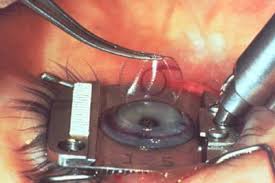
Whatever else you take from this article, this is the part that matters most: don’t rub your eyes, even gently, even through closed lids. At two weeks, your corneal flap has made real progress but hasn’t finished adhering — most surgeons place the meaningful risk window at two to four weeks, with the single highest-risk period being the first 72 hours. Mechanical force from rubbing is the most common patient-controlled cause of flap displacement, exactly because the urge is strongest when eyes itch the most.
| Data Point | Finding |
|---|---|
| Overall flap complication rate | 0.73% of eyes, per a 2025 peer-reviewed review |
| Sight-threatening complications specifically | Just 0.07% — genuinely rare |
| Timing of most displacement cases | Most occur in the first week; risk drops substantially by 3 months |
Sources: 2025 peer-reviewed flap-complication review; peer-reviewed flap-dislocation case series.
Our dedicated guide on what happens if you rub your eyes after LASIK covers the mechanics in full, and our week-by-week flap-healing timeline shows exactly where two weeks sits in that process.
Why Nighttime Itching Is the Bigger Risk
Here’s the part most itchy-eyes advice skips entirely: the daytime urge to rub is one you can consciously resist. The version you can’t control is what happens while you’re asleep. Unconscious eye rubbing during sleep, especially in REM phases, is common in the general population — and it’s precisely why your surgeon has you wearing a rigid protective shield at night rather than relying on willpower. If your eyes are itchier at night or first thing in the morning, that’s typical — blink rate drops during sleep, which lets the surface dry out further — but it also means this is exactly when an unshielded hand is most likely to do damage without you knowing it happened. Our guide on how long to wear the eye shield at night covers the exact schedule for your stage of recovery.
Is It Healing, or an Allergic Reaction?
Not all post-LASIK irritation is the same, and the distinction changes what actually helps.
| What You’re Feeling | Likely Cause |
|---|---|
| Gritty, scratchy, “sand in the eye” sensation, mild and gradual | ✅ Typical post-LASIK dry eye — lubricating drops usually help |
| Intense itch with a strong urge to rub, especially with watering or a runny nose | ⚠️ Possible allergic component — worth mentioning at your follow-up |
| Itch or irritation alongside pain, discharge, or sudden blurred vision | ❌ Contact your surgeon the same day |
Clinically, true itch is largely histamine-driven — the hallmark of an allergic response — while plain post-LASIK dryness tends to feel more like burning or grittiness than an urge to scratch. One useful clue for your surgeon: if the sensation eases with a blink and a fresh drop, that points toward dryness; if it seems to build the more you’re tempted to rub, that leans allergic. Either way, resist testing this by actually rubbing — report it instead.
Safe Ways to Get Relief
- Use preservative-free lubricating drops every 1–2 hours for now. This is the direct substitute for rubbing, not a delayed measure — our guide on how long and how often to use artificial tears covers the exact taper as you heal, and the best eye drops for dry eyes after LASIK covers which formulations to look for.
- Press a clean, cold compress gently over closed lids, not into the eye itself, to ease the sensation without mechanical rubbing.
- Ask before using antihistamine drops — some reduce tear production and can make dryness-driven irritation worse rather than better, so they’re not a safe default without your surgeon’s input.
- Cut back on screen time where possible, since concentrated focus lowers your blink rate and lets the surface dry out faster.
Woke Up and Think You Rubbed Your Eyes?
A genuinely common worry, and one worth a clear answer rather than a night of panic-searching.
| What You Notice | What It Likely Means |
|---|---|
| Shield came loose, but vision looks the same as yesterday and there’s no new pain | ✅ Reassuring — mention it at your next check, no need to panic |
| Mild extra grittiness or watering, vision still stable | ⚠️ Worth a same-day call to confirm, not necessarily an emergency |
| Sudden blur, sharp pain, or vision noticeably worse than before you slept | ❌ Contact your surgeon immediately — don’t wait for your scheduled visit |
When It’s More Than Normal Healing
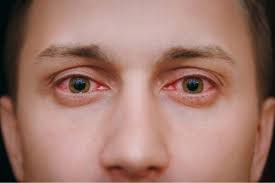
Itch alone, however persistent, is rarely an emergency. What changes the picture is itch combined with something else: sharp pain, a sudden drop in vision clarity, unusual discharge, or redness that’s spreading rather than settling. Any of these — especially paired with a sensation that something shifted after you touched your eye — warrants an urgent check rather than waiting it out; our guide on recognising a shifted flap covers exactly what that looks like versus ordinary itch.
Bottom Line
Itchy eyes two weeks after LASIK are common and usually just dry-eye healing working its way through — but the flap underneath is still vulnerable enough that rubbing isn’t a safe way to deal with it. Reach for preservative-free drops instead, watch for whether it’s a gritty dryness or a genuine allergic itch, and treat pain or sudden vision change as your signal to call, not wait.
Not sure which one you’re dealing with? Book a consultation at Visual Aids Centre — a quick check confirms whether your flap and healing are exactly on track.
Frequently Asked Questions
Is it normal to have itchy eyes 2 weeks after LASIK?
Yes — it’s usually dry-eye healing from disrupted corneal nerves, and it typically continues improving over the following months.
Can I rub my itchy eyes at this stage?
No. Your flap hasn’t fully adhered yet, and rubbing is the most common cause of flap displacement — use lubricating drops instead.
I think I rubbed my eyes in my sleep — should I panic?
Not immediately. If your vision looks the same as before and there’s no new pain, mention it at your next check; a sudden change in vision needs a same-day call.
How do I know if it’s dry eye or an allergy?
Intense itch with an urge to rub leans allergic; a gritty, burning sensation without much itch is more typical of ordinary post-LASIK dryness.
Are antihistamine eye drops safe to use?
Check with your surgeon first — some antihistamine drops reduce tear production and can worsen dryness-driven irritation.
When should I actually call my surgeon about itchy eyes?
If the itch comes with pain, discharge, spreading redness, or a sudden drop in vision clarity — not for ordinary grittiness alone.
👁️ MEDICALLY REVIEWED BY
Padmashree Vipin Buckshey
BS Optometry | AIIMS Graduate, 1977 | Padma Shri Honouree | Official Optometrist to the President of India | Laser Vision Correction Specialist & Founder, Visual Aids Centre
The two-week itch is one of the most common calls Vipin Buckshey’s team fields, precisely because it lands right at the point where dry-eye healing peaks and the temptation to rub is strongest. He founded Visual Aids Centre in 1980 — the first eye centre in Delhi to introduce LASIK surgery in 1999 — and has overseen 250,000+ Laser Vision Correction procedures across a 45-year career, including routine management of exactly this presentation at post-operative reviews. The guidance in this article reflects standard post-operative practice and published ophthalmology literature, not a proprietary protocol. Read more at our story.