
You have successfully completed your LASIK surgery. The procedure was painless, you are already noticing a dramatic improvement in your vision, and now you are resting at home. Naturally, your first instinct is to pull out your smartphone to text your family or turn on the television to pass the time. But before you look at a digital display, you need to ask: what is the ideal time for no screen time after LASIK surgery?
In a world where we are constantly tethered to our devices, taking a strict digital detox is one of the hardest parts of post-operative recovery. However, prematurely exposing your sensitive, healing corneas to the intense glare and blue light wavelengths of modern screens can lead to severe dry eye, prolonged discomfort, and unnecessary visual strain. At Visual Aids Centre, we advise patients to take this screen-free window seriously. This comprehensive guide explains exactly how long you should avoid screens, why LED lighting affects your recovery, and how to safely reintroduce your favourite devices without compromising your surgical results.
Key Takeaways
- Absolute Minimum: You must avoid all screens—phones, TVs, and computers—for at least the first 24 hours following your procedure.
- The Ideal Window: For devices held close to your face (smartphones and tablets), extending your screen-free period to 48 hours is highly recommended.
- The Blinking Factor: Staring at screens drastically reduces your blink rate, which exacerbates post-LASIK dry eye and irritation.
- Blue Light Hazard: LED screens emit blue light wavelengths that can be harsh on highly sensitised, recovering corneas.
Why Your Eyes Are So Sensitive After Surgery
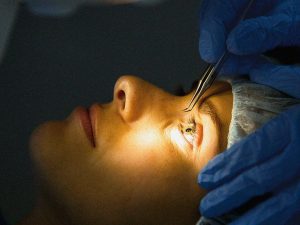
To understand why a screen break is necessary, it helps to briefly look at what takes place during the procedure. LASIK is a minimally invasive surgery performed under local anaesthetic drops. The eye surgeon uses a highly precise laser to reshape the underlying corneal tissue, which involves creating and then painlessly replacing a thin corneal flap. The entire process takes less than 20 minutes per eye.
While there are no bandages or stitches required, your eyes have just undergone a profound structural change. In the hours immediately following surgery, your corneas are beginning the critical first phase of healing. The sensory nerves on the surface of your eye have been temporarily disrupted. If you were researching how to choose the best LASIK surgeon prior to your procedure, you likely learned that patient compliance during this early healing phase is just as important as the surgeon’s skill. Exposing your eyes to the harsh glare of a screen right now forces them to focus intensely when all they need to do is rest in a dim environment.
The Ideal “No Screening” Timeline
The healing process unfolds in stages. While initial recovery is fast, full corneal stabilisation takes up to six weeks. Here is the ideal timeline for managing your digital exposure.
The First 24 Hours: Complete Digital Detox
Can you watch TV immediately after getting LASIK? In a nutshell, no. Your eyes will be tired, sensitive to light, and potentially a little cloudy. You must avoid all screens for at least 24 hours. The best thing you can do during this window is keep your eyes closed as much as possible. Listen to an audiobook, play some soft music, or take a long nap. The less visual processing your brain and eyes have to do, the faster your epithelial cells will regenerate.
24 to 48 Hours: The Danger of Smartphones
While you might be able to glance at a television from across the room after a day, handheld devices are a different story. Smartphones and tablets require intense, close-up focusing. Because of this, it is strongly advised to keep these devices away for closer to 48 hours. If you are a young professional wondering if LASIK is worth the downtime, remember that sacrificing two days of Instagram is a very small price to pay for decades of perfect vision.
After 48 Hours: Gradual Reintroduction
Once you cross the two-day mark, you can begin checking emails and watching television in short intervals. However, if you experience sudden stinging, excessive watering, or a gritty sensation, step away immediately. For a deep dive into managing heavy workloads, our guide on when to resume full-time computer work provides specific ergonomic tips.
How LED Wavelengths and Mobile Radiation Affect Recovery
It is not just the act of focusing that causes strain; it is the type of light you are looking at. Modern televisions, laptops, tablets, and smartphones utilise LED (light-emitting diode) technology. These screens emit a high concentration of blue and white light wavelengths.
Under normal circumstances, your eyes handle this light relatively well (though it can still cause digital eye strain). But immediately following refractive surgery, your eyes are exceptionally vulnerable. These specific wavelengths can be hazardous to a freshly treated cornea, causing intensified irritation and digital eye strain. Furthermore, looking at screens drastically reduces your blink rate. Normally, you blink about 15 times a minute. Staring at a smartphone drops that rate to 5 or 7 times a minute, causing your tear film to evaporate. This leads to severe dry eye, which can mimic symptoms of nerve irritation and significantly delay your comfort and visual clarity.
Safe Screen Habits for the First 6 Weeks
Once you resume your normal digital life, your eyes are still technically healing. To protect your investment—especially if you had a complex prescription and want to avoid needing LASIK twice or multiple laser treatments in the future—adopt these protective habits:
- Use the 20-20-20 Rule: Every 20 minutes, look at an object 20 feet away for at least 20 seconds. This relaxes your focusing muscles.
- Artificial Tears Are Your Best Friend: Keep preservative-free lubricating drops at your desk. Use them proactively before your eyes feel dry, not just when they start burning.
- Lower the Brightness: Turn down the brightness on your monitors and enable “Night Shift” or “Eye Comfort” modes on your devices to filter out harsh blue light.
- Blink Consciously: Remind yourself to blink fully and frequently while typing or reading.
Conclusion
Patience is the ultimate key to a successful LASIK recovery. The ideal time for no screening after LASIK surgery is an absolute minimum of 24 hours, extending to 48 hours for smartphones and tablets. By giving your eyes a strict break from blue light wavelengths and the intense focus required by digital displays, you allow the delicate corneal tissues to heal smoothly and comfortably. Put the phone down, close your eyes, and let your body do its work. If you have any concerns about your recovery timeline or wish to determine your candidacy for vision correction, book a consultation with Visual Aids Centre today.
Frequently Asked Questions (FAQs)
Can I watch TV 12 hours after LASIK?
No. You should avoid watching television for at least the first 24 hours. Your eyes need rest, and the bright, shifting light from a TV can cause severe strain and discomfort during the initial healing phase.
Why do screens hurt my eyes after LASIK?
Screens emit blue and white LED wavelengths that are harsh on sensitive, healing eyes. Additionally, looking at screens reduces your blink rate by over 50%, leading to rapid tear evaporation and painful dry eye.
How long should I avoid my smartphone after surgery?
It is highly recommended to avoid your smartphone for 48 hours. Handheld devices require intense close-up focus, which strains the eye muscles much more than looking at a distant television.
Will using a screen too early ruin my LASIK results?
It will not permanently “ruin” or reverse the physical laser correction, but it can cause severe dry eye, prolong your recovery time, and cause significant, avoidable pain and blurred vision.
Can I wear blue light blocking glasses after LASIK?
Yes. Once your surgeon clears you to use screens (typically after 24-48 hours), non-prescription blue light blocking glasses can help reduce glare and eye strain while you work.
👁️ MEDICALLY REVIEWED BY
Padmashree Dr. Vipin Buckshey
Senior Eye Surgeon & LASIK Specialist | AIIMS Graduate, 1977 | Padma Shri Honouree
With over four decades of clinical experience and more than 250,000 successful vision correction procedures, Dr. Vipin Buckshey is a leading authority on refractive surgery recovery. A distinguished AIIMS alumnus and the official optometrist to the President of India, Dr. Buckshey ensures that every post-operative protocol at Visual Aids Centre meets the highest global standards for safety and long-term visual excellence. Learn more about our legacy of clinical excellence.