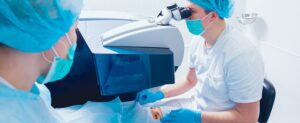

One of the first things patients ask after booking their SMILE Pro procedure is: “What is recovery actually going to feel like?” It’s a sensible question—and one that deserves a straight answer rather than a polished summary. The good news is that SMILE Pro has one of the most forgiving recovery profiles of any laser vision correction procedure available today. Most patients notice a meaningful vision improvement within hours, and the majority are back to their regular routine within 24–48 hours. But knowing exactly what to expect at each stage—and what’s normal versus what needs attention—makes the whole experience far less stressful.
This guide walks you through the recovery process phase by phase, from the moments immediately after surgery through the first few weeks, along with the practical habits that make the biggest difference to how comfortably you heal.
Key Takeaways
- SMILE Pro is a flapless, keyhole laser procedure — the absence of a corneal flap means faster initial stabilisation and less risk of mechanical disruption during recovery.
- Vision improvement is typically noticeable within hours of surgery, with full stabilisation taking several weeks to a few months.
- Mild dryness, light sensitivity, and transient blurriness in the first few days are expected and normal — they are not signs that something has gone wrong.
- SMILE Pro causes significantly less post-operative dry eye than flap-based LASIK, because fewer corneal nerves are disrupted by the keyhole incision.
- Follow-up appointments, prescribed eye drops, and avoiding eye rubbing are the three most important things you can do to protect your outcome.
Why SMILE Pro Recovery Differs From LASIK
Understanding what makes SMILE Pro recovery distinctive starts with understanding what the procedure actually does. Unlike LASIK, which creates a corneal flap, SMILE Pro extracts a tiny disc of corneal tissue (a lenticule) through a 2–4mm keyhole incision. No flap is created, no flap needs to heal, and the structural integrity of the cornea is preserved to a much greater degree. This is not a minor detail—it directly translates into a more predictable, lower-risk recovery experience.
The flapless approach means there is no risk of flap dislodgement during the healing period. It also means fewer corneal nerve fibres are severed during surgery, which is the primary reason SMILE Pro is associated with significantly lower post-operative dry eye rates compared to standard LASIK. For patients who already tend toward dry eyes, or who spend extended hours on screens, this biomechanical advantage is clinically meaningful. Our comparison article on why SMILE Pro recovery is faster than standard SMILE explains the specific anatomical reasons in further detail.
Immediate Post-Surgery: First Few Hours
Immediately after the procedure, you’ll spend a short time in the recovery room while the clinical team confirms your initial status. The surgery itself typically takes under 10 minutes for both eyes, and most patients are surprised by how little they felt during it. What comes after is straightforward, but it helps to know what to expect.
What You Will Feel
In the first hour or two, expect mild grittiness, watery eyes, and some light sensitivity. A slight foreign-body sensation is common and usually resolves within the first day. Your vision will likely be hazy or blurred immediately after surgery—this is entirely normal and is one of the most commonly misunderstood aspects of the early recovery period. It reflects the eye settling rather than a problem with the procedure. For a detailed breakdown of this specific window, our guide on what to expect in the first 24 hours after SMILE Pro covers it in full.
What You Should Do
Go home and rest with your eyes closed as much as possible. Have someone drive you—you won’t be able to drive yourself. Keep your prescribed eye drops with you and begin using them on the schedule your surgeon has set. Do not rub or touch your eyes under any circumstances, even if the grittiness is uncomfortable. Protective eye shields are typically provided to wear during sleep for the first few nights, preventing accidental contact while you’re unaware.
First Few Days: What to Expect
Most SMILE Pro patients notice a significant jump in vision clarity within 24 hours—often well enough to be genuinely surprised at how quickly things sharpen up. That said, vision at this stage is not yet fully stable, and several sensations remain common and expected.
Normal Symptoms in Days 1–3
- Mild dryness and grittiness — the most consistently reported sensation, driven by temporary disruption to corneal nerve signalling that governs tear production. Far less pronounced after SMILE Pro than after LASIK, but present nonetheless.
- Light sensitivity — particularly to bright light and screens. If you find indoor lights more intense than usual, this is the corneal surface adjusting. Sunglasses outdoors are essential during this window. Our article on why lights appear blurry after SMILE Pro explains the mechanism and typical duration.
- Fluctuating vision — your vision may vary slightly at different times of day, especially between waking and mid-morning as the tear film stabilises. This is normal and self-resolving.
- Mild itching — the incision site heals from within, and itching is a natural part of tissue repair. The response to this must not be rubbing.
What to Avoid in the First 72 Hours
Screen use should be kept brief and intentional—this is not the time to catch up on a full day’s email. Avoid getting water directly in your eyes; showering is fine, but keep your face tilted and eyes closed. Our guide on showering safely after SMILE Pro surgery gives practical guidance on technique. Strenuous physical activity, swimming, and anything that risks eye contact or sweat around the eyes should wait. And a reminder worth repeating: do not rub your eyes, no matter how strong the urge.
The First Week: Vision Settling In
By the end of the first week, most patients are functionally clear-sighted and managing daily life comfortably. Dryness and light sensitivity are typically decreasing, and the fluctuating-vision pattern of the first few days has usually stabilised into something much more consistent. Our dedicated guide on what one week after SMILE Pro looks like gives a detailed picture of this milestone point.
Activities You Can Resume
Most routine daily activities are fine—including light office work, reading, and normal household tasks. Screen use can increase progressively as comfort allows; the 20-20-20 rule (every 20 minutes, look 20 feet away for 20 seconds) remains useful in reducing residual eye strain. Light walking is generally fine. What remains off-limits: contact sports, gym sessions involving heavy lifting or impact, swimming, and anything that puts pressure on or near the eye area. For specific guidance on physical activity, see our article on exercising after SMILE Pro.
Eye Drops and Follow-Up
Continue using your prescribed antibiotic and anti-inflammatory drops for the full course—stopping early because your eyes feel fine is one of the most common patient mistakes. Your first formal post-operative review typically occurs within this first week. Attend it without fail; it’s the checkpoint where your surgeon confirms healing trajectory and addresses any early concerns. If you experience persistent dryness after SMILE Pro surgery, mention it at this appointment so management can be adjusted early.
Weeks Two to Four: Near-Normal Life Resumes
The second and third weeks represent the transition from active recovery to normal life with improving vision. The majority of patients are spectacle-free and functioning well by this point, though some residual dryness in variable conditions—air conditioning, wind, extended screen use—is not unusual and should be managed with preservative-free lubricating drops.
Swimming can be resumed around the four-week mark with your surgeon’s clearance, ideally with goggles initially to reduce chemical and biological exposure to the healing ocular surface. Running and most gym activity is usually cleared between weeks two and three, though contact sports generally require a longer wait. Our article on when you can run after SMILE Pro covers the specific timeline and precautions.
Driving is permitted once your vision meets the legal standard for driving in your country and your surgeon has confirmed it at a follow-up review—not before. Eye makeup can typically resume around the one-week mark for non-lash-line products, with full resumption around two to three weeks for products applied closer to the eye. The hygiene risks of eye cosmetics during the healing period are real, and it’s worth following the timeline rather than estimating.
Tips for a Smooth Recovery
Beyond following the phase-specific guidance above, a handful of consistent habits make a disproportionate difference to recovery comfort and outcome quality.
- Use lubricating drops preventively, not reactively. Apply them before screen sessions and before going outdoors—not just when your eyes already feel dry. A preservative-free formulation is preferable for frequent use.
- Sleep with the provided protective shields for the first week. It’s easy to forget this instruction once discomfort subsides—but nighttime rubbing is an involuntary risk worth eliminating entirely.
- Wear wraparound sunglasses outdoors for at least the first month. UV exposure on a healing cornea is both uncomfortable and counterproductive. This applies on overcast days too.
- Keep follow-up appointments, even when you feel fine. The surgeon can detect early changes in healing that aren’t symptomatic yet. Catching them early is straightforwardly better than managing them later.
- Support healing through diet. Nutrients like omega-3 fatty acids, vitamin A, and zinc support corneal and tear film health.
- Avoid any eye rubbing. This cannot be overstated. Even gentle rubbing in the weeks following SMILE Pro can affect corneal shape and healing. If the itch is irresistible, apply a cold lubricating drop and keep your hands away.
Red Flags: When to Call Your Surgeon
Most of what patients experience during SMILE Pro recovery is predictable and self-resolving. A few symptoms, however, require prompt attention rather than watchful waiting.
- Vision that worsens progressively over days rather than fluctuating with time of day or dryness.
- Significant pain or burning that doesn’t settle with lubricating drops and rest.
- Discharge from the eye — any pus, crusting, or unusual secretion is a potential indicator of infection and should be seen the same day.
- Sudden increase in light sensitivity, particularly when paired with discomfort—this combination warrants an urgent call to your clinical team.
- Any vision changes after accidentally rubbing your eyes — contact your surgeon promptly rather than monitoring at home.
If you’re unsure whether a symptom is normal, call the clinic. A brief reassurance call is far preferable to delayed intervention for something that needed attention earlier.
Conclusion
SMILE Pro recovery is genuinely one of the most straightforward in laser vision correction—faster initial visual clarity than most alternatives, less post-operative dryness, and a return to daily activities within 24–48 hours for most patients. The things that matter most are simple: follow your surgeon’s instructions, use your drops consistently, protect your eyes from rubbing and UV exposure, and attend every follow-up appointment. Do those things and the vast majority of patients look back on recovery as easier than they expected.
At Visual Aids Centre, every SMILE Pro patient receives a complete personalised recovery plan before leaving the clinic, because we know that how well you recover is as important as the procedure itself. If you’re considering SMILE Pro and want to understand whether it’s right for your eyes and lifestyle, book a consultation with our team.
Frequently Asked Questions (FAQs)
How long does SMILE Pro recovery take?
Most patients are back to routine daily activities within 24–48 hours. Full vision stabilisation typically takes four to eight weeks, though many patients are functionally clear-sighted well before that. The complete healing of corneal tissue at a microscopic level takes several months.
Is SMILE Pro recovery faster than LASIK?
Yes, for most patients. The flapless approach means there is no risk of flap-related complications and fewer corneal nerves are disrupted, resulting in faster initial visual clarity and significantly less post-operative dryness. Our article comparing SMILE Pro versus LASIK covers the key differences in detail.
When can I use my phone or watch TV after SMILE Pro?
Brief, essential phone use is generally fine from day two—keep sessions under 15 minutes initially and increase gradually as comfort allows. Watching TV is typically manageable within the first day or two. See our specific guide on using your phone after SMILE Pro.
Why is my vision blurry a few days after SMILE Pro?
Transient blurriness in the first days to weeks is normal and expected. It is most commonly caused by the tear film being temporarily unstable—a side effect of corneal nerve disruption that resolves as nerves regenerate.
When can I exercise after SMILE Pro?
Light walking is generally fine within the first week. More vigorous cardio is typically cleared at the two-week mark; gym sessions involving impact or overhead lifting usually require clearance at your follow-up. Contact sports should wait at least four to six weeks. See our guide on exercise after SMILE Pro for a full activity-specific breakdown.
How do I shower after SMILE Pro without getting water in my eyes?
For the first 24–48 hours, avoid getting any water on your face. From day two or three, gentle showering with eyes closed and head tilted back is generally fine. Avoid direct showerhead pressure on the face. See our full guidance on showering in the first days after SMILE Pro for step-by-step technique.
👁️ MEDICALLY REVIEWED BY
Padmashree Dr. Vipin Buckshey
Optometrist & Post-Operative Care Specialist | AIIMS Graduate, 1977 | Padma Shri Honouree
With more than four decades of clinical experience and over 250,000 laser vision correction procedures performed at Visual Aids Centre, Dr. Vipin Buckshey has shaped the post-operative protocols that guide SMILE Pro patients through every stage of their recovery—from the first hour post-procedure through to full visual stabilisation. An AIIMS alumnus, former President of the Indian Optometric Association, and official optometrist to the President of India, Dr. Buckshey personally reviews all clinical content at Visual Aids Centre to ensure it reflects the evidence and serves genuine patient need. Learn more about the centre’s clinical philosophy and history at our story.