If you’re a smoker planning LASIK eye surgery, here’s the short answer: no, you should not smoke after LASIK—and ideally, you should stop well before the procedure too. Cigarette smoke introduces hundreds of irritants directly into a healing cornea, slowing recovery and raising the risk of complications that could compromise your results.
LASIK reshapes the cornea using a precision laser, creating a thin flap that needs an uninterrupted window to stabilise and reattach. During that critical period, everything from tear quality to blood flow matters—and smoking undermines both. This guide explains exactly why tobacco smoke is dangerous after refractive surgery, how long you need to abstain, and what you can do to protect your investment in clearer vision. Whether you had Femto LASIK, Contoura Vision, or SMILE Pro, the advice below applies.
Key Takeaways
- Avoid all smoking for at least 3–5 weeks before and 4–6 weeks after LASIK surgery.
- Cigarette smoke irritates the corneal surface, worsens dry eye, and slows flap healing.
- Smokers face a higher risk of post-operative infection and corneal flap complications.
- LASIK recovery is an excellent opportunity to quit smoking permanently.
What Is LASIK Eye Surgery?
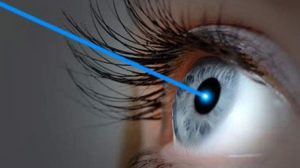
LASIK (Laser-Assisted In Situ Keratomileusis) is a refractive laser procedure that corrects vision by permanently reshaping the cornea—the clear front surface of the eye. A femtosecond laser creates a thin corneal flap, an excimer laser removes microscopic tissue to adjust the curvature, and the flap is repositioned. The entire process takes roughly 10–15 minutes per eye, and most patients notice dramatically sharper vision within 24 hours.
Because the corneal flap must bond back to the underlying stroma without disruption, the post-operative healing environment matters enormously. That is precisely where smoking becomes a serious concern.
Why Is LASIK Done?
LASIK is performed to correct three common refractive errors. Myopia (nearsightedness) occurs when the eyeball is slightly longer than normal, causing distant objects to appear blurry. Hyperopia (farsightedness) is the opposite—the eyeball is shorter, so close-up vision suffers. Astigmatism results from an irregularly curved cornea that distorts both near and far vision. If you are considering surgery for any of these conditions, understanding who qualifies—and who doesn’t—is the first step.
Can You Smoke After LASIK Surgery?
Absolutely not—at least not during the healing window. Smoking after LASIK is one of the most avoidable risks a patient can take, and here’s why it matters:
It Restricts Blood Flow
Nicotine constricts blood vessels throughout the body, including the fine capillaries that supply oxygen and nutrients to the eye. Reduced circulation slows the delivery of growth factors the cornea needs to heal. In severe cases, smoking-related vascular changes can cause retinal vascular occlusions—clots that may lead to permanent vision loss.
It Worsens Dry Eye
Dry eye is the most common side effect after LASIK, and cigarette smoke makes it significantly worse. The chemicals in tobacco degrade tear film quality by disrupting the lipid layer that prevents evaporation. If you already experience post-surgical dryness, smoking can push mild discomfort into painful dry-eye syndrome.
It Causes Irritation and Inflammation
Smoke particles act as direct chemical irritants. Your eyes will be unusually sensitive after surgery, and exposure to smoke—even secondhand—can trigger burning, redness, and excessive tearing. This inflammatory response interferes with epithelial regeneration and can delay recovery by weeks.
It Slows Overall Recovery
Research consistently shows that smokers heal more slowly from surgical procedures than non-smokers. Nicotine suppresses immune function, making the body less efficient at fighting off bacteria and repairing tissue. After LASIK, a weakened immune response means the corneal flap takes longer to stabilise, extending the period during which complications can occur. For a detailed timeline, see our guide on how long LASIK takes to heal.
Potential Post-Op Complications Linked to Smoking
The combination of slower healing and a suppressed immune system creates a window for serious complications. Infection is the primary worry—bacteria that would normally be cleared by healthy immune cells can colonise the flap interface, leading to diffuse lamellar keratitis (DLK) or other inflammatory conditions. Corneal flap issues, including flap wrinkles or displacement, are also more likely when the tissue heals unevenly due to poor circulation.
Eye Irritation and Smoking-Related Side Effects
Beyond infection, smoking amplifies everyday post-surgical side effects. The smoke from cigarettes and cigars contains formaldehyde, ammonia, and hundreds of other compounds that directly irritate the ocular surface. After LASIK, this can trigger a cascade of problems: poor tear quality, persistent redness, a gritty sensation, and in worst-case scenarios, complete failure of the surgical outcome. Patients who continue smoking also report higher rates of persistent glare and slower visual stabilisation.
If you are already managing dry eyes after LASIK, adding cigarette smoke to the equation is like pouring salt on an open wound.
Stop Smoking Before Your LASIK Procedure
Ideally, you should quit all tobacco products—cigarettes, cigars, vapes, and nicotine pouches—at least three to five weeks before your surgery date. This gives your body time to restore normal blood flow, improve tear production, and strengthen immune function. Think of it as putting your body in the best possible condition to recover quickly. This is a standard pre-operative instruction given to every surgical patient, not just LASIK candidates.
Do Not Smoke While You Are Healing
After the procedure, avoid smoking for a minimum of four to six weeks. This is the period during which the corneal flap reattaches and the epithelium fully regenerates. Even brief exposure to cigarette smoke during this time can trigger a severe eye infection or dry-eye flare that sets your recovery back substantially. Follow your surgeon’s post-op recovery instructions closely, and keep smoke-free environments a priority.
A Good Excuse to Quit for Good
Many patients at Visual Aids Centre tell us that LASIK became the turning point that motivated them to stop smoking permanently. After investing in your vision, it makes sense to protect it long-term. Quitting reduces your lifetime risk of cataracts, macular degeneration, and dozens of other health conditions. If you need support, speak to your doctor about nicotine-replacement therapies or counselling resources—they can make the transition much smoother.
Speak With a Laser Eye Surgeon
If you’re a smoker considering LASIK, the best thing you can do is have an honest conversation with your surgeon. At Visual Aids Centre, our team evaluates every patient individually—factoring in lifestyle habits, corneal health, and overall medical history—to design a recovery plan that maximises results. Book a consultation to discuss your specific situation and get personalised guidance on preparing for surgery.
Conclusion
Smoking after LASIK surgery is one of the most preventable risks you can eliminate. Tobacco smoke slows healing, weakens immune defences, worsens dry eye, and increases the chance of infection or flap complications. The consensus is clear: stop smoking at least three to five weeks before your procedure and abstain for four to six weeks after. Better yet, use the surgery as motivation to quit for good. Your eyes—and your overall health—will thank you. For expert advice tailored to your situation, schedule a consultation with the team at Visual Aids Centre today.
Frequently Asked Questions (FAQs)
How long after LASIK can I smoke?
You should avoid smoking for at least four to six weeks after LASIK. Your surgeon may extend this recommendation based on how your cornea is healing at follow-up visits.
Can secondhand smoke affect my eyes after LASIK?
Yes. Secondhand smoke contains the same chemical irritants as direct smoke and can trigger inflammation, dryness, and delayed healing. Avoid smoky environments during your recovery period.
Is vaping safer than smoking after LASIK?
Not significantly. Vape aerosol still contains nicotine and chemical compounds that irritate the ocular surface and constrict blood vessels. Treat vaping with the same caution as cigarette smoking after surgery.
Can smoking cause LASIK surgery to fail?
In extreme cases, yes. Chronic smoking can lead to severe dry eye, persistent inflammation, or infection—any of which may compromise your surgical outcome and require additional treatment.
Should I quit smoking before LASIK even if I plan to resume later?
Absolutely. Stopping three to five weeks before surgery improves blood flow, tear quality, and immune function—all essential for a smooth recovery. Even a temporary break makes a measurable difference.
👁️ MEDICALLY REVIEWED BY
Padmashree Dr. Vipin Buckshey
Optometrist & Post-Operative Care Specialist | AIIMS Graduate, 1977 | Padma Shri Honouree
With more than four decades of clinical experience and over 250,000 laser vision correction procedures performed Visual Aids Centre, Dr. Vipin Buckshey has refined every aspect of post-LASIK patient care—from surgical technique to the everyday recovery advice that prevents complications. An AIIMS alumnus, former President of the Indian Optometric Association, and official optometrist to the President of India, Dr. Buckshey personally reviews post-operative care protocols at the centre to ensure patients receive guidance grounded in real-world outcomes, not generic instructions.