
For anyone who has spent years reaching for glasses the moment they wake up, the idea of removing spectacles permanently with a single operation sounds almost too good to be true. The good news? It is very real. Modern refractive surgery can free most people from glasses and contact lenses for good — and the technology has never been safer or more precise.
This guide from Visual Aids Centre walks you through every surgical option for permanent spectacle removal, explains how each one works, who qualifies, and how to choose the procedure that genuinely fits your eyes — so you can make an informed, confident decision.
Key Takeaways
- Several proven operations can remove spectacles permanently — LASIK, SMILE Pro, Contoura Vision, and ICL among them.
- Corneal laser procedures reshape the cornea; lens-based procedures like ICL add a corrective lens inside the eye.
- The right choice depends on your prescription, corneal thickness, age, and lifestyle — not on which is “newest.”
- Most procedures are quick, largely painless, and offer fast recovery with clear vision within days.
- A diagnostic assessment is the only way to confirm which operation suits you.
Can You Really Remove Spectacles Permanently?
Yes — for the vast majority of people with a stable prescription, surgery can correct the underlying refractive error so glasses are no longer needed. These operations treat the root cause: short-sightedness, long-sightedness, and astigmatism all come down to how light focuses inside your eye, and refractive surgery changes that focus permanently.
A word of realism keeps this honest: “permanent” means the correction itself does not wear off, but your eyes still age naturally. Most people in their reading years may eventually need help for close-up tasks regardless. If you have wondered whether a week-long fix exists, our guide on removing spectacles within a week explains realistically how fast modern surgery actually works.
Laser Operations That Remove Spectacles
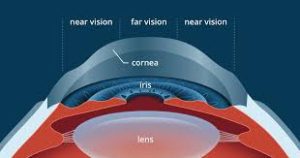
Laser vision correction reshapes the cornea so it focuses light precisely on the retina. There are several routes, and they differ mainly in technique and personalisation.
LASIK
The most widely performed and well-established option. A thin corneal flap is created, the laser reshapes the tissue beneath, and recovery is fast. LASIK eye surgery remains the benchmark for a quick, effective, permanent fix, and there are several types of LASIK to suit different eyes.
SMILE Pro
A flapless, minimally invasive procedure that removes a small lens of tissue through a keyhole incision. SMILE Pro is often favoured by active patients and those prone to dry eye because it preserves more corneal strength.
Contoura Vision
A topography-guided LASIK that maps your cornea in fine detail for a highly customised correction. Many patients ask why they should choose Contoura Vision for spectacle removal — the answer is its precision for quality-of-vision detail.
Lens-Based Operations for Higher Powers
Not everyone is suited to corneal laser surgery — very high prescriptions, thin corneas, or certain eye shapes call for a different approach. Lens-based operations work without reshaping the cornea at all.
Refractive Lens Exchange
For older patients or those with early lens changes, replacing the eye’s natural lens with an artificial one can correct vision and pre-empt cataracts. See our overview of refractive lens exchange versus LASIK to understand when it makes sense.
Who Qualifies for Spectacle Removal Surgery?
Most healthy adults with a stable prescription are candidates, but a few factors decide suitability:
- Stable vision: your prescription should not have changed significantly in the past year.
- Age: usually 18 and above.
- Healthy eyes: adequate corneal thickness and no active disease.
How to Choose the Right Operation
There is no single “best” procedure — only the best one for your eyes. A simple way to think about it:
- Standard prescription, healthy corneas: LASIK or Contoura Vision usually fit beautifully.
- Active lifestyle or dry-eye tendency: SMILE Pro is often the gentler choice.
- Very high power or thin corneas: an ICL is frequently the safer, more effective route.
- Older with lens changes: refractive lens exchange may be ideal.
The deciding step is always a thorough diagnostic assessment. Your surgeon measures your cornea, prescription, and eye health, then recommends the option that delivers the best, safest result — not the most expensive one.
Conclusion
Removing spectacles permanently with an operation is not only possible — it is one of the most rewarding decisions people make for their daily lives. Whether it is laser correction like LASIK, SMILE Pro, or Contoura Vision, or a lens-based solution like ICL, there is very likely a procedure suited to your eyes. The key is matching the operation to your prescription, corneal health, age, and lifestyle, which only a proper assessment can confirm.
Ready to find out which operation can set you free from glasses? Book a consultation with Visual Aids Centre and we will measure your eyes and recommend the right path to lasting, spectacle-free vision.
Frequently Asked Questions (FAQs)
Which operation removes spectacles permanently?
LASIK, SMILE Pro, Contoura Vision, and ICL all remove spectacles permanently. Laser procedures reshape the cornea; ICL implants a corrective lens. The right one depends on your eyes.
Is spectacle removal surgery safe?
Yes. These are among the most performed and well-studied elective procedures, with high success rates. As with any surgery, suitability and a thorough assessment matter most.
Does the correction last forever?
The correction itself is permanent, but eyes still age. Many people may need reading help later in life regardless, due to natural age-related changes.
What if my power is too high for LASIK?
An ICL is often the answer for high prescriptions or thin corneas, correcting vision without reshaping the cornea. A consultation confirms which option fits.
How quickly will I see clearly after surgery?
Most laser patients notice clear vision within a day or two, with continued refinement over weeks. ICL recovery is similarly fast.
Am I too old to remove my spectacles surgically?
Rarely. Older patients may suit refractive lens exchange rather than LASIK, especially if early lens changes are present. Age alone does not rule you out.
👁️ MEDICALLY REVIEWED BY
Padmashree Dr. Vipin Buckshey
Optometrist & Laser Vision Correction Specialist | AIIMS Graduate, 1977 | Padma Shri Honouree | Former President, Indian Optometric Association
Visual Aids Centre was founded by Vipin Buckshey and became the first eye centre in Delhi to introduce LASIK surgery, in 1999 — the only facility in the city offering spectacles, contact lenses, and laser vision correction under one roof. Across more than 250,000 laser vision correction procedures, one principle has guided the practice: recommend the operation that suits the patient’s eyes, not the one that sells. As the official optometrist to the President of India and a Padma Shri honouree, Dr. Buckshey draws on four decades of refractive experience to match each person to the right path to spectacle freedom. Learn more about our story.