If you have chosen WaveLight Plus InnovEyes, there is one thing worth understanding clearly from the start: it is a flap-based LASIK procedure. The AI-driven mapping and ray-traced precision are what make InnovEyes special, but the surgical step is classic LASIK — a femtosecond laser creates a thin corneal flap, the excimer laser reshapes the tissue beneath, and the flap is laid back into place.
That means everything that applies to life with a LASIK flap applies to you too. This guide from Visual Aids Centre explains how your flap heals, what to expect from dry eye, and exactly when you can get back to contact sports — so you can protect a precise, personalised result for the long term.
Key Takeaways
- WaveLight Plus InnovEyes creates a corneal flap — it is flap-based LASIK, not a flapless procedure, so flap-care rules apply to you.
- The flap seals within hours and is structurally stable within weeks, but the bond is never identical to an uncut cornea — gentle care matters for life.
- Dry eye is the most common side effect. It usually peaks in the first weeks and settles within one to three months with lubricating drops.
- Non-contact exercise resumes within days; contact sports with a real risk of an eye blow generally wait four weeks or longer, then with eye protection.
- Eye rubbing is the single behaviour most likely to disturb a healing flap — avoid it strictly in the first month.
The InnovEyes Flap: What It Is and Why It Matters
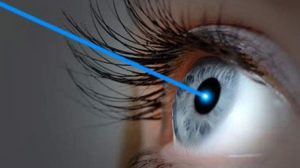
WaveLight Plus InnovEyes belongs to the LASIK family. The way it works is a two-step process: a femtosecond laser first creates a thin, hinged flap of corneal tissue — entirely bladeless — and then the EX500 excimer laser applies an AI-generated, ray-traced correction tailored to a 3D model of your eye. Once the reshaping is done, the surgeon repositions the flap, and it begins to heal naturally without stitches.
What sets InnovEyes apart is the planning, not the surgical mechanism. So while you gain a level of personalisation that standard LASIK cannot match, you also share the same anatomical reality as any LASIK patient: you have a flap. Here is the part patients rarely hear — the flap edge heals firmly, but the central interface never fully re-fuses to its original strength. That is not a defect. Millions live active lives with stable flaps for decades. It simply explains why surgeons are firm about protecting the eye early, and why knowing the procedure’s risks helps you behave protectively without anxiety.
Recovery: How Your Flap Heals Week by Week
InnovEyes recovery is fast and, for most people, gentler than expected. Knowing what is normal at each stage stops you worrying about ordinary healing — and flags the rare moments that genuinely need a call. For the full picture, our detailed InnovEyes recovery timeline covers every milestone.
The First 24–48 Hours
Vision is often hazy, eyes feel gritty, and light sensitivity is common — yet many patients notice visibly clearer vision within a day. This is the flap’s most vulnerable window. Sleep in the protective recovery goggles you are given, use your drops on schedule, and do not touch the eye.
Week One
Day-to-day vision sharpens quickly and most people return to desk work and screens within a day or two. The flap is sealing well, but it is not yet robust. Keep water out of the eyes and resist any urge to rub.
Weeks Two to Four
The flap edge bonds further and visual fluctuations fade. This is when most normal activity resumes. One behaviour deserves a hard rule throughout this period: do not rub your eyes. Rubbing is the most common patient-controlled cause of a problem — it is worth reading exactly what happens if you poke or press the eye after surgery. If vision suddenly worsens, the eye becomes painful, or you sense something has shifted, call your surgeon the same day.
Living With Dry Eye After InnovEyes
Dry eye is the side effect patients ask about most — and the most common one after any flap-based LASIK, InnovEyes included. Creating the flap temporarily disrupts some corneal nerves that signal tear production, so your eyes may feel dry, scratchy, or tired while those nerves recover.
The reassuring news: it is usually temporary. For most people dry eye peaks early and eases within one to three months as nerve sensitivity returns and the tear film stabilises. Honest pre-operative screening of your tear quality is what keeps this predictable, which is part of why candidacy assessment matters so much before you book.
Managing it is simple in practice:
- Use preservative-free artificial tears generously — the right lubricating drops make the early weeks far more comfortable.
- Blink consciously during screen time, since concentration cuts your blink rate and worsens dryness.
- Stay hydrated and avoid direct airflow from fans, vents, and car blowers aimed at your face.
- Follow up if symptoms linger — there are effective treatments for persistent dry eye beyond the expected window.
Contact Sports and Your Corneal Flap
This is where having a flap genuinely shapes your timeline — and it is the same for InnovEyes as for any LASIK. A direct blow to the eye — an elbow in basketball, a stray ball, a sparring glove — can theoretically dislodge a flap that has not fully bonded. The risk is highest in the first weeks and falls sharply afterwards, but it never quite reaches zero, which is why precautions matter.
Non-Contact Exercise
Light activity returns fast. Walking is fine almost immediately, and most people resume the gym for non-contact workouts within about a week, keeping sweat out of the eyes with a headband.
Contact and High-Impact Sports
Anything with collision potential needs more patience. As a general rule, wait at least four weeks before returning to football, basketball, martial arts, or similar, and clear it with your surgeon first. Combat sports sit at the cautious end — even seasoned athletes considering boxing are advised to wait longer and wear protective eyewear afterwards. Swimmers should hold off too and use sealed goggles once cleared, since the concern there is waterborne infection rather than impact.
The practical takeaway: the flap is not fragile forever, but for active people it adds a sensible, lifelong layer of caution. Protective eyewear during contact sport is wise advice for any flap-based LASIK patient, even years later.
Protecting a Precision Result for Life
InnovEyes gives you a highly personalised correction — it is worth protecting that investment with a few permanent habits. Beyond the early no-rubbing rule, wear UV-blocking sunglasses outdoors, keep up lubricating drops whenever your eyes feel dry, and attend your follow-up reviews so any small issue is caught early.
It also helps to know whether you were an ideal candidate in the first place, since outcomes track closely with corneal thickness, prescription stability, and tear film. If you are still in the research stage, our guide to who makes an ideal InnovEyes candidate is a useful starting point, and a consultation confirms it for your eyes specifically.
Conclusion
Life with a WaveLight Plus InnovEyes flap is, for the vast majority, completely unremarkable — sharp, personalised vision, a brief recovery, and a few sensible habits. The flap seals within weeks, dry eye usually resolves within months, and contact sports become safe again with patience and protective eyewear. Because InnovEyes is flap-based LASIK, the one rule worth tattooing on your memory is the same as for any LASIK patient: don’t rub your eyes, especially early on.
If you want a precise answer for your own eyes and lifestyle, the team at Visual Aids Centre can guide you. Book a consultation and we will help you get the most from your InnovEyes result.
Frequently Asked Questions (FAQs)
Is WaveLight Plus InnovEyes a flapless surgery?
No. InnovEyes is a flap-based LASIK procedure. A femtosecond laser creates a thin corneal flap, the excimer laser reshapes the cornea beneath it, and the flap is repositioned. It is bladeless, but it is not flapless.
Does the InnovEyes flap ever fully heal?
The flap edge heals firmly, but the central interface never bonds to its original pre-surgery strength. This is normal and stable for life, which is why gentle, lifelong eye care is recommended.
How long does dry eye last after InnovEyes?
For most patients it peaks in the first few weeks and settles within one to three months. Lubricating drops manage it comfortably, and persistent cases have effective treatments.
When can I play contact sports after InnovEyes?
Generally after at least four weeks, and only with surgeon clearance. Combat and high-impact sports may need longer, and protective eyewear is advised even after you return.
Can the flap move years after surgery?
It is rare, but a hard, direct blow to the eye can theoretically displace a flap even long after surgery — for InnovEyes as for any LASIK. That is why protective eyewear during contact sport remains good practice.
What is the most important rule during flap recovery?
Do not rub your eyes, particularly in the first month. Eye rubbing is the most common patient-controlled cause of flap problems.
👁️ MEDICALLY REVIEWED BY
Padmashree Dr. Vipin Buckshey
Optometrist & Laser Vision Correction Specialist | AIIMS Graduate, 1977 | Padma Shri Honouree | Former President, Indian Optometric Association
Visual Aids Centre was founded by Vipin Buckshey and became the first eye centre in Delhi to introduce LASIK surgery, in 1999. In the decades since, the centre has performed over 250,000 laser vision correction procedures — among the highest by any private eye centre in India — and offers WaveLight Plus InnovEyes as part of a full suite of refractive options. As the official optometrist to the President of India and a Padma Shri honouree, Dr. Buckshey grounds every recommendation in four decades of refractive surgery experience. His guiding principle is simple: patients who understand how their flap heals protect it far better than those handed instructions without explanation. Learn more about our story.