“Flapless” has become one of the most searched-for words in laser eye surgery, and for good reason — the corneal flap is the part of LASIK that makes a lot of people hesitate. So if you’re considering WaveLight Plus InnovEyes and wondering whether it skips the flap, you deserve a clear, honest answer rather than marketing spin.
Here it is, plainly: WaveLight Plus InnovEyes is not flapless. It’s an advanced, AI-guided LASIK procedure, and like all LASIK, it creates a corneal flap. That isn’t a drawback to hide — it’s simply how the technology works, and it comes with real strengths. This guide from Visual Aids Centre explains why it uses a flap, what that means for you, and how it compares to procedures that genuinely don’t.
Key Takeaways
- WaveLight Plus InnovEyes is a flap-based LASIK procedure — it is not flapless.
- It creates a thin corneal flap using a femtosecond laser, then reshapes the tissue beneath with AI-guided precision.
- Its real strength is accuracy: ray-tracing technology builds a personalised 3D model of your eye to plan the treatment.
- If a flapless procedure is your priority, SMILE Pro and surface treatments like PRK are the genuinely flapless alternatives.
- “Flap” versus “flapless” isn’t about better or worse — it’s about which approach suits your eyes, and that’s a consultation decision.
The Honest Answer
No — WaveLight Plus InnovEyes is not a flapless procedure. It belongs to the LASIK family, and the defining feature of LASIK is the creation of a thin, hinged flap in the cornea to access the tissue underneath. WaveLight Plus InnovEyes follows that same principle, then adds a layer of AI-driven planning that sets it apart from standard LASIK. If you’ve seen it described as flapless anywhere, that description is simply incorrect — and at Visual Aids Centre we’d rather you make your decision on accurate information. For the full picture of the platform, our overview of what WaveLight Plus InnovEyes is is the best starting point.
What WaveLight Plus InnovEyes Actually Is
WaveLight Plus InnovEyes is best understood as LASIK made more precise by artificial intelligence. What makes it distinctive isn’t the flap — that part is conventional — but how it plans the correction. Using ray-tracing technology, it builds a detailed, personalised 3D model of your entire optical system, not just the front surface of the cornea, and uses that model to design a treatment tailored to your individual eye.
That precision is the headline feature, and it’s a genuine one. The full mechanism is explained in our resource on how WaveLight Plus InnovEyes works. But it’s important to separate the two things people often blur together: the procedure is advanced in its planning, and conventional in its use of a flap. Both are true at once, and our comparison of the key differences between WaveLight Plus InnovEyes and standard LASIK makes the distinction clear.
Why It Uses a Flap
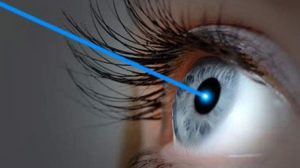
The flap exists to give the laser access to the corneal stroma — the middle layer where refractive correction happens. In WaveLight Plus InnovEyes, a femtosecond laser creates a thin, precise flap, which the surgeon gently lifts to expose the tissue beneath. The AI-planned reshaping is then applied to that tissue, and the flap is laid back into place, where it adheres without stitches.
This flap-based approach is what allows the rapid visual recovery LASIK is known for — most patients see clearly within a day or two, because the surface of the eye is largely preserved.
What Having a Flap Means for You
A flap isn’t something to fear, but it’s fair to understand what it involves. The honest balance looks like this:
- The upside: very fast visual recovery, minimal discomfort, and the well-established track record of LASIK over millions of procedures.
- The consideration: the flap remains a structural feature of the cornea, which is why LASIK patients are advised to avoid hard eye rubbing and to take care in contact sports, particularly early on.
The flap heals quickly and reliably, settling over the days and weeks after surgery — a process mapped out in our guide to LASIK flap healing stages. For most people leading ordinary lives, the flap is a non-issue once healed; it’s mainly those in high-impact occupations or sports who weigh it more heavily.
If You Want a Truly Flapless Procedure
If avoiding a flap is genuinely important to you — and for some patients it is — then WaveLight Plus InnovEyes isn’t the right fit, and that’s worth knowing upfront. The genuinely flapless options work differently:
- SMILE Pro removes a small disc of tissue through a keyhole incision, with no flap at all — preserving more of the cornea’s front surface.
- PRK and surface treatments reshape the cornea from the surface after gently removing the outer cell layer, which then regrows.
Among these, SMILE Pro is the most modern flapless choice, and many patients researching alternatives compare it directly — our guide on whether there’s a better alternative to LASIK lays out the landscape. It’s also worth knowing that not every “advanced” laser procedure is flapless: Contoura Vision, for instance, sits on the flap side too.
Flap or Flapless — Which Is Right for You?
It’s tempting to assume flapless automatically means better, but that’s not how surgeons think about it. Each approach has genuine strengths, and the right one depends on your corneal thickness, prescription, lifestyle, and priorities. A thin cornea, an active contact-sport life, or a strong personal preference for no flap may point toward SMILE Pro. A desire for AI-level planning precision with fast recovery may point toward WaveLight Plus InnovEyes. The most useful thing you can do is compare them honestly with a surgeon — our side-by-side on WaveLight Plus InnovEyes versus SMILE Pro is the natural next read for exactly that decision.
Conclusion
WaveLight Plus InnovEyes is not flapless — it’s an AI-guided LASIK procedure that creates a thin corneal flap, then reshapes the tissue beneath with ray-tracing precision. The flap brings fast recovery and a proven track record, with the usual LASIK considerations around eye rubbing and impact while it heals. If a flapless procedure is what you’re set on, SMILE Pro is the modern alternative to look at. Neither is universally “better” — the right choice comes down to your eyes and your life, decided with honest guidance rather than buzzwords.
Want to know which approach genuinely suits your corneas? Book a consultation at Visual Aids Centre, and we’ll measure your eyes and give you a clear, honest recommendation.
Frequently Asked Questions (FAQs)
Is WaveLight Plus InnovEyes flapless?
No. It’s a flap-based LASIK procedure. A femtosecond laser creates a thin corneal flap, which is lifted so the tissue beneath can be reshaped with AI-guided precision, then repositioned.
If it has a flap, what makes WaveLight Plus InnovEyes special?
Its planning. Ray-tracing technology builds a personalised 3D model of your whole optical system to design a highly precise treatment — that accuracy, not the flap, is its distinguishing feature.
Which laser procedures are actually flapless?
SMILE Pro (a keyhole, flapless technique) and surface treatments like PRK. If avoiding a flap is your priority, these are the options to discuss with your surgeon.
Is having a flap a bad thing?
Not at all. The flap enables fast visual recovery and is backed by LASIK’s long track record. It does remain a structural feature, so eye rubbing and high-impact sports need care, especially early on.
Is WaveLight Plus InnovEyes the same as standard LASIK?
It’s the same in using a flap, but more advanced in planning. Its AI ray-tracing creates a customised treatment model that standard LASIK doesn’t, aiming for greater precision.
Should I choose WaveLight Plus InnovEyes or SMILE Pro?
It depends on your corneal thickness, prescription, and lifestyle. WaveLight offers AI-planned LASIK with fast recovery; SMILE Pro offers a flapless approach. A consultation is the only way to know which fits your eyes.
👁️ MEDICALLY REVIEWED BY
Padmashree Dr. Vipin Buckshey
Optometrist & Laser Vision Correction Specialist | AIIMS Graduate, 1977 | Padma Shri Honouree | Refractive Surgery Specialist, Visual Aids Centre
Misunderstandings about which procedures are flapless are common, and Dr. Vipin Buckshey makes a point of clearing them up honestly at Visual Aids Centre rather than letting marketing language guide a patient’s choice. In four decades of refractive practice he has learned that patients make better decisions when they understand what each technology genuinely does — that WaveLight Plus InnovEyes is LASIK refined by AI, not a flapless procedure, and that flapless options like SMILE Pro exist for those who need them. His role, as he sees it, is to match the right technology to the right eye, never to oversell the newest name. The guidance in this article reflects that straightforward, patient-first approach. An AIIMS alumnus, Padma Shri honouree, and former President of the Indian Optometric Association, Dr. Buckshey is trusted for honest, jargon-free counselling. Read more on our story.