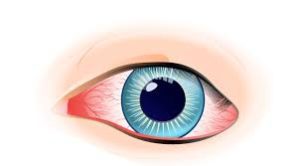

Most surgeons recommend a 2 to 4 hour nap immediately after LASIK — but almost nobody explains why it’s specifically sleep, not just resting with your eyes shut, that matters. The real reason is two-sided, and most guides only tell you half of it: closed eyes during sleep genuinely protect a healing cornea from rubbing, screens, and light, but sleep also drops your blink rate, which temporarily reduces how well your tear film gets redistributed. Both things are true at once, and understanding that is what tells you how to nap well instead of just napping long.
Key Takeaways
- A 2–4 hour nap immediately after surgery is the most commonly recommended window — this is when your corneal flap is most vulnerable.
- Sleep protects mechanically — no conscious rubbing, no screens, no light exposure — but genuinely different from just resting with your eyes closed while awake.
- Blink rate drops during sleep, which can transiently worsen dryness — the reason lubricating drops before a nap matter as much as the nap itself.
- Post-LASIK dry eye is genuinely common — reported in as many as 59% of patients in clinical literature, at least transiently.
- An eye shield during naps isn’t optional in the first several days — it stops unconscious rubbing and protects against a real possibility most people don’t know about themselves.
- About 1 in 5 people don’t fully close their eyes during sleep — a condition called nocturnal lagophthalmos — meaning “closed eyes while napping” isn’t guaranteed for everyone.
| Your Question | Short Answer |
|---|---|
| How long should I nap right after LASIK? | 2–4 hours is the most commonly recommended window |
| Does resting with eyes closed count the same as napping? | Not quite — actual sleep drops conscious rubbing risk and blink strain further |
| Do I need an eye shield for a nap? | Yes, in the first several days — it guards against unconscious rubbing and incomplete lid closure |
| Do my eyes actually stay closed the whole nap? | Maybe not — about 1 in 5 people don’t fully close their eyes during sleep |
| Will napping make my eyes drier? | Possibly, temporarily — blink rate drops during sleep, so use drops beforehand |
| Can I nap face-down? | Better not to in the first few days — position matters for healing |
Why Napping Right After Surgery Matters So Much
In the first 24 hours after LASIK, your corneal flap is at its most vulnerable — still sealing, not yet firmly adhered. Closed eyes during sleep remove three real risks at once: no conscious eye rubbing, no screen-driven blink suppression, and no bright light exposure. That’s the protective half of the story most articles stop at.
| Data Point | What It Means |
|---|---|
| Reported post-LASIK dry eye incidence | Up to 59% of patients in clinical literature, with almost all patients having some transient symptoms early on |
| Blink rate during sleep | Drops significantly, reducing how often the tear film gets redistributed across the healing surface |
| Nocturnal lagophthalmos | Roughly 1 in 5 people don’t fully close their eyelids during sleep, per clinical data — meaning “closed eyes while napping” isn’t a safe assumption for everyone |
Sources: clinical trial documentation on hinge position and dry eye after LASIK; Cleveland Clinic, Lagophthalmos; post-LASIK sleep guidance compiled across ophthalmology recovery literature.
That last point is worth sitting with: if your eyelids don’t fully seal during sleep, “just take a nap” doesn’t automatically mean your cornea is protected the way you’d assume. This is actually the strongest reason your eye shield matters during naps specifically — it physically blocks air and light exposure regardless of whether your own eyelids close completely, doing a job your body might not be doing on its own.
This is the part worth actually internalising: napping isn’t just “doing nothing productive” — it’s actively protective in one way and something to manage in another. That’s why your surgeon’s drop schedule doesn’t pause just because you’re about to sleep.
How Long Is Actually Recommended
The most consistent guidance across post-LASIK recovery protocols is a 2 to 4 hour nap immediately after your procedure, ideally starting as soon as you’re home. This isn’t an arbitrary number — it roughly covers the window where light sensitivity and mild grittiness are most intense, and gives the ocular surface a real head start before you’re back to more normal activity. Beyond that first nap, there’s no strict rule requiring additional daytime naps on subsequent days — normal nighttime sleep, protected the same way, does the same job going forward.
Napping the Right Way: Position and Protection
- Use your prescribed drops right before lying down, not just when you remember — this is specifically what offsets the blink-rate drop during sleep.
- Wear your protective eye shield, even for a daytime nap, not just overnight sleep — our page on recovery goggles after LASIK covers what’s typically used and for how long. Note that this isn’t the same thing as a soft sleep mask or blindfold — those can press directly on the eye, which the rigid shield is specifically designed to avoid.
- Avoid sleeping face-down in the first few days — our guide on sleeping face-down after LASIK covers exactly why this position is worth avoiding early on.
- Keep fans and direct AC airflow away from your face while you nap — our page on sleeping with a fan on after LASIK explains why moving air specifically worsens the dryness issue above.
Why Resting Isn’t Quite the Same as Napping
A common shortcut patients take: sitting up with eyes closed, maybe listening to something, rather than actually sleeping. It’s better than nothing, but it isn’t equivalent — you’re still more likely to unconsciously touch your face, and your blink pattern while awake with eyes closed isn’t the same as genuine sleep. If screens are the main temptation you’re resisting instead of napping, our page on how long to avoid screens after LASIK covers that specific window directly.
When It’s Worth Mentioning to Your Surgeon
A nap that leaves your eyes feeling scratchy or mildly dry on waking is common and expected — drops usually settle it within minutes. What’s worth flagging: waking up with sharp pain, noticeably worse vision than before the nap, or a feeling that something shifted. Those are reasons to call rather than wait for your next scheduled visit.
Bottom Line
A 2 to 4 hour nap right after LASIK isn’t just “resting” — it’s genuinely protective, removing rubbing, screens, and light exposure during the hours your flap is most vulnerable. The trade-off worth knowing is that sleep also lowers your blink rate, which is exactly why drops before you lie down matter as much as the nap itself. Protect the nap properly — shield on, right position, drops first — and it does real work for your recovery.
Not sure your recovery routine is on track? book a consultation at Visual Aids Centre — a quick check confirms whether what you’re feeling is expected or worth a closer look.
Frequently Asked Questions
How long should I nap after LASIK?
Most surgeons recommend 2 to 4 hours immediately after the procedure, when your flap is most vulnerable.
Is resting with my eyes closed the same as napping?
Not quite — actual sleep further reduces the risk of unconscious rubbing and involves a different blink pattern than resting while awake.
Will napping make my eyes drier?
Possibly, temporarily — blink rate drops during sleep, reducing tear redistribution. Using prescribed drops before you lie down offsets this.
Do I need an eye shield just for a daytime nap?
Yes, in the first several days — it protects against unconscious rubbing and, for some people, incomplete eyelid closure during sleep.
Do my eyes actually stay fully closed while I nap?
Not necessarily — roughly 1 in 5 people have some degree of eyelid gap during sleep, called nocturnal lagophthalmos, which is exactly why the eye shield matters even though you’re “resting with your eyes closed.”
What should send me to my surgeon instead of just resting more?
Sharp pain, noticeably worse vision after waking, or a sense that something shifted — those are worth a call, not another nap.
👁️ MEDICALLY REVIEWED BY
Padmashree Dr. Vipin Buckshey
BS Optometry | AIIMS Graduate, 1977 | Padma Shri Honouree | Official Optometrist to the President of India | Laser Vision Correction Specialist & Founder, Visual Aids Centre
Explaining that a post-LASIK nap does real, specific protective work — rather than just telling patients to “rest” — is a habit Dr. Vipin Buckshey has built into day-one recovery instructions, since patients who understand why they’re napping tend to actually protect the nap properly. He founded Visual Aids Centre in 1980 — the first eye centre in Delhi to introduce LASIK surgery in 1999 — and has overseen 250,000+ Laser Vision Correction procedures across a 46-year career. The guidance here reflects standard post-operative practice, not a proprietary protocol. Read more at our story.