Hyperopic LASIK corrects farsightedness — but has tighter limits than myopic LASIK, with regression as the primary long-term concern. Correcting hyperopia requires a peripheral ring ablation that steepens the central cornea — the opposite of myopic LASIK, which flattens it. This larger ablation overlaps with the flap edge, leaving the cornea more vulnerable to gradual reshaping. Optimal correction range: +1.00D to +4.00D. Above +4.00D, regression risk rises significantly. Above +6.00D, ICL or RLE is the better choice over corneal laser.
Key Takeaways
- Hyperopic LASIK uses a peripheral ring ablation pattern to steepen the central cornea — the opposite of myopic LASIK. This larger ablation zone makes hyperopic correction more regression-prone than myopic correction at equivalent prescription levels.
- Optimal correction range: +1.00D to +4.00D. Above +4.00D, regression risk rises significantly. Above +6.00D, most surgeons recommend non-corneal alternatives (ICL or RLE).
- Regression (gradual return toward original prescription) is the primary long-term concern. Published data shows ~10–20% of initial correction lost at 5 years for corrections above +3.50D.
- SMILE Pro treat hyperopia — FDA-approved for myopia only. Hyperopic patients need LASIK, Contoura Vision, ICL, or RLE.
- Patients over 40–45 often get better long-term results with RLE (Refractive Lens Exchange) — it addresses both hyperopia and early presbyopia simultaneously.
- Candidacy requires Pentacam mapping, corneal topography, and pachymetry — prescription alone is not sufficient to determine suitability.
Why Hyperopic LASIK Has Tighter Limits Than Myopic LASIK
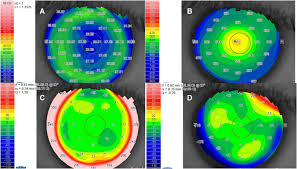
Myopic LASIK ablates the central cornea directly under the flap. Hyperopic LASIK ablates a peripheral ring — leaving the central cornea untouched and creating relative central steepening through peripheral tissue removal. This ring ablation requires a larger optical zone (≥6mm), overlaps with the flap margin, and depends on peripheral tissue maintaining its shape. Peripheral corneal tissue is more prone to biomechanical remodelling — why regression is a clinically significant long-term outcome unique to hyperopic correction. Our guide on topography-guided vs wavefront LASIK covers how these platforms compare for hyperopic correction.
Hyperopic LASIK Correction Range — What Each Level Means
| Prescription Range | Candidacy Status | Expected Outcome | Regression Risk |
|---|---|---|---|
| +1.00D to +2.00D | ✅ Excellent — strongest candidacy range | High predictability; >90% achieve ±0.50D of target; stability confirmed at 6–12 months | Low — minimal regression expected; long-term stability comparable to myopic LASIK at equivalent prescriptions |
| +2.00D to +4.00D | ✅ Good — standard LASIK range | Good predictability; most achieve spectacle independence for distance; near vision may still need reading glasses over 40 | Moderate — ~5–10% correction lost over 1–3 years; enhancement may be needed in some patients |
| +4.00D to +6.00D | ⚠️ Extended range — case-by-case; optimal corneal parameters required | Acceptable in selected patients; lower predictability; larger optical zone (~7mm) required | High — 10–20% correction lost at 5 years; regression monitoring essential; enhancement may be required |
| Above +6.00D | ❌ Outside recommended LASIK range | High risk of undercorrection, regression, optical aberrations (halos, glare, reduced contrast sensitivity) | Very high — ICL or RLE recommended instead; corneal laser not appropriate at this level |
Hyperopic LASIK Candidacy Criteria
| Criterion | Suitable ✅ | Not Suitable / Reassess ❌ |
|---|---|---|
| Prescription | +1.00D to +4.00D (optimal); up to +6.00D (extended, selected patients) | Above +6.00D — non-corneal alternatives recommended |
| Age | 21–45 years — best results when natural lens retains accommodation | Under 18; over 45 (presbyopia affects outcome — RLE often more appropriate) |
| Refraction stability | No change >0.50D in the preceding 12 months | Prescription still changing — defer until stable for 12 months |
| Corneal topography | Regular topography; no keratoconus or irregular astigmatism | Keratoconus or Pentacam posterior elevation abnormality — corneal laser procedures contraindicated |
| Pupil size | Average mesopic pupil size — optical zone must cover the pupil diameter | Large pupils in low light (>7mm) — higher risk of halos, glare, and visual quality issues |
When Hyperopic LASIK Isn’t Suitable — Alternative Procedures
Our guide comparing Refractive Lens Exchange vs LASIK covers the key differences for patients with high hyperopia or presbyopia.
| Procedure | Effective Hyperopia Range | Key Advantage | Best For |
|---|---|---|---|
| LASIK (standard) | +1.00D to +4.00D (optimal); up to +6.00D (extended) | No implant; rapid recovery; established safety record | Ages 21–45 with low-moderate hyperopia and adequate corneal thickness |
| ICL (EVO ICL) | Hyperopia up to approximately +10.00D | No corneal ablation; reversible; preserves corneal thickness; no regression (stable lens position); excellent for high hyperopia | High hyperopia above +6.00D; thin corneas unsuitable for laser; patients under 45 wanting a reversible option |
| RLE (Refractive Lens Exchange) | Any degree of hyperopia; particularly effective above +6.00D | Premium IOL replaces natural lens; simultaneously corrects hyperopia and presbyopia; eliminates future cataract risk | Patients over 40–45 with significant hyperopia; combined hyperopia and presbyopia; high hyperopia outside LASIK or ICL preference range |
My Hyperopia — Which Procedure Is Right for Me?
If you’ve already had hyperopic LASIK and notice your prescription returning over time, regression is the most likely explanation. Our guide on LASIK enhancement recovery time covers what re-treatment involves and when the cornea is suitable for assessment after regression.
| Your Situation | Recommended Direction | Key Clinical Reason |
|---|---|---|
| +1.00D to +4.00D, age 21–40, good corneal thickness | Hyperopic LASIK or Contoura Vision — both appropriate; discuss which platform your surgeon recommends | Optimal candidacy range — best predictability, lowest regression risk, highest likelihood of spectacle independence |
| +4.00D to +6.00D, age 21–40 | Extended-range hyperopic LASIK (selected cases) or ICL — discuss both; ICL may offer better long-term stability | Regression risk is clinically significant (~10–20% over 5 years); ICL avoids corneal ablation entirely and has no regression — trade-off is an implanted lens vs no implant |
| Above +6.00D at any age | ICL (under 45) or RLE (over 45) — corneal laser not recommended at this level | LASIK success rates fall significantly above +6.00D and regression is highly likely; ICL or RLE provides stable, predictable correction without corneal ablation |
| Farsighted, age 45+, difficulty with near vision (presbyopia) | RLE with a multifocal or EDOF IOL — addresses both hyperopia and presbyopia simultaneously | After 45, the natural lens loses accommodation; LASIK corrects distance but not presbyopia; RLE provides both near and distance correction with a premium IOL and eliminates future cataract risk |
Regression After Hyperopic LASIK — What to Expect
Regression — gradual drift back toward the original prescription — is the primary long-term concern. Peripheral corneal tissue tends to remodel over months and years, reducing the laser-created central steepening. Patients corrected above +3.50D should expect periodic refraction monitoring. Enhancement surgery may be required 1–3 years post-operatively — feasible when ≥250µm residual stromal bed remains for safe re-treatment.
Conclusion
Hyperopic LASIK is most effective at +1.00D to +4.00D. Above +4.00D, regression risk rises meaningfully. Above +6.00D, ICL or RLE provides better long-term outcomes. SMILE Pro treat hyperopia at all — critical for any farsighted patient exploring laser options. The right choice depends on prescription level, age, corneal thickness, and whether presbyopia is also present. Book a hyperopia assessment at Visual Aids Centre — Pentacam mapping, cycloplegic refraction, and personalised procedure recommendation included.
Frequently Asked Questions
What is the maximum LASIK can correct for farsightedness?
Most platforms are FDA-approved for hyperopic LASIK up to +6.00D. The optimal range for stable, predictable outcomes is +1.00D to +4.00D. Above +4.00D, regression risk rises significantly (~10–20% of correction lost over 5 years). Above +6.00D, ICL (under 45) or RLE (over 45) are more reliable alternatives.
Why does hyperopic LASIK cause more regression than myopic LASIK?
Hyperopic LASIK uses peripheral ring ablation rather than direct central ablation. Peripheral corneal tissue is more biomechanically active and prone to remodelling, causing gradual loss of central steepening over time — why regression is meaningfully higher at +3.50D and above compared to myopic LASIK of similar magnitude.
Can SMILE Pro treat farsightedness?
No — SMILE Pro and original SMILE are FDA-approved for myopia (−1.00D to −10.00D) and myopic astigmatism (to −3.00D) only. Farsighted patients who want a laser procedure need LASIK or Contoura Vision, not SMILE Pro.
Is hyperopic LASIK permanent?
The corneal reshaping is permanent — ablated tissue does not regrow. The visual result, however, may not be permanent — regression can shift the prescription back toward farsightedness, especially at higher corrections. Presbyopia (age-related near focus loss after 40–45) develops independently of LASIK and is not corrected by corneal laser procedures.
Alternatives to hyperopic LASIK for high farsightedness?
Above +6.00D: ICL (phakic IOL; no natural lens removal; effective to ~+10D; preferred under 45) and RLE (premium IOL replaces natural lens; also corrects presbyopia; preferred over 45). PRK/Trans-PRK treats low-moderate hyperopia (to +4.00D) flaplessly for patients with thin corneas unsuitable for LASIK.
👁️ MEDICALLY REVIEWED BY
Padmashree Dr. Vipin Buckshey
BS Ophthalmology | AIIMS Graduate, 1977 | Padma Shri Honouree | LASIK and Farsightedness Correction Specialist, Visual Aids Centre
Hyperopic LASIK mechanism (peripheral ring ablation, central corneal steepening), correction range (+1.00D to +4.00D optimal; +4.00D to +6.00D extended; ceiling at +6.00D), regression rates (~10–20% at 5 years above +3.50D), optical zone requirements (≥6mm), and candidacy criteria (corneal thickness, topography, refraction stability, cycloplegic refraction, age 21–45) reflect published refractive surgery outcome literature. SMILE Pro and SMILE not approved for hyperopia (FDA approval: myopia −1.00D to −10.00D; astigmatism to −3.00D) reflects current FDA-approved indications. ICL effectiveness for high hyperopia (to approximately +10D) and RLE appropriateness for patients over 45 reflect published phakic IOL and IOL literature. Residual stromal bed requirement (≥250µm) for enhancement after regression reflects published corneal ectasia safety data. Patients at Visual Aids Centre receive Pentacam mapping, cycloplegic refraction, and individualised hyperopia correction assessment before any procedure recommendation. An AIIMS alumnus, Padma Shri honouree, and former President of the Indian Optometric Association. Read more at our story.