
You had LASIK, enjoyed months or years of perfect vision, and now things are starting to blur again. It’s unsettling — and the first question on your mind is probably: did the surgery fail? The answer, in almost every case, is no. What you’re experiencing is called regression, and it has specific, well-understood causes that have nothing to do with a failed procedure.
LASIK regression refers to a partial return of the refractive error that was corrected during surgery. It doesn’t mean the laser reshaping has reversed itself — it means the eye has changed in ways that shift the prescription slightly back toward where it was. Understanding why this happens, how common it is, and what can be done about it gives you the clarity you need to take the right next step. This guide covers every major cause of regression after LASIK and the options available when it occurs.
Key Takeaways
- LASIK regression affects fewer than 5% of patients in the first year, but the likelihood increases over longer time horizons.
- The most common causes are corneal remodelling, continued myopic progression, and age-related presbyopia — not surgical error.
- High initial prescriptions, thin corneas, and untreated dry eye increase the risk of regression.
- Enhancement procedures can correct regression in most cases, provided sufficient corneal tissue remains.
What Is LASIK Regression?
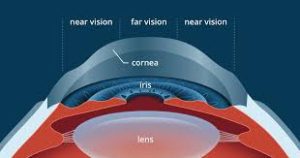
During LASIK, an excimer laser permanently removes microscopic layers of corneal tissue to reshape the cornea and correct refractive errors — myopia, hyperopia, or astigmatism. Regression occurs when the eye’s optical system shifts after surgery, causing some of the original prescription to return. The corneal reshaping itself is permanent — the tissue that was removed doesn’t grow back. Instead, regression is driven by biological changes elsewhere in the eye or in the cornea’s wound-healing response.
It’s important to distinguish regression from normal post-operative fluctuation. In the first 3–6 months after LASIK, minor vision shifts are expected as the corneal flap heals and the tear film stabilises. True regression refers to a measurable, sustained change in refraction that occurs after the initial healing period — typically months or years later.
How Common Is Regression After LASIK?
Studies consistently show that fewer than 5% of LASIK patients experience clinically significant regression within the first year. Over longer periods — 5 to 10 years — the rate increases modestly, particularly among patients who had very high prescriptions corrected. The vast majority of patients maintain excellent vision long-term; when regression does occur, it’s usually mild (a shift of 0.50 to 1.00 dioptre) and often manageable with a straightforward enhancement procedure. Patients with moderate myopia (-2.00 to -6.00D) have the most stable long-term outcomes, while those corrected beyond -8.00D have a statistically higher chance of experiencing some degree of shift over time.
Key Causes of Regression After LASIK
Corneal Epithelial and Stromal Remodelling
After LASIK reshapes the stroma, the cornea’s wound-healing response begins. The epithelium (surface layer) can thicken slightly over the ablation zone, partially compensating for the tissue that was removed. This epithelial hyperplasia is the single most common mechanism behind early regression, and it’s more pronounced in patients who had higher corrections. Deeper in the stroma, collagen remodelling can also gradually alter the corneal curvature over months to years. These are normal biological processes — not complications — but they can shift the refraction enough to cause noticeable blurring.
Continued Progression of the Original Refractive Error
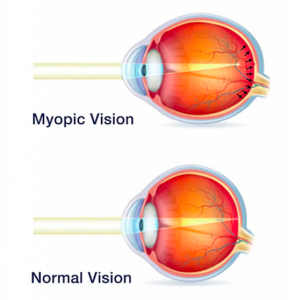
LASIK corrects the prescription you have on the day of surgery — it doesn’t freeze your eye in place. If your myopia was still progressing (common in patients under 25), the eye can continue to elongate after the procedure, bringing back some nearsightedness. This is why surgeons require a stable prescription for at least 12 months before approving LASIK. Patients whose prescriptions were changing rapidly before surgery have the highest risk of this type of regression.
Age-Related Presbyopia
LASIK reshapes the cornea — it does nothing to the crystalline lens inside the eye. Starting in the early 40s, that lens gradually loses its flexibility, making it harder to focus on near objects. This is presbyopia, and it happens to everyone, with or without LASIK. A patient who had perfect distance vision after LASIK at age 30 will still need reading glasses by their mid-40s. This isn’t regression in the technical sense, but many patients perceive it that way because their overall visual experience has changed.
High Initial Refractive Error
The higher the correction, the greater the amount of tissue removed, and the stronger the cornea’s healing response. Patients corrected for -8.00D or higher are statistically more likely to experience some regression compared to those corrected for -3.00D. This is one reason surgeons carefully evaluate whether a patient with a very high prescription is better served by LASIK or an alternative like implantable collamer lenses (ICL), which don’t remove corneal tissue and avoid this particular regression pathway entirely.
Dry Eye and Tear Film Instability
Chronic dry eye after LASIK doesn’t cause true refractive regression, but it closely mimics it. An unstable tear film creates an irregular optical surface, causing fluctuating blur, ghosting, and reduced contrast sensitivity. Patients often describe this as “my vision has gotten worse” — and until the dry eye is treated, it’s impossible to determine whether there’s an actual refractive shift underneath. Managing dryness with preservative-free lubricating drops, omega-3 supplementation, and in some cases punctal plugs resolves the visual symptoms in the majority of these patients.
Hormonal Changes
Pregnancy, breastfeeding, and menopause can all alter corneal thickness and curvature through hormonal mechanisms. These changes are typically temporary — vision usually returns to its post-LASIK baseline once hormone levels stabilise — but they can cause alarming fluctuations that feel like regression in the moment. This is why surgeons advise waiting at least 6 months after LASIK before becoming pregnant and confirming that any vision changes during pregnancy are assessed only after hormones have normalised.
Underlying Corneal Conditions
In rare cases, what appears to be regression is actually the early presentation of post-LASIK ectasia — a progressive thinning and bulging of the cornea that occurs when the residual corneal bed is too weak to maintain its shape. This is why thorough pre-operative screening with corneal topography and Pentacam tomography is critical: it identifies at-risk corneas before surgery. Ectasia requires specific treatment (typically corneal cross-linking) and is managed very differently from simple regression.
How to Reduce Your Risk of Regression
The most effective prevention starts before surgery, not after. Ensuring your prescription has been stable for at least 12 months eliminates the risk of continued myopic progression. Choosing a surgeon who performs comprehensive pre-operative screening — including corneal thickness measurement, topography, and tear film assessment — identifies patients at higher risk and allows the treatment plan to be adjusted accordingly. After surgery, following the prescribed eye drop regimen, attending all follow-up appointments, protecting your eyes from UV exposure with quality sunglasses, and managing dry eye proactively all contribute to long-term stability. Nutrition matters too — a diet rich in omega-3 fatty acids, vitamin A, and lutein supports both tear film quality and overall corneal health.
What to Do If Regression Happens
If you notice a gradual decline in visual clarity months or years after LASIK, the first step is a comprehensive eye examination to determine whether the change is refractive (a true prescription shift), tear-film related (dry eye masquerading as regression), or something else entirely (early cataract, for example). If a genuine refractive shift is confirmed and it’s significant enough to affect your daily life, the most common solution is a LASIK enhancement — essentially a refinement procedure that adjusts the corneal shape to account for the shift. Enhancement is only possible if sufficient corneal thickness remains; your surgeon will evaluate this with updated imaging.
For patients who don’t have enough corneal tissue for a safe enhancement, alternatives include surface ablation (PRK), prescription glasses or contact lenses for the residual error, or in cases of significant regression with high prescriptions, ICL implantation. The right choice depends on the degree of regression, your corneal health, and your lifestyle needs — all of which your eye care team will assess individually.
Conclusion
LASIK regression is uncommon, usually mild, and almost always treatable. It’s driven by the cornea’s natural healing response, continued changes in the eye’s refractive power, or age-related lens changes — not by a defect in the surgery itself. Understanding what causes regression removes the anxiety and replaces it with a clear action plan: monitor your vision with regular check-ups, manage dry eye proactively, and know that enhancement options exist if your prescription drifts. If you’re experiencing blurring after LASIK and want to know whether it’s regression, dry eye, or something else, book a consultation at Visual Aids Centre and our team will give you a definitive answer and a path forward.
Frequently Asked Questions (FAQs)
Is LASIK regression the same as the surgery failing?
No. Regression is a biological response — the eye changing after surgery — not a surgical failure. The corneal reshaping LASIK performs is permanent; regression comes from other factors like healing responses or continued myopic progression.
How soon after LASIK can regression occur?
True regression typically becomes apparent 6–12 months after surgery, once initial healing is complete. Vision fluctuations in the first 3 months are normal post-operative healing, not regression.
Can LASIK regression be fixed?
Yes. An enhancement (touch-up) procedure can correct regression in most cases. If insufficient corneal tissue remains, alternatives like PRK, glasses, or ICL are available.
Does age increase the risk of LASIK regression?
Age itself doesn’t increase true regression risk, but presbyopia (age-related loss of near focus) starting in the 40s can feel like regression. Patients who had LASIK at a young age with an unstable prescription also face higher risk.
Can dry eye cause what feels like regression?
Yes. An unstable tear film creates blurry, fluctuating vision that mimics a prescription change. Treating the dry eye often resolves the symptoms completely without any surgical intervention.
How can I prevent regression after LASIK?
Ensure your prescription is stable before surgery, follow all post-operative instructions, manage dry eye, attend follow-up appointments, and protect your eyes from UV exposure. These steps significantly reduce regression risk.
👁️ MEDICALLY REVIEWED BY
Padmashree Dr. Vipin Buckshey
Optometrist & Refractive Surgery Specialist | AIIMS Graduate, 1977 | Padma Shri Honouree
With more than four decades of clinical experience and over 250,000 laser vision correction procedures performed at Visual Aids Centre, Dr. Vipin Buckshey has managed the full range of post-LASIK outcomes — from patients enjoying decades of stable 6/6 vision to the small percentage who require enhancement procedures for regression. An AIIMS alumnus, former President of the Indian Optometric Association, and official optometrist to the President of India, Dr. Buckshey’s approach to regression management is informed by real outcome data from hundreds of thousands of cases. Learn more about our story and the clinical standards at Visual Aids Centre.