
Waking up after LASIK with bright red patches on the whites of your eyes can be alarming — especially when nobody warned you it might happen. The good news is that these red spots are almost always harmless subconjunctival hemorrhages caused by the suction ring used during surgery, and they resolve completely on their own. But understanding what they are, how long they last, and what to watch for gives you the confidence to recover without unnecessary worry.
Most patients see these red spots fade within one to three weeks, following the same healing pattern as a bruise anywhere else on the body. The blood is trapped beneath the conjunctiva (the thin, clear membrane covering the white of the eye) and has nowhere to go except to be gradually reabsorbed. This guide explains the exact mechanism behind post-LASIK redness, provides a realistic day-by-day timeline for resolution, and covers what you should — and shouldn’t — do to help them clear faster. Whether you had Femto LASIK, Contoura Vision, or SMILE Pro, the information below applies.
Key Takeaways
- Red spots after LASIK are subconjunctival hemorrhages — blood trapped under the clear membrane of the eye. They are cosmetic, painless, and harmless.
- Most spots fade completely within 1–3 weeks; larger ones may take up to 4 weeks.
- The suction ring applied during the procedure is the primary cause — it temporarily raises pressure in the small conjunctival blood vessels.
- No treatment is needed. Lubricating eye drops, sun protection, and avoiding eye rubbing support the natural healing process.
- Red spots that worsen after the first few days, or are accompanied by pain, vision changes, or discharge, require immediate medical attention.
What Are the Red Spots on Your Eyes After LASIK?
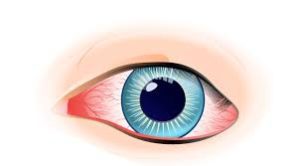
The red or dark crimson patches you see on the white part of your eye (the sclera) after LASIK are called subconjunctival hemorrhages. They occur when tiny blood vessels in the conjunctiva — the transparent membrane that covers the sclera — rupture and leak a small amount of blood into the space between the conjunctiva and the sclera. Because the conjunctiva is clear, the trapped blood is highly visible, making the spots look far more dramatic than they actually are.
A subconjunctival hemorrhage is essentially a bruise on the surface of the eye. It doesn’t affect your cornea, your vision, or your LASIK results in any way. The blood doesn’t enter the interior of the eye, doesn’t touch the corneal flap, and doesn’t indicate any complication with the procedure itself. Most patients who develop these spots have no symptoms from them whatsoever — no pain, no light sensitivity, and no visual disturbance beyond the cosmetic appearance.
What Causes Subconjunctival Hemorrhage During LASIK?
During LASIK, a suction ring is placed on the eye to stabilise it and maintain the correct pressure while the femtosecond laser creates the corneal flap. This suction temporarily increases the pressure on the conjunctival blood vessels. In patients with naturally fragile capillaries — or those who took blood-thinning medications in the days before surgery — this pressure is enough to cause small vessel ruptures. The result is one or more bright red patches that become visible within hours of the procedure.
Several factors can make subconjunctival hemorrhages more likely or more pronounced. Patients who take aspirin, ibuprofen, or other blood-thinning medications before LASIK are at higher risk, which is why surgeons ask you to stop these well in advance. People with naturally thin or fragile conjunctival vessels, those with uncontrolled blood pressure, and patients who strain or cough forcefully in the hours after surgery may also develop larger spots. None of these scenarios indicate a problem with the surgery itself — they simply reflect individual variation in vascular fragility.
Day-by-Day Timeline: When Do Red Spots Fade?
Days 1–3: Bright Red, Most Visible
In the first few days, the spots are at their most vivid — bright red or deep crimson against the white sclera. They may even appear to spread slightly as the trapped blood disperses along the tissue plane. This is normal and doesn’t mean the bleeding is continuing. Your vision should be improving during this period regardless of the spots, and your surgeon will confirm at your day-one or day-two follow-up that everything is healing as expected.
Days 4–7: Colour Begins to Change
By the end of the first week, the red patches typically begin to shift colour — moving from bright red toward a darker brownish-red or maroon, similar to a healing bruise on your skin. The edges of the spots may start to fade while the centre remains more concentrated. This colour change is a sign that your body is actively reabsorbing the trapped blood.
Weeks 2–3: Gradual Fading
During the second and third weeks, the spots progressively lighten — transitioning through shades of orange, yellow, and eventually disappearing entirely. Most patients find that by the two-week mark, the redness is mild enough to be barely noticeable. By three weeks, the vast majority of spots have cleared completely. If you’re managing other recovery symptoms like dryness during this period, our guide on treating dry eyes after LASIK covers the best approach.
Week 4: Complete Resolution (Larger Spots)
In rare cases where the hemorrhage was particularly large or the patient has slower vascular healing, faint yellow discolouration may persist into the fourth week. Even in these cases, full resolution is the expected outcome — no permanent staining or scarring occurs from a subconjunctival hemorrhage.
What Helps Red Spots Heal Faster?
There is no medical treatment that accelerates the reabsorption of a subconjunctival hemorrhage — the body clears the blood at its own pace. However, several practical measures support the process and prevent delays. Keep using your prescribed lubricating eye drops on schedule; a well-hydrated ocular surface heals more efficiently. Wear sunglasses outdoors to protect the sensitive conjunctival tissue from UV exposure, which can prolong inflammation. Stay well-hydrated and get adequate sleep — general health directly supports microvascular healing. Continue attending all follow-up appointments so your surgeon can confirm that the spots are resolving normally and that the underlying LASIK recovery is on track.
What to Avoid While Red Spots Are Present
The most important rule is to avoid rubbing your eyes — this applies throughout your LASIK recovery, but it’s especially relevant when a subconjunctival hemorrhage is present, as friction can worsen the bruising or irritate healing vessels. Avoid blood-thinning supplements like fish oil, vitamin E, and ginkgo biloba until your surgeon clears them, as these can slow clot stabilisation. Steer clear of heavy lifting and strenuous exercise for the first week — activities that spike blood pressure can delay reabsorption. Alcohol consumption should also be limited in the first few days, as it acts as a mild blood thinner and vasodilator. Finally, avoid dusty environments, smoke, and strong fumes — irritants can trigger excessive tearing or prolonged surface redness that compounds the appearance of the hemorrhage.
When to Contact Your Surgeon About Eye Redness
While subconjunctival hemorrhages are harmless, certain types of redness after LASIK warrant immediate attention. Contact your surgeon if the redness is accompanied by significant pain that isn’t relieved by lubricating drops. If you notice worsening redness after the first three days — rather than gradual improvement — this could indicate inflammation or early infection rather than a simple bruise. Sudden onset of blurry vision, discharge (yellow or green), or increasing light sensitivity alongside the redness are also red flags. A spreading ring of redness around the entire cornea (ciliary flush) looks different from the patchy spots of a subconjunctival hemorrhage and may signal a deeper inflammatory process like diffuse lamellar keratitis. When in doubt, call your surgeon — it’s always better to have a benign spot checked than to miss an early sign of something treatable.
Conclusion
Red spots on the whites of your eyes after LASIK are a common, harmless cosmetic side effect caused by the suction ring used during the procedure. They follow the same healing trajectory as any bruise — vivid red in the first few days, shifting through brown and yellow over one to three weeks, and disappearing completely without treatment. No drops, compresses, or interventions are needed to clear them; your body handles reabsorption naturally. Focus on your standard post-LASIK care — lubricating drops, sun protection, avoiding eye rubbing — and the spots will resolve alongside the rest of your recovery. If you have concerns about persistent redness or want to understand your healing timeline in detail, book a consultation at Visual Aids Centre and our team will walk you through exactly what to expect.
Frequently Asked Questions (FAQs)
Are red spots after LASIK a sign that something went wrong?
No. Subconjunctival hemorrhages are a normal response to the suction ring used during LASIK. They are purely cosmetic, do not affect vision or healing, and resolve on their own within one to three weeks.
Can I use eye-whitening drops to clear the red spots faster?
No. Drops like naphazoline or tetrahydrozoline (found in redness-relief products) constrict blood vessels and can interfere with LASIK healing. Stick to your prescribed preservative-free lubricating drops only.
Do red spots appear after every LASIK procedure?
Not always. Some patients develop noticeable spots while others have minimal or no visible redness. It depends on individual vascular fragility, blood pressure, and whether blood-thinning medications were stopped in time.
Will the red spots leave a permanent mark on my eye?
No. Subconjunctival hemorrhages resolve completely without any scarring, staining, or permanent discolouration. The sclera returns to its normal white appearance once the blood is reabsorbed.
Can I wear contact lenses over the red spots if I need them temporarily?
Contact lenses should not be worn during LASIK recovery regardless of red spots. Your surgeon will advise when — and if — contacts can be considered. The hemorrhage itself does not change this timeline.
Do red spots take longer to fade after SMILE Pro than Femto LASIK?
SMILE Pro uses lower suction pressure and a smaller contact interface than Femto LASIK, so subconjunctival hemorrhages tend to be less common and smaller. When they do occur, the fading timeline is similar — typically one to two weeks.
👁️ MEDICALLY REVIEWED BY
Padmashree Dr. Vipin Buckshey
Optometrist & Post-Operative Care Specialist | AIIMS Graduate, 1977 | Padma Shri Honouree
With more than four decades of clinical experience and over 250,000 laser vision correction procedures performed at Visual Aids Centre, Dr. Vipin Buckshey has guided patients through every stage of post-LASIK recovery — including the cosmetic concerns that cause the most anxiety in the first days after surgery. An AIIMS alumnus, former President of the Indian Optometric Association, and official optometrist to the President of India, Dr. Buckshey ensures every patient at the centre receives a clear, honest explanation of what to expect during healing. Learn more about our story.