Epi-LASIK and LASIK both correct myopia, hyperopia, and astigmatism with an excimer laser — but access the cornea differently. LASIK creates a full-thickness flap (100–120 µm, through Bowman’s layer into the stroma). Epi-LASIK creates an epithelium-only flap (~40–50 µm, using a blunt plastic epikeratome — not a laser or blade), leaving Bowman’s layer intact. Epi-LASIK suits thin corneas and contact sports patients — but recovery takes 5–14 days vs 24–48 hours with LASIK. This guide covers both procedures, candidacy, recovery, and where SMILE Pro fits.
Key Takeaways
- LASIK creates a full-thickness flap (~100–160 µm) through Bowman’s layer. Epi-LASIK creates an epithelium-only flap (~40–50 µm) using a blunt plastic epikeratome — Bowman’s layer untouched until excimer ablation.
- Recovery is significantly longer with Epi-LASIK — comfortable vision in 5–14 days vs 24–48 hours for LASIK. This is the most important practical difference for most patients.
- Epi-LASIK causes less dry eye than LASIK — surface ablation preserves more sub-basal nerve plexus fibres, maintaining better reflex tear production.
- Epi-LASIK has no flap-related complications (no DLK, no flap dislocation) — meaningful for contact sports, military service, or high eye-trauma occupations.
- Epi-LASIK carries higher haze risk for corrections above −6D — managed with intraoperative Mitomycin C (MMC) and a post-operative steroid course.
- SMILE Pro has largely superseded Epi-LASIK at advanced centres — offering comparable biomechanical advantages with significantly faster recovery (closer to LASIK speeds).
What Is Epi-LASIK and How Is It Different From LASIK?
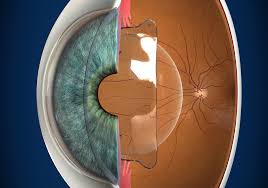
Epi-LASIK (Epithelial Laser In Situ Keratomileusis) was developed by Dr. Ioannis Pallikaris in 2003. The epikeratome separates epithelium (~40–50 µm) without cutting Bowman’s layer; the excimer laser then ablates Bowman’s layer and stroma (as in PRK); the epithelial sheet is repositioned with a bandage contact lens. LASIK uses a femtosecond laser or microkeratome to cut a deeper flap (100–120 µm) through Bowman’s layer into the stroma; excimer ablates stroma only — Bowman’s preserved within the flap. This deeper approach enables faster recovery but introduces flap-specific complications Epi-LASIK eliminates.
Epi-LASIK vs LASIK — Head-to-Head
| Factor | Epi-LASIK | LASIK |
|---|---|---|
| Flap type | Epithelial-only (~40–50 µm) by blunt plastic epikeratome — Bowman’s layer intact | Full-thickness (~100–120 µm femtosecond; 130–160 µm microkeratome) through Bowman’s layer into stroma |
| Flap instrument | Epikeratome (blunt plastic separator) — NOT a laser or blade | Femtosecond laser (bladeless LASIK) or microkeratome (blade-based) |
| Excimer laser targets | Bowman’s + anterior stroma (same as PRK/Trans-PRK) | Anterior stroma only — Bowman’s preserved within the repositioned flap |
| Visual recovery | 5–14 days for comfortable functional vision; stable by 3–6 months | 24–48 hours for clear functional vision; stable by 1–3 months |
| Post-op discomfort | Moderate — surface healing discomfort for 3–5 days; bandage contact lens required | Mild — grittiness and burning for 4–24 hours; settles rapidly |
| Dry eye risk | Lower — sub-basal nerve plexus better preserved; less reflex tear arc disruption | Higher — deep flap cuts more corneal nerve fibres; dry eye common in first 6–12 months |
| Flap complications | None — no permanent flap; no DLK, no flap dislocation, no epithelial ingrowth | Possible — DLK (0.4–2%), flap displacement (0.1–0.5%), epithelial ingrowth (0.2–3.9%) |
| Corneal haze risk | Higher for prescriptions above −6D — Bowman’s ablation triggers haze pathways; managed with intraoperative MMC and steroid drops | Lower — Bowman’s preserved within flap; haze uncommon at standard prescriptions |
| Corneal thickness minimum | Suitable for thinner corneas (~460–480 µm) — preserves more residual stroma | Requires ≥500 µm; residual stromal bed ≥250 µm post-ablation |
Recovery Timeline — Epi-LASIK vs LASIK
The most significant practical difference is recovery — Epi-LASIK recovery is longer, not shorter as sometimes stated. For patients considering astigmatism correction, our guide on PRK vs LASIK for astigmatism covers how surface ablation compares to flap-based procedures for cylindrical correction.
| Stage | Epi-LASIK Recovery | LASIK Recovery |
|---|---|---|
| Week 2–4 | Functional vision for most tasks; haze monitoring begins; steroid course continues (6–8 weeks total) | Vision stable; driving and work resumed; Lotepred steroid taper completing at 4 weeks |
Who Is Each Procedure Best For?
| Patient Profile | Epi-LASIK | LASIK |
|---|---|---|
| Corneal thickness | Preferred for thin corneas (~460–480 µm); insufficient residual stromal bed for LASIK after ablation calculation | Requires ≥500 µm corneal thickness; residual stromal bed ≥250 µm post-ablation |
| Contact sports | Preferred — no permanent flap eliminates dislocation risk from blunt eye trauma (boxing, martial arts, rugby) | Possible but permanent flap interface remains; protective eyewear recommended indefinitely for contact sports |
| Pre-existing dry eye | Better for mild pre-existing dry eye — lower post-operative burden due to better corneal nerve preservation | Not ideal for significant dry eye — LASIK exacerbates dry eye in the first 6–12 months; pre-operative treatment often required |
| Prescription range | Mild to moderate myopia (up to ~−8D); hyperopia up to +3D; astigmatism up to −4D — haze risk increases at higher corrections | Wider range: myopia up to −12D; hyperopia up to +4D; astigmatism up to −6D — preferred for higher prescriptions where Epi-LASIK haze risk is significant |
| Recovery priority | Appropriate when rapid recovery is NOT a priority — accept 5–14 days of blurred vision for biomechanical advantages | Preferred when rapid return to work is needed — 24–48 hours to functional vision |
Which Procedure Is Right for Me? — Decision Guide
For thin-cornea patients wanting faster recovery than Epi-LASIK, SMILE Pro offers a flapless option with recovery closer to LASIK. Our guide on why SMILE Pro is preferred over SMILE covers the advances relevant for patients weighing all modern options.
| Your Situation | Recommended Direction | Key Reason |
|---|---|---|
| Cornea too thin for LASIK | Epi-LASIK or SMILE Pro — discuss both with your surgeon | Epi-LASIK preserves more residual stroma; SMILE Pro also avoids a deep flap and is now often preferred for faster recovery in thin-cornea candidates |
| I play contact sports (boxing, martial arts, rugby) | Epi-LASIK or SMILE Pro — both eliminate permanent deep flap risk | No deep flap = no flap dislocation risk from eye trauma; SMILE Pro now preferred at most advanced centres for faster recovery alongside the same biomechanical advantage |
| Back at work within 2–3 days | LASIK (if corneal thickness and topography allow) | LASIK’s 24–48 hour recovery significantly faster than Epi-LASIK’s 5–14 days; LASIK or SMILE Pro are better choices when rapid return is essential |
| Significant pre-existing dry eye | Epi-LASIK or SMILE Pro — both cause less post-operative dry eye than LASIK | Both preserve more corneal nerve fibres than LASIK; SMILE Pro now generally preferred over Epi-LASIK for dry eye patients — faster recovery, no bandage lens required |
| High prescription (above −6D myopia) | LASIK (if corneal thickness allows) or SMILE Pro | Epi-LASIK above −6D carries significant haze risk requiring intraoperative MMC; LASIK or SMILE Pro preferred for high myopia where corneal thickness allows |
Conclusion
Epi-LASIK and LASIK correct the same errors with the same laser — the key difference is corneal access. LASIK’s deeper flap delivers 24–48 hour recovery at the cost of a permanent flap interface and higher dry eye risk. Epi-LASIK’s epithelial-only approach preserves more stroma and eliminates flap complications, but takes 5–14 days and needs haze management above −6D. For cost comparison, our guide on PRK vs LASIK cost in India provides a helpful framework. For thin-cornea and contact sports patients, SMILE Pro represents the most advanced option today — flapless biomechanical benefits with LASIK-comparable recovery.
Want to know which procedure suits your cornea and lifestyle? Book a candidacy assessment at Visual Aids Centre — Pentacam mapping, corneal thickness measurement, and a personalised procedure recommendation included.
Frequently Asked Questions
Main difference between Epi-LASIK and LASIK?
Flap depth. LASIK creates a full-thickness flap (~100–120 µm) through Bowman’s layer into the stroma. Epi-LASIK creates an epithelium-only flap (~40–50 µm) using a blunt plastic epikeratome, leaving Bowman’s layer intact. The excimer ablation step is the same — but the approach determines recovery speed, dry eye risk, and thin-cornea suitability.
Is Epi-LASIK recovery faster than LASIK?
No — the opposite. Epi-LASIK takes 5–14 days (epithelium must fully heal). LASIK delivers clear functional vision in 24–48 hours because the repositioned flap provides immediate surface coverage. Epi-LASIK’s longer recovery is its primary practical disadvantage.
Who should choose Epi-LASIK over LASIK?
Thin corneas (insufficient stromal bed for LASIK); contact sports patients (boxing, martial arts, rugby); significant pre-existing dry eye; or prior corneal surgery precluding another LASIK flap. SMILE Pro now addresses most of these indications with faster recovery than Epi-LASIK.
Does Epi-LASIK cause less dry eye than LASIK?
Yes — Epi-LASIK preserves more sub-basal nerve plexus fibres than LASIK’s deep flap, meaning less disruption to the corneal-lacrimal reflex arc and lower rates of persistent post-operative dry eye.
Is Epi-LASIK still commonly performed?
Largely superseded by Trans-PRK (flapless surface ablation) and SMILE Pro (flapless lenticule extraction) at advanced centres. Both offer equivalent biomechanical advantages while addressing Epi-LASIK’s primary limitation — slow recovery. Epi-LASIK may still be available but is no longer the first-choice surface ablation technique at most modern centres.
👁️ MEDICALLY REVIEWED BY
Padmashree Dr. Vipin Buckshey
BS Ophthalmology | AIIMS Graduate, 1977 | Padma Shri Honouree | Refractive Surgery and Laser Vision Correction Specialist, Visual Aids Centre
Epi-LASIK’s development by Dr. Ioannis Pallikaris (2003), epikeratome mechanism, epithelial flap depth (~40–50 µm), LASIK femtosecond flap depth (100–120 µm), and both procedures’ clinical characteristics reflect published refractive surgery literature. The factual correction that Epi-LASIK recovery (5–14 days) is significantly longer than LASIK (24–48 hours) — not shorter as sometimes stated — reflects published outcome literature. Epi-LASIK’s lower dry eye risk (better sub-basal nerve plexus preservation) reflects published confocal microscopy and corneal nerve studies. Haze risk above −6D and MMC management reflects published surface ablation outcome literature. SMILE Pro superseding Epi-LASIK reflects the current refractive surgery practice landscape. Corneal thickness parameters (≥500 µm for LASIK; ~460–480 µm for surface ablation; ≥250 µm residual stromal bed) reflect published ectasia safety literature. Patients at Visual Aids Centre receive Pentacam corneal mapping, topography, pachymetry, and dry eye assessment before any refractive procedure recommendation. An AIIMS alumnus, Padma Shri honouree, and former President of the Indian Optometric Association. Read more at our story.