If your prescription reads somewhere between -6.00 and -10.00 diopters, you already know the particular frustration of high myopia. You have lived with thick lenses that distort peripheral vision, contact lenses that barely feel like enough correction, and a list of activities you approach with more caution than you should have to. The question of whether a permanent surgical solution is available to you is not academic — it is genuinely life-changing if the answer is yes.
The answer, for many high myopia patients, is yes. SMILE Pro can correct myopia up to -10.00 diopters, and its flapless design makes it particularly well-suited to the thinner corneas that often accompany high prescriptions. This guide from Visual Aids Centre explains exactly how it works for high myopia patients, what the outcomes look like in practice, where the limits of candidacy lie, and what your alternatives are if SMILE Pro is not the right fit for your specific eye profile.
Key Takeaways
- SMILE Pro corrects myopia up to -10.00 diopters — covering the vast majority of high myopia cases that seek surgical correction.
- The flapless, keyhole incision design preserves significantly more corneal tissue than LASIK, which is a decisive advantage for high myopes whose corneas are often thinner.
- Clinical studies show 96% of SMILE Pro patients achieving 20/20 or better — outcomes that hold for high myopia prescriptions as well as moderate ones.
- Not all high myopia patients are candidates — corneal thickness, retinal health, and prescription stability are the key filters in pre-operative assessment.
- Patients with prescriptions above -10.00 D or corneas too thin for adequate tissue removal have alternatives, primarily EVO ICL implantation.
What Is High Myopia and Why Does It Complicate Surgery?
Defining High Myopia
Myopia is classified as “high” when the prescription exceeds -6.00 diopters. Beyond -8.00 D, it is sometimes further described as severe or pathological. The underlying cause in most cases is an eye that is physically longer than average — the axial length of the globe exceeds approximately 26 mm — which means light focuses in front of the retina rather than on it, producing the characteristic blur for distant objects.
Patients with prescriptions above -6.00 D have a meaningfully elevated risk of retinal complications — including myopic macular degeneration, retinal tears, and retinal detachment — because the elongated globe stretches and thins the retina over time. This structural risk is also one reason standard flap-based procedures have limitations with high myopia that SMILE Pro’s flapless architecture addresses more effectively. This is why thorough retinal assessment before any refractive surgery is a clinical requirement for high myopia patients, not an administrative formality. Surgery corrects what you see; it does not shorten the eye or eliminate the underlying structural risk.
Why High Myopia Complicates Laser Surgery
Correcting a higher prescription requires removing more corneal tissue. More tissue removal means a deeper ablation profile — and deeper ablation demands more initial corneal thickness to remain within safe residual stromal bed thresholds. This is the core tension for high myopia patients: the prescription that most needs surgical correction is the one that most stresses the available tissue budget. SMILE Pro’s approach to this tension is fundamentally different from LASIK’s — and that difference is directly relevant to high myopia candidacy.
Why SMILE Pro Is Particularly Well-Suited to High Myopia
The Tissue Preservation Advantage
LASIK corrects vision by ablating tissue from the corneal surface beneath a hinged flap. The flap itself consumes corneal thickness — typically 100–120 microns — before any prescription-correcting ablation begins. For high myopia patients, this is a significant structural cost. SMILE Pro creates no flap. The lenticule is sculpted inside the intact cornea and removed through a 2–3 mm keyhole incision. This approach preserves substantially more anterior stromal tissue, which is biomechanically the strongest portion of the cornea. The result is a more structurally resilient post-operative cornea — a material advantage for patients whose prescriptions demand significant tissue removal.
Understanding the minimum corneal thickness required for SMILE Pro surgery is one of the most important things a high myopia patient can learn before their consultation. The minimum safe residual stromal bed thickness after lenticule extraction is generally considered to be 250 microns by most refractive surgeons — and the pre-operative mapping that confirms your eye has sufficient tissue to meet this threshold is the central purpose of your eligibility assessment.
Reduced Dry Eye Risk
High myopia patients are frequently long-term contact lens wearers who already have compromised tear film function before surgery. LASIK’s wide stromal surface ablation severs a large number of corneal nerves — significantly disrupting the feedback loop that controls tear secretion. SMILE Pro’s flapless, keyhole approach disrupts far fewer corneal nerves, which means tear film recovery after surgery is faster and more complete. For high myopia patients arriving to surgery with pre-existing dry eye from years of lens wear, this nerve-preservation advantage is clinically significant rather than marginal.
What Clinical Outcomes Look Like for High Myopia
High myopia patients sometimes assume that their prescription places them at the bottom of the outcomes distribution — that surgery will leave them better than before but still meaningfully short of normal vision. Published clinical data does not support this assumption. In multicentre SMILE Pro studies, patients with prescriptions between -6.00 and -10.00 D achieved 20/20 or better in 91–96% of cases. Safety indices across these cohorts showed no net loss of best-corrected visual acuity compared to pre-operative baselines.
Predictability — the proportion of treated eyes landing within ±0.50 D of the target correction — is slightly lower at the extreme end of the prescription range than for moderate myopia, which is consistent across all laser procedures and reflects the increased tissue removal involved. Your surgeon will discuss the specific predictability data for your prescription level during the consultation and set accurate expectations for your target correction range. For patients who want to review published data before that conversation, our overview of whether SMILE Pro eye surgery is successful presents the clinical outcomes evidence in accessible terms.
The SMILE Pro Procedure for High Myopia Patients
Pre-Surgery Assessment
For high myopia patients, the pre-operative assessment is more detailed than for moderate prescriptions. In addition to the standard corneal mapping, refraction measurement, and pupil assessment, high myopia patients require careful retinal examination to rule out existing tears, lattice degeneration, or other structural vulnerabilities. Knowing what retinal tests are required before laser eye surgery helps high myopia patients understand why the pre-operative appointment takes considerably longer than for moderate prescriptions.
Corneal topography and tomography — using instruments like the Pentacam — map the three-dimensional shape and thickness of the cornea at every point. This data determines not just whether SMILE Pro is possible but precisely how much tissue can be safely removed, which directly determines the target correction range. Contact lenses must be discontinued for at least two weeks before this assessment to allow the corneal shape to return to its natural, unmoulded state.
The Surgery Itself
The SMILE Pro procedure for high myopia follows the identical surgical sequence as for any other prescription — the difference lies in the lenticule dimensions, which are larger to account for the greater tissue removal required. The femtosecond laser (VisuMax 800) creates the lenticule in under ten seconds per eye, the surgeon performs the extraction through the keyhole incision, and the patient is typically in the treatment room for under 30 minutes total. The subjective experience does not meaningfully differ between moderate and high myopia cases.
Who Qualifies and Who Does Not
Strong Candidates for SMILE Pro with High Myopia
- Prescription between -6.00 and -10.00 D, stable for at least 12 months.
- Adequate corneal thickness — typically above 500 microns pre-operatively — to allow safe lenticule removal while maintaining a residual stromal bed above 250 microns.
- No significant corneal irregularity, keratoconus, or ectasia risk factors on topography.
- No retinal pathology that represents a surgical contraindication.
- Generally healthy eyes with no active ocular surface disease.
Patients Who May Not Qualify
- Prescriptions above -10.00 D — beyond SMILE Pro’s current approved treatment range.
- Corneas too thin to permit adequate tissue removal safely.
- Topographic abnormalities suggesting keratoconus or subclinical ectasia.
- Significant retinal pathology requiring treatment before any refractive surgery.
- Prescriptions that are still progressing — particularly relevant for patients in their early twenties with high myopia that has not yet stabilised.
None of these factors can be assessed without a comprehensive examination. Understanding who is a good candidate for SMILE eye surgery gives you a framework for interpreting your own pre-operative results — and knowing which parameters matter most helps you ask the right questions at your consultation.
SMILE Pro vs LASIK vs PRK for High Myopia
| Factor | SMILE Pro | LASIK | PRK |
|---|---|---|---|
| Max myopia treated | -10.00 D | -10.00 D | -12.00 D |
| Flap creation | No | Yes | No |
| Corneal tissue use | Most efficient | Flap + ablation | Ablation only |
| Recovery time | 1–2 days | 1–2 days | 5–7 days |
| Dry eye risk | Lowest | Higher | Moderate |
| Thin cornea suitability | Best | Limited | Moderate |
For high myopia patients with adequate corneal thickness, SMILE Pro leads this comparison on tissue efficiency, dry eye profile, and structural preservation. PRK can treat slightly higher prescriptions (-12.00 D) but at the cost of a significantly longer and more uncomfortable recovery — a consideration that matters practically for most working adults. For a fuller clinical comparison across all three procedures, our guide on how PRK, SMILE, and SMILE Pro compare covers the decision points specific to patients at the upper prescription range.
If SMILE Pro Is Not Right for You
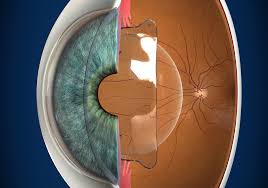
For patients whose prescriptions exceed -10.00 D, or whose corneas are too thin to permit safe lenticule removal, laser surgery is not the appropriate pathway — but surgical correction still is. EVO ICL (Implantable Collamer Lens) is an additive procedure that implants a soft, biocompatible lens inside the eye between the iris and the natural crystalline lens. It corrects vision without removing any corneal tissue — making it suitable for patients with thin corneas, prescriptions outside the SMILE Pro range, and certain other contraindications to surface-based laser procedures.
EVO ICL has its own excellent long-term outcomes data for high myopia and is increasingly the procedure of choice for patients at the extreme end of the prescription spectrum. Our comparison of EVO ICL versus LASIK explains how lens-based correction differs from surface laser procedures and helps patients at the extreme end of the prescription spectrum understand all their options. The right answer for your eyes is determined by your specific measurements — not a general preference for one procedure over another.
Conclusion
SMILE Pro can fix high myopia — for the right patient. Its -10.00 D treatment range covers the majority of high myopia prescriptions, its tissue-preservation advantage is directly relevant to the thinner corneas that high prescriptions are associated with, and its clinical outcomes data for high myopia is genuinely impressive. The two questions that determine whether it applies to you specifically are: is your cornea thick enough, and is your retina healthy enough? Both require clinical measurement, not estimation.
If you have been told in the past that surgery was not an option for your prescription, it is worth asking whether that assessment was made for LASIK specifically — because SMILE Pro’s corneal architecture often changes the answer. A comprehensive pre-operative assessment at Visual Aids Centre will give you a definitive answer based on your actual eye measurements. Book your consultation and find out precisely what your cornea and prescription make possible.
Frequently Asked Questions (FAQs)
What is the maximum myopia SMILE Pro can correct?
SMILE Pro corrects myopia up to -10.00 diopters. Patients with prescriptions above this range, or whose corneas are insufficiently thick for safe lenticule removal at the required depth, are typically directed toward EVO ICL implantation rather than laser surgery.
Is SMILE Pro better than LASIK for high myopia?
For most high myopia patients, yes — primarily because of corneal tissue preservation. LASIK’s flap consumes corneal thickness before any prescription correction begins. SMILE Pro uses no flap, making the tissue budget available entirely for the correction itself. This makes SMILE Pro viable for patients with slightly thinner corneas who would not qualify for LASIK at the same prescription.
Will SMILE Pro eliminate my glasses or contacts completely at -8 diopters?
For most patients with -8.00 D myopia and adequate corneal thickness, SMILE Pro achieves sufficient correction to eliminate distance glasses and contacts entirely. Achieving 20/20 or better is the outcome for 91–96% of patients across the high myopia range. Your surgeon will give you a specific target correction range based on your pre-operative measurements.
Do I need a retinal check before SMILE Pro for high myopia?
Yes — this is a clinical requirement, not optional. Patients with high myopia have elevated retinal complication risk, and any existing tears, lattice degeneration, or structural vulnerability must be identified and addressed before refractive surgery. A dilated retinal examination is a standard component of the pre-operative assessment for all high myopia candidates at Visual Aids Centre.
Can SMILE Pro prevent the retinal complications of high myopia?
No. SMILE Pro corrects the refractive error — what you see — but does not shorten the eyeball or eliminate the structural risk associated with axial elongation. Patients with high myopia remain at elevated risk for retinal detachment and macular degeneration regardless of whether they have had refractive surgery. Annual comprehensive eye examinations remain important for life after SMILE Pro.
What if my cornea is too thin for SMILE Pro at -9 diopters?
EVO ICL implantation is the standard alternative for high myopia patients who are not SMILE Pro candidates due to corneal thickness constraints. It corrects vision without any corneal tissue removal, making it suitable across a wider range of corneal profiles. A pre-operative assessment will determine which procedure is appropriate for your specific measurements.
👁️ MEDICALLY REVIEWED BY
Padmashree Dr. Vipin Buckshey
BS Ophthalmology | AIIMS Graduate, 1977 | Padma Shri Honouree | High Myopia Refractive Surgery Specialist
High myopia is not a single condition — it is a spectrum with meaningfully different surgical implications at -6.00 D, -8.00 D, and -10.00 D. Over four decades of treating patients across this full spectrum at Visual Aids Centre, Dr. Vipin Buckshey has developed the clinical depth to distinguish which patients within the high myopia range are strong SMILE Pro candidates and which are better served by alternative approaches. His particular expertise in managing the intersection of high prescription, corneal tissue budgets, and retinal risk is what ensures the recommendations in this article reflect real surgical decision-making rather than generic eligibility criteria. An AIIMS alumnus, Padma Shri honouree, and former President of the Indian Optometric Association, Dr. Buckshey brings the same evidence-based rigour to complex cases that he applies to straightforward ones. Learn more about our specialist refractive surgery team.