No — blood tests are not part of the standard LASIK pre-operative workup. LASIK is a corneal surface procedure. It does not involve the circulatory system, general anaesthesia, or systemic tissue — so the reasons that make blood tests necessary before most other surgeries simply do not apply here.
That said, there are specific situations where a surgeon will request blood work before proceeding. Uncontrolled diabetes, bleeding disorders, active infections, and certain immunosuppressive medications are among the conditions that can directly affect corneal healing — and a blood test may be the most reliable way to assess whether those risk factors are present and controlled. This article explains what the standard pre-LASIK assessment does include, when blood tests become relevant, and what patients with complex medical histories need to know before booking surgery.
💡 Quick Highlights
- Blood tests are not routinely required before LASIK — the standard pre-operative workup is entirely eye-focused.
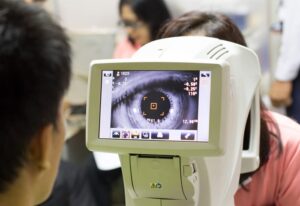
- The core pre-op tests are corneal topography, pachymetry, wavefront analysis, tear film evaluation, and a full refraction under dilation.
- Blood tests may be ordered for patients with diabetes, autoimmune conditions, bleeding disorders, or active systemic infections.
- Certain medications — anticoagulants, immunosuppressants, corticosteroids — can affect healing and may require blood-level monitoring before surgery is cleared.
- Pregnancy is a contraindication to LASIK. If pregnancy status is uncertain, a blood test to confirm is appropriate before any surgical planning proceeds.
- Full, accurate medical history disclosure is the most important pre-operative step. The surgeon cannot identify relevant risks from incomplete information.
In This Article
What the Standard Pre-LASIK Assessment Covers
The pre-operative evaluation for LASIK is comprehensive — but it is an eye assessment, not a general medical one. Here is what is typically included at Visual Aids Centre before any surgical decision is made:
| Test | What It Measures | Why It Matters |
|---|---|---|
| Corneal topography | Surface curvature map of the cornea | Confirms regular corneal shape; detects keratoconus or irregular astigmatism |
| Pachymetry | Corneal thickness at multiple points | Confirms adequate tissue for safe ablation depth |
| Wavefront analysis | Higher-order aberrations in the optical system | Guides personalised treatment plan; identifies optical irregularities |
| Tear film evaluation | Tear break-up time, Schirmer’s test, meibography | Identifies dry eye that could affect healing or post-op comfort |
| Dilated refraction | True refractive error under cycloplegia | Removes accommodative influence for accurate prescription measurement |
| Slit lamp examination | Anterior segment — cornea, lens, conjunctiva | Checks for active eye disease, prior surgery changes, epithelial abnormalities |
| Dilated fundus exam | Retina, optic nerve, vitreous | Important for myopes; identifies peripheral pathology before surgery |
None of these requires blood. They are all ocular measurements. The full picture of what each test involves and why it is done is covered in our article on what tests are done before LASIK. For the corneal topography component specifically — which is often the most misunderstood — our guide on corneal topography for LASIK explains what the maps show and what patterns disqualify a candidate.
When Blood Tests Are Requested
📋 Blood tests may be ordered before LASIK in these specific situations:
- Uncontrolled or suspected diabetes: Blood glucose and HbA1c levels directly affect corneal epithelial healing. A surgeon needs to know the level of glycaemic control before operating.
- Bleeding disorders: Conditions like haemophilia or thrombocytopenia affect how vessel ruptures at the ocular surface heal after the suction ring application. A coagulation profile may be requested.
- Active systemic infections: HIV, hepatitis B/C, and other chronic infections affect immune response and healing. Blood screening may be required at certain surgical facilities as part of standard infection control protocol.
- Autoimmune disease: Conditions like lupus, rheumatoid arthritis, or Sjögren’s syndrome affect both candidacy and healing. Inflammatory markers (ESR, CRP, ANA) may be relevant to the surgeon’s assessment.
- Anticoagulant therapy: Patients on warfarin, clopidogrel, or newer oral anticoagulants may need INR or platelet function testing before any ocular procedure involving instrumentation.
- Uncertain pregnancy status: Pregnancy is a contraindication to LASIK. If a patient’s status is unknown, a serum or urine hCG is appropriate before surgical planning proceeds.
- Thyroid disease: Uncontrolled thyroid dysfunction can affect tear film and wound healing. Thyroid function tests may be relevant if the condition is not currently under treatment.
The decision is entirely individualised. Most LASIK candidates — young adults in good general health with no chronic conditions — will never need a blood test at any stage of the process. The cases where blood work is ordered are almost always preceded by something in the medical history that flags the need. This is why honest and complete disclosure at consultation is the patient’s most important contribution to their own safety.
Medical Conditions That Affect LASIK Eligibility
Several systemic conditions do not just trigger blood tests — they can affect whether LASIK is appropriate at all, or which procedure variant is safest.
Diabetes
Type 1 and Type 2 diabetes are among the most common reasons blood tests are ordered before LASIK. Well-controlled diabetes (HbA1c below 7.5–8%) with no significant retinopathy or corneal neuropathy does not automatically disqualify a candidate. Poorly controlled diabetes slows epithelial healing, increases infection risk, and is associated with refractive instability — all of which directly affect LASIK outcomes. Our article on whether diabetic patients can have LASIK surgery covers the eligibility assessment in full.
Medications That Affect Healing
Some medications do not produce disqualifying conditions by themselves, but they alter the healing environment in ways a surgeon needs to account for. Isotretinoin (Accutane) causes severe dry eye and is an absolute contraindication while in use. Corticosteroids taken long-term can affect wound healing and IOP regulation. Immunosuppressive drugs prescribed for autoimmune conditions affect the inflammatory response that drives corneal repair. A complete medication list at your consultation is essential — our guide on medications to avoid before LASIK covers the categories in detail.
Prescription Stability
This is not a blood test issue but it is the most common candidacy disqualifier at pre-op assessment. LASIK corrects the prescription at the time of surgery. If that prescription is still changing, the correction is being applied to a moving target. A minimum of 12 months’ stability — ideally confirmed by comparing consecutive prescription records — is required before surgery is scheduled. The clinical standards for this are explained in our article on how stable your prescription needs to be for LASIK.
What to Disclose at Your Pre-Op Consultation
The pre-operative consultation only works as a safety filter if the surgeon has complete information. Patients sometimes omit details they consider irrelevant — old procedures, supplements they do not classify as medication, conditions that feel managed and therefore unremarkable. Everything on this list belongs in the conversation:
- All current prescription medications, including topical treatments and inhaled medications
- All supplements, herbal preparations, and over-the-counter products (fish oil, vitamin E, ginkgo, aspirin)
- Any autoimmune, endocrine, or bleeding-related diagnosis, even if currently in remission
- Previous eye surgeries, trauma, or infections
- Family history of keratoconus or corneal disease
- Current or planned pregnancy
- Any allergies to medications, including anaesthetics
Your surgeon cannot order the right blood tests — or make the right candidacy decision — without this picture. The standard pre-operative workup catches eye-specific contraindications. The consultation conversation is what catches systemic ones.
Frequently Asked Questions
Is a blood test mandatory before LASIK?
No. Blood tests are not part of the standard pre-LASIK protocol for healthy candidates. They are ordered selectively, based on the patient’s medical history — specifically conditions like diabetes, bleeding disorders, active infections, or certain medications that could affect corneal healing. Most LASIK patients will not need any blood work.
What tests are actually done before LASIK?
The standard pre-operative assessment covers corneal topography (surface mapping), pachymetry (corneal thickness), wavefront analysis, tear film evaluation, dilated refraction, slit lamp examination of the anterior segment, and a dilated fundus examination. All of these are eye-specific tests — none require blood.
Can I have LASIK if I have diabetes?
Potentially yes — but it depends on how well-controlled the diabetes is. Well-managed diabetes with no significant retinopathy or corneal neuropathy may not disqualify a candidate, though blood glucose and HbA1c testing will be required to assess control. Poorly controlled diabetes, however, is typically a contraindication due to the effect on healing and refractive stability.
Do I need to stop any medications before LASIK?
Some medications need to be paused before surgery, including isotretinoin (must be stopped for six months), aspirin and NSAIDs (typically one week before), and certain immunosuppressants depending on dosage. Never stop a prescribed medication before confirming with both your prescribing physician and your LASIK surgeon that it is safe to do so.
The most common gap at pre-LASIK consultation is not missing blood tests — it is incomplete medication disclosure. Supplements, over-the-counter drugs, and treatments patients classify as “not real medication” can affect healing in ways that are entirely avoidable with a complete picture, so the clinical conversation always begins there rather than with a routine blood draw. About Dr. Buckshey and Visual Aids Centre.