Four procedures. One goal: clear vision without glasses. Every week, patients ask us the same question — “which one is right for me?” The honest answer: it depends entirely on your prescription, corneal thickness, dry eye status, and lifestyle — not on which procedure is trending.
This guide from Visual Aids Centre compares all four across every factor that matters — candidacy, risk, recovery, and cost — with verified 2025 clinical data.
Key Takeaways
- All four are long-lasting, clinically proven procedures — the differences are technique, candidacy, risk profile, and cost.
- ZEISS milestone: ZEISS SMILE has now treated over 14 million eyes worldwide — the most recent figure confirmed on the ZEISS official website — proof of global adoption.
- SMILE Pro received FDA approval in 2024 using the VISUMAX 800 — and a PMC 2025 study confirmed 100% of patients achieved 20/40 or better vision at 3 months.
- A 2025 study in the Indian Journal of Ophthalmology found ICL efficacy at 93.3% vs SMILE at 83.3% — with ICL also showing superior contrast sensitivity.
- Only ICL is reversible — all three laser options permanently reshape corneal tissue.
- India cost range: ₹80,000 (standard LASIK, both eyes) to ₹3,60,000 (ICL) — the right procedure may not be the cheapest one for your eye profile.
Master Comparison — All 4 Procedures at a Glance
This table covers every factor patients ask about before surgery. Use it alongside your pre-operative diagnostic results — particularly your corneal thickness map and prescription — to identify which procedures you are eligible for.
| Feature | LASIK | PRK | SMILE Pro | ICL |
|---|---|---|---|---|
| Technique | Corneal flap + laser ablation | Surface ablation — no flap | Flapless keyhole lenticule extraction | Biocompatible lens implanted inside eye |
| Recovery (functional) | 24–48 hours | 5–7 days | 24–48 hours | 24–48 hours |
| Myopia range | Up to -12D | Up to -12D | Up to -10D | -3D to -20D |
| Treats hyperopia? | ✓ Yes (up to +6D) | ✓ Yes | ✓ Yes — up to +7D (ZEISS SMILE Pro, first KLEx to treat hyperopia) | ✓ ICL Toric |
| Thin corneas? | ❌ Often unsuitable | ⚠ Better than LASIK | ✓ Good option | ✓ Best option — no corneal tissue removed |
| Dry eye risk | Higher — flap severs nerves | Moderate | Lowest laser option | None — cornea untouched |
| Reversible? | ❌ No | ❌ No | ❌ No | ✓ Lens can be removed |
| Safe for contact sports? | ⚠ Flap risk — caution | ✓ Safe | ✓ Safest laser option | ✓ Safe |
| Best clinical outcome data | 95%+ achieve 20/40 or better | Same as LASIK long-term | 100% achieved 20/40+ (PMC 2025) | 93.3% efficacy (Indian J Ophthalmol 2025) |
Who Should Choose Each Procedure
LASIK — Best for Speed and Affordability
95%+ of patients achieve 20/40 or better. Best for moderate myopia, hyperopia, or astigmatism with adequate corneal thickness. Not suitable for thin corneas, significant dry eye, or prescriptions above -12D. Our guide on how permanent LASIK is long-term covers what to expect over decades.
PRK — Best for Thin Corneas and Physical Occupations
Same laser, same long-term outcomes — no flap. The preferred procedure for defence personnel, pilots, contact sport athletes, and thin corneas that cannot safely accommodate a flap. Recovery is longer (5–7 days functional, up to 4 weeks full clarity) but outcomes are identical.
SMILE Pro — Best for Dry Eyes and Active Lifestyles
Flapless with minimal corneal nerve disruption — SMILE Pro gives LASIK-speed recovery with superior structural integrity. ZEISS SMILE Pro has now treated over 14 million eyes globally (ZEISS official site); SMILE Pro received FDA approval in 2024. The first choice for dry eye patients, screen-heavy workers, and athletes. Corrects myopia, astigmatism, and hyperopia up to +7D — confirmed by ZEISS as the first lenticule extraction solution to treat all three. For patients choosing between SMILE Pro and ICL, our detailed comparison of SMILE Pro vs ICL for high myopia covers the candidacy differences. Corneal thickness requirements are explained in our guide on minimum corneal thickness for SMILE.
ICL — Best for High Myopia and Thin Corneas
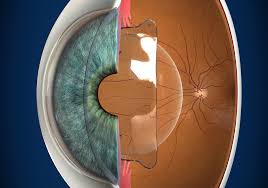
ICL (EVO Implantable Collamer Lens) is a fundamentally different category — a biocompatible lens implanted inside the eye without removing corneal tissue. The 2025 Indian Journal of Ophthalmology study found ICL efficacy at 93.3% vs SMILE at 83.3%, with ICL delivering superior contrast sensitivity. The only reversible procedure. Best for prescriptions above -10D, thin corneas unsuitable for laser, and patients who want superior night vision quality. Our detailed comparison of EVO ICL vs LASIK covers candidacy differences.
Procedure Time, Discomfort and Key Risks
What the consultation brochures often don’t highlight — procedure duration, how uncomfortable recovery really is, and the specific risks per procedure.
| Factor | LASIK | PRK | SMILE Pro | ICL |
|---|---|---|---|---|
| Procedure time | 10–15 min (both eyes) | 10–15 min (both eyes) | 15–20 min (both eyes) | 20–30 min per eye |
| Discomfort during recovery | Minimal — grittiness first 24 hrs | Moderate — surface pain days 2–4 | Minimal — similar to LASIK | Minimal — foreign body sensation short-term |
| Primary risk | Flap dislodgement; dry eye | Slower healing; haze (rare) | Under-correction at high Rx; rare | IOP increase; rare cataract (long-term) |
| Night vision / glare | Temporary halos in first weeks | Temporary — same as LASIK | Minimal — reduced aberrations | Often improved vs pre-surgery |
| Enhancement option? | ✓ Yes, with sufficient tissue | ✓ Yes | ⚠ Limited — requires residual lenticule tissue | ✓ Lens exchange or laser top-up |
India Cost Comparison — 2025 Verified Ranges
| Procedure | Both Eyes (India) | Per Eye (Approx.) |
|---|---|---|
| Standard LASIK | ₹80,000–1,00,000 | ₹40,000–50,000 |
| Femto LASIK / Contoura Vision | ₹70,000–1,30,000 | ₹35,000–65,000 |
| PRK / TransPRK | ₹50,000–70,000 | ₹25,000–35,000 |
| SMILE Pro | ₹1,30,000–1,50,000 | ₹70,000–80,000 |
| ICL (EVO ICL) | ₹2,40,000–3,60,000 | ₹1,20,000–1,80,000 |
All-inclusive packages covering pre-op diagnostics, surgery, medications, and 6-month follow-up give the most accurate cost comparison. Our full breakdown of PRK vs LASIK vs SMILE Pro costs in India explains what most clinics don’t disclose upfront.
Quick Decision Guide — Match Your Profile
| Your Profile | Best Starting Point | Why |
|---|---|---|
| Moderate myopia, healthy corneas, fast recovery needed | Femto LASIK / Contoura | Fastest recovery, proven outcomes, most affordable laser |
| Thin corneas, defence/aviation job, contact sports | PRK or SMILE Pro | No flap risk; structural integrity preserved |
| Pre-existing dry eyes, heavy screen use, active lifestyle | SMILE Pro | Lowest nerve disruption; lowest dry eye risk among laser options |
| High myopia above -10D or very thin corneas | ICL (EVO ICL) | No corneal tissue removed; superior outcomes for high Rx |
| Hyperopia (farsightedness) | LASIK, PRK, or SMILE Pro | All three treat hyperopia — SMILE Pro up to +7D (ZEISS confirmed); ICL Toric also treats hyperopia |
| Budget is primary decision factor | Standard LASIK or PRK | Most affordable without compromising proven outcomes |
Conclusion
LASIK is best for moderate prescriptions needing fast, affordable results. PRK for thin corneas and physical occupations. SMILE Pro — now FDA-approved and backed by 10 million global procedures — for dry eyes and active lifestyles. ICL for high myopia and thin corneas, with 93.3% efficacy confirmed by 2025 data. The right procedure starts with your eye measurements, not a preference.
Book a consultation at Visual Aids Centre — get a comprehensive diagnostic assessment and a personalised procedure recommendation under Dr. Vipin Buckshey’s guidance.
Frequently Asked Questions
Which is better — LASIK or SMILE Pro?
Both deliver similar long-term vision outcomes. SMILE Pro has lower dry eye risk, no flap complications, and better structural integrity. LASIK is more affordable and treats hyperopia, which SMILE Pro currently cannot. For patients with dry eyes or active lifestyles, SMILE Pro is clinically preferable. For standard prescriptions with a budget focus, LASIK is excellent.
Is ICL better than LASIK?
For high prescriptions (above -10D) or thin corneas, yes. The 2025 Indian Journal of Ophthalmology study showed ICL efficacy at 93.3% vs 83.3% for SMILE, with better contrast sensitivity. For moderate myopia with healthy corneas, LASIK delivers excellent outcomes at significantly lower cost. Candidacy — not preference — should drive the decision.
Which procedure has the fastest recovery?
LASIK, SMILE Pro, and ICL all achieve functional vision within 24–48 hours. PRK requires 5–7 days for basic function and up to 4 weeks for full clarity. For patients who cannot take extended time off, LASIK, SMILE Pro, or ICL are the practical options.
Is PRK as good as LASIK long-term?
Yes — identical long-term outcomes. Same laser, same corneal reshaping, just without a flap. Long-term vision quality, stability, and satisfaction rates are equivalent. The only meaningful differences are recovery speed and the short-term discomfort of surface healing.
Can I have LASIK if I have dry eyes?
Mild dry eye can often be managed pre-operatively to make LASIK viable. Significant dry eye is better suited to SMILE Pro (lowest nerve disruption of any laser option) or ICL (no corneal involvement). Your pre-operative tear film assessment determines what is safe.
What is the cheapest vision correction surgery in India?
Standard LASIK starts from ₹80,000 for both eyes — the most affordable option with proven outcomes. PRK is similar. SMILE Pro starts from ₹1,00,000. ICL is the most expensive at ₹2,40,000–3,60,000. Candidacy must be confirmed before cost becomes the deciding factor.
👁️ MEDICALLY REVIEWED BY
Padmashree Dr. Vipin Buckshey
BS Ophthalmology | AIIMS Graduate, 1977 | Padma Shri Honouree | Refractive Surgery Options Specialist, Visual Aids Centre
The most common error before a refractive consultation is arriving with a procedure preference rather than eye measurements. Every procedure here is excellent when matched to the right candidate. Dr. Vipin Buckshey has performed all four across more than 250,000 cases at Visual Aids Centre — his position is consistent: candidacy drives the decision. The 2025 IJO study, the PMC 2025 SMILE Pro data, and the ZEISS December 2024 milestone are all verified peer-reviewed and manufacturer sources. An AIIMS alumnus, Padma Shri honouree, and former President of the Indian Optometric Association. Read more at our story.