
Yes, lights can look blurry, haloed, or starburst after SMILE Pro eye surgery — and in the first one to two weeks, this is normal rather than concerning. Bright streetlights may appear ringed in the first few days. Car headlights may look larger than they should. Indoor bulbs may seem to flare at the edges. These light-related visual effects come from genuine biological changes happening in your healing cornea, and they resolve in the vast majority of patients within a month as the cornea settles into its new shape and the tear film restabilises. The 5–10% of patients who notice some residual halo or starburst after a month usually see it fade across the next two to three months.
This guide from Visual Aids Centre explains the four specific biological reasons lights can look blurry after SMILE Pro, the typical timeline each visual effect follows, practical tips for managing night vision during recovery, and the warning signs that separate normal healing from complications worth a same-day call to your surgeon.
Key Takeaways
- Blurry lights, halos, and starbursts are common in the first 1–4 weeks after SMILE Pro and typically resolve fully.
- Four biological drivers: corneal oedema, epithelial healing, surface irregularity, and tear-film instability.
- Night driving should wait 7–10 days and often until halos subside — usually by week 2–3.
- Persistent symptoms beyond 3 months warrant a detailed post-op review with your surgeon.
Why Blurry Lights Are Normal Early On
After SMILE Pro, your cornea has just undergone a microscopic reshaping. A 2 mm incision was made, a thin disc of corneal tissue (the lenticule) was removed, and the cornea is now settling into its new geometry. For the first few days the corneal surface is not yet perfectly smooth, the epithelium is regrowing and remodelling, mild oedema is present, and the tear film is disturbed. Any of these factors alone would slightly scatter light; together they produce the hazy, haloed, flared appearance that patients describe in the first week.
This is a normal part of healing, not a failure of surgery. Vision quality typically improves noticeably day by day, and most patients describe light-related symptoms as dramatically better by the end of week two. Our article on what to expect during recovery after SMILE Pro eye surgery covers the broader post-op experience.
The Four Biological Drivers
1. Corneal Oedema
The cornea retains a small amount of fluid in the hours and days after surgery — mild post-operative swelling. Water content alters the cornea’s refractive behaviour slightly, scattering light that should focus cleanly on the retina. This resolves over roughly the first week as the corneal endothelium pumps fluid back out.
2. Epithelial Healing and Remodelling
The outer surface layer of the cornea — the epithelium — heals across the small incision site over a few days, and continues remodelling for several weeks. Until this process completes, the surface has minor micro-variations that refract light unevenly.
3. Surface Irregularity
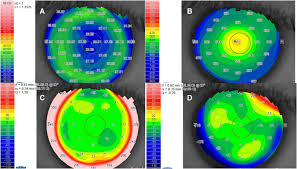
Even a perfectly executed SMILE Pro leaves the cornea with sub-micron surface variations while the tissue reorganises. These irregularities are imperceptible to the naked eye but measurable on corneal topography, and they temporarily degrade the optical quality at night when the pupil is large.
4. Tear Film Instability
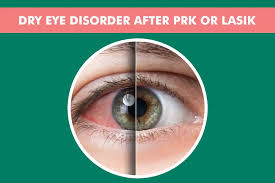
Every laser refractive procedure briefly disrupts the corneal nerves that trigger tear production, which is why post-operative dryness is common. A compromised tear film scatters light in the same way a dirty windscreen does.
What the Timeline Actually Looks Like
- Day 1: Moderate hazy vision, light sensitivity, potential halos. Normal.
- Days 2–5: Vision clears noticeably each day. Halos around lights still common at night.
- Week 1: Daytime vision usually very good. Night halos and slight glare often still present.
- Weeks 2–3: Most halos and starbursts significantly reduced. Occasional subtle glare.
- Month 1: Around 90% of patients report light effects essentially resolved.
- Months 2–3: Residual effects in the remaining 5–10% typically fade in this window.
For when vision becomes stable enough for reliable daily use, see our article on how long it takes for vision to stabilise after SMILE Pro surgery.
Halos, Glare & Starbursts — What’s the Difference
- Halos are circular rings around bright points of light (streetlights, oncoming headlights) — most obvious at night against a dark background.
- Glare is the sensation of brightness spreading or feeling uncomfortably intense, often making it hard to see clearly around the light source.
- Starbursts are radiating spikes or rays from a light source — often described as “the light has points coming out of it.”
- General light sensitivity (photophobia) is the eye’s increased reaction to normal brightness — sunshine or indoor lights feeling harsher than usual.
Most patients experience some combination of these in the first two weeks. They are distinct from the question of overall blur and can persist slightly longer than the daytime blur does. For the specific night-driving safety question, see our article on how long after SMILE Pro eye surgery before you can drive.
Night Vision, Driving, and Practical Tips
Night vision typically lags daytime vision by about a week. This is because the pupil dilates in low light, exposing the optical system to a larger portion of the healing cornea — including the slightly irregular peripheral zones. Patients who try to drive at night before this settles often describe “explosions of light” from oncoming cars, which is unsettling but neither dangerous to the eye nor permanent.
Practical management:
- Wear the protective sunglasses issued by your clinic whenever outdoors for the first week. See whether you need to wear sunglasses after SMILE Pro for detail, and whether you always have to wear dark glasses after the procedure for the specific timeline.
- Use prescribed lubricating drops frequently — restoring the tear film reduces the scattering that produces halos.
- Avoid night driving until your follow-up at day 7 confirms readiness.
- Dim screens and use warm colour tones to reduce the severity of perceived glare.
- Sleep in a dark room with no direct-light screens for the first two to three nights.
Warning Signs That Aren’t Normal
Most light-related symptoms settle on their own. Contact your surgeon same-day if you notice any of these:
- Sudden worsening of blur after a period of improvement
- Sharp eye pain accompanied by light sensitivity
- Persistent halos or starbursts beyond 3 months that are not improving
- New floaters, flashing lights in peripheral vision, or sudden shadow in your visual field
- Intense redness developing alongside the visual symptoms
These are rarely emergencies but warrant prompt evaluation. The first three could indicate healing issues that benefit from early intervention; the fourth could be unrelated to the surgery but needs retinal assessment.
Why SMILE Pro Has Fewer Visual Disturbances Than LASIK
SMILE Pro patients generally experience fewer and milder light-related visual effects than older flap-based LASIK patients, for three reasons. First, SMILE Pro’s 2 mm incision disrupts far fewer corneal nerves than LASIK’s 20 mm flap, meaning less tear-film disturbance and less light-scattering from dryness. Second, the absence of a flap eliminates the micro-wrinkle and flap-edge optical effects that can produce LASIK-specific glare. Third, the VisuMax 800 platform’s spot pattern produces a smoother residual surface than older platforms.
Conclusion
Blurry lights, halos, glare, and starbursts after SMILE Pro are common early-recovery phenomena — not signs of failed surgery. They come from real biological processes happening in the healing cornea, resolve on their own in nearly all patients, and follow a predictable timeline measured in days and weeks rather than months. Night vision lags daytime vision by about a week; night driving should generally wait for the day-7 follow-up clearance. If light-related effects persist beyond three months or worsen suddenly, that’s the point to call your surgeon rather than wait. For any post-operative concern at Visual Aids Centre, book a follow-up consultation at Visual Aids Centre.
Frequently Asked Questions (FAQs)
How long do halos last after SMILE Pro?
Most patients see halos significantly reduce by week 2 and fully resolve by month 1. About 5–10% of patients have subtle residual halos that fade over 2–3 months.
Is blurry vision normal in the first week after SMILE Pro?
Yes. Daytime vision clears within 2–4 days for most patients. Light sensitivity and halos at night are common and typically resolve within the first two weeks.
Can I drive at night 3 days after SMILE Pro?
No — wait at least 7–10 days and ideally until halos have faded substantially. Oncoming headlights may appear as light explosions early in recovery.
Why do lights look starbursted after my SMILE Pro surgery?
Because the corneal surface hasn’t fully smoothed yet, and minor surface irregularities scatter light into rays. This resolves as the epithelium completes remodelling over a few weeks.
Does dry eye cause blurry lights after SMILE Pro?
Yes. A disturbed tear film scatters light similarly to a dirty windscreen. Frequent lubricating drops during recovery help restore clarity.
When should I worry about persistent light disturbances?
If halos or glare persist beyond 3 months without improvement, or worsen suddenly after initial improvement, book a post-operative review with your surgeon.
👁️ MEDICALLY REVIEWED BY
Padmashree Dr. Vipin Buckshey
Optometrist & Post-Operative Visual Quality Specialist | AIIMS Graduate, 1977 | Padma Shri Honouree
Light-related visual effects are one of the most frequently discussed topics at post-SMILE Pro follow-up visits. Dr. Vipin Buckshey and the Visual Aids Centre clinical team counsel patients on the expected timeline at every stage — what day-one effects to expect, what week-one improvement looks like, and the markers that separate normal recovery from issues needing intervention. This structured counselling reduces patient anxiety during the first weeks and ensures that genuine red-flag symptoms are flagged promptly. An AIIMS alumnus, former President of the Indian Optometric Association, official optometrist to the President of India, and Padma Shri recipient, Dr. Buckshey founded Visual Aids Centre in 1980. Read more in our story.