
Yes, once your bandage lens is out and your first check-up is clear, usually about a week after TransPRK. Your surgeon sets the day.
Here’s what many travel guides skip: the flight is the easy part. Dry cabin air is manageable. What really matters is your follow-up calendar, months of steroid drops and strong sun, so plan those and the trip largely takes care of itself.
Key Takeaways
- The bandage lens comes first — it usually stays in for 4 to 7 days.
- Clinics differ — advice ranges from 5 days to 3 weeks.
- Don’t skip the one-month check — steroid drops can raise eye pressure silently.
- Sun and water need more care than flights — pools and sea usually wait 3 to 4 weeks.
- Normal-altitude treks are fine — only extreme heights may shift vision.
What Decides When You Can Travel After TransPRK?
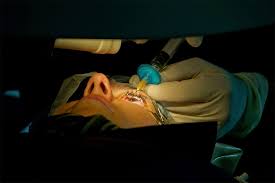
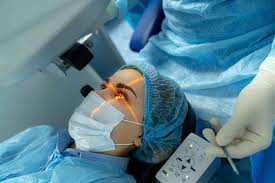
TransPRK is a surface laser. It removes the thin outer layer of the cornea (the epithelium) and reshapes the tissue beneath, so that surface has to grow back. That takes about 3 to 4 days on average, and in one series every eye had healed by day 5. A soft bandage lens protects the eye meanwhile. Three things set your travel date:
- The bandage lens is out — usually between day 4 and day 7.
- Your first review is clear — your surgeon has seen the surface healed.
- You’re comfortable — discomfort is usually worst in the first 3 days.
Clinics still disagree: some allow flying from day 5, others ask for one to three weeks. Surface healing is also why TransPRK waits longer than LASIK, where many people fly within a couple of days; see flying after LASIK. For the trade-offs, read TransPRK compared with LASIK.
Coming from another city or country?
Plan to stay near the clinic until the lens is out and the first review is done. The week-by-week TransPRK recovery will help you plan your visits.
Which Trip Is Safe, and When?
| Trip | Usually OK from | Before you go |
|---|---|---|
| Ride home after surgery | Same day, with an escort | Vision is blurry; don’t travel alone |
| Short car or train trip | After your first review, about a week | Let someone else drive |
| Domestic flight | Lens out and review clear, usually about a week | Carry drops; book your next review |
| International or long-haul | Some clinics advise 2 to 3 weeks | Check drop supply and time zones |
| Pool, hot tub or sea | Often 3 to 4 weeks | Wait for your surgeon’s okay |
| Trek or high altitude | Once cleared | Sun cover; see the holiday table below |
| Driving or riding yourself | Only when your surgeon agrees | Lens out, vision clear; avoid night driving at first |
Sources: ELZA Institute; Providence Eye; Blue Fin Vision.
For a big trip, try to leave at least a month after surgery. That is practical guidance, not a rule. Not sure about your dates? book an assessment and ask, and check how long the assessment visit takes before you plan your stay.
How Do Your Follow-Up Visits Shape the Trip?
Your appointments are the real travel calendar. A typical schedule is below; your surgeon sets yours. At day 7, TransPRK eyes still trailed femto-LASIK in one comparison, and by 3 months they matched.
| Visit | Usually | Vision to expect | If you’re travelling |
|---|---|---|---|
| First check | Day 1 | About 20/40 | Stay put and rest |
| Bandage lens out | Day 4 to 7 | About 20/25 by week 1 | Don’t fly before this |
| One-month check | About 1 month | Steadier; pressure checked | Don’t skip it |
| Three-month check | About 3 months | About 20/20 | Plan trips around it |
| Final review | About 6 months | Final result assessed | Book before long trips abroad |
Sources: Greenwich Eye; ESCRS; EyeWorld; ASCRS.
Why can’t you skip the one-month check?
Steroid drops usually run 3 to 4 months, and they can raise eye pressure without any symptoms. In a US military series of 19,213 PRK eyes, about 6% had a steroid-related rise, most often around the first month, and it eased as drops were tapered. Never stop or extend drops on your own. Ask your surgeon how to get a pressure check wherever you’ll be.
What Does a Flight Do to a Healing Eye?
Cabin pressure isn’t the problem. Unlike some retinal surgeries, TransPRK leaves no gas bubble in the eye. Dryness is: on intercontinental flights the relative humidity has been measured at 10 to 12%, and adding humidity improved tear stability and eased eye symptoms.
- Lubricate early — use the drops your surgeon allows before boarding and every hour or so.
- Dodge the vent — turn the overhead air away from your face.
- Blink on purpose — screens make you blink less.
- Don’t rub — grittiness is normal, rubbing is not.
- Use a sleep mask — it cuts glare and strain.
What goes in your hand luggage?
All your drops with the surgeon’s written schedule, a spare supply, UV-blocking sunglasses, a sleep mask and the clinic’s phone number. Leave eye makeup at home for the first week. Drops work to intervals, not clock times, so ask how to shift timings across time zones. Airports such as those run by the US TSA allow medically necessary eye drops above the usual 100 ml limit if you declare them; check your own airport’s rules.
Which Holiday Activities Need Extra Care?
| Activity | Usually OK from | Extra care |
|---|---|---|
| Beach or snow sun | Outdoors from day one, protected | Close-fitting UV-blocking sunglasses and a hat |
| Pool, hot tub or sea | Often 3 to 4 weeks | Open water and diving later; goggles at first |
| Trek at normal altitude | Once cleared | Dry air; carry lubricating drops |
| Extreme altitude | Ask your surgeon first | Vision may fluctuate or shift temporarily |
Sources: Blue Fin Vision; EyeWiki; ESCRS; PMC (Stojanovic).
UV matters because haze, a clouding of the cornea, peaks one to two months after surgery. A later form can appear two to five months out, and in one study it was more common in sunnier regions. Sunglasses advice runs from one month to a year, so follow your surgeon. Studies after PRK found no lasting refractive change from altitude. Protecting your eyes protects your final result too; see how long TransPRK results last.
What If Something Goes Wrong Away From Home?
Call your clinic the same day, or find the nearest eye hospital, if you notice:
- Pain that grows after the third day
- A sudden drop in vision
- Discharge, or redness that keeps increasing
- A bandage lens that falls out early
Carry your surgeon’s report with the drop names and dates, so a local doctor can act fast. Check that your travel insurance covers eye problems before you go.
Pack-and-Go Check: Are Your Eyes Ready to Travel?
| Check | ✅ Go ahead | ⚠️ Wait and call us |
|---|---|---|
| Bandage lens | Removed by your surgeon | ⚠️ Still in place |
| First review | Done; healing confirmed | ⚠️ Not yet booked or done |
| Discomfort | Mild grittiness only | ❌ Pain rising after day 3, or sudden vision loss |
| Vision | Clear enough for signs and screens | ⚠️ Very blurry or swinging |
| Drops | Packed, with schedule and spare | ⚠️ Not enough for the trip |
| Pressure check | One-month visit booked or covered | ⚠️ Nothing arranged |
| Sun plan | UV sunglasses and hat packed | ⚠️ Nothing for bright places |
Bottom Line
You can travel after TransPRK once the lens is out and your surgeon has checked the healing, usually around a week. Keep your one-month pressure check, pack your drops, and protect your eyes from dry air, strong sun and unclean water. For what to expect afterwards, see TransPRK success rates. Contact our team to plan your dates around surgery.
FAQs
Can I fly after TransPRK?
Yes, once your bandage lens is out and your surgeon clears you, usually about a week.
Can I travel by car or train sooner?
Short, escorted trips home are fine. Keep longer journeys for after your first review.
Do I need to stay near the clinic at first?
Yes. Stay close until the lens is out and your first review is clear.
Can I take eye drops on a plane?
Yes. Keep them in hand luggage with your prescription, following airport rules.
Can I swim or go to the beach?
The beach, yes, with UV sunglasses and a hat. Swimming usually waits 3 to 4 weeks.
Can I trek or go to high altitude?
Normal altitudes are fine once cleared. Ask first about very high peaks.
When can I drive after TransPRK?
When the lens is out, your vision is clear and your surgeon agrees.
👁️ MEDICALLY REVIEWED BY
Padmashree Dr. Vipin Buckshey
Optometrist & Laser Vision Correction Specialist | AIIMS Graduate, 1977 | Padma Shri Honouree | Official Optometrist to the President of India | Former President, Indian Optometric Association | Founder, Visual Aids Centre
Patients planning trips around surgery are often handed one number with no reason, so this guide explains what that number depends on. Dr. Vipin Buckshey founded Visual Aids Centre in 1980, and in 1999 it became the first eye centre in Delhi to introduce LASIK. The centre reports over 250,000 Laser Vision Correction procedures to date. This article is general information rather than medical advice, and your own surgeon’s guidance always takes priority. Read more at our story.