
If you searched “Is LASIK allowed in CISF” and found the answer “no” — that is outdated and incorrect. CISF is a Central Armed Police Force (CAPF) under the Ministry of Home Affairs. MHA/DoPT medical standards explicitly allow LASIK-corrected candidates in CAPF recruitment, subject to defined conditions. The question is not whether LASIK disqualifies you — it does not. The question is whether you meet the CAPF conditions for eligibility, and whether your post-LASIK vision reaches the CISF’s strict 6/6 unaided standard in both eyes.
Key Takeaways
- ⚠️ LASIK does NOT automatically disqualify CISF aspirants. CISF is a CAPF — MHA/DoPT medical standards explicitly allow LASIK-corrected candidates subject to conditions.
- The CISF requires 6/6 unaided vision in both eyes — the most stringent bilateral unaided vision standard across all five CAPF forces. LASIK can achieve this standard for eligible prescriptions.
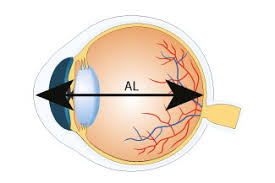
- CAPF LASIK conditions (MHA/DoPT framework): minimum 6 months post-surgery; pre-surgery error ≤ ±6D; corneal thickness ≥ 425 microns; axial length 21–26mm; stable result; no complications.
- Post-LASIK vision IS uncorrected unaided vision — LASIK permanently reshapes the cornea. There is no corrective aid at the time of CISF medical examination. The 6/6 unaided standard is satisfied by post-LASIK natural vision.
- CISF also requires Colour Perception CP-II (Ishihara test) and normal binocular vision — assessed independently of LASIK status. Colour blindness or squint remain independent disqualifiers.
- Always verify against the current CISF recruitment notification — MHA/DoPT standards are periodically revised.
Why the “LASIK Disqualifies CISF” Answer Is Wrong
The claim that LASIK disqualifies CISF aspirants misreads the vision standard. The CISF requirement — 6/6 unaided, no corrective aids — describes what is required at the medical, not how it was achieved. A candidate with 6/6 post-LASIK unaided vision presents with uncorrected vision — LASIK permanently reshaped the cornea. There is no corrective aid at examination.
MHA/DoPT CAPF standards — governing all five CAPFs including CISF — explicitly allow LASIK-corrected candidates with defined conditions. For the full CAPF framework, our guide on LASIK eligibility in CAPF covers all five organisations.
CISF Vision Standards — Complete Requirements
| Vision Criterion | Standard Required | LASIK-Corrected Candidate Position |
|---|---|---|
| Unaided distant vision — better eye | 6/6 (20/20) | Achievable post-LASIK — routinely achieves 6/6 or better for eligible prescriptions (published clinical series: 99.5% achieve 20/40+; AAO 2024) |
| Unaided distant vision — worse eye | 6/6 (20/20) | Achievable post-LASIK — both eyes treated in standard binocular procedure; CISF’s bilateral requirement is more stringent than other CAPF forces (6/9 worse eye) |
| Near vision | N6 in both eyes | Not affected by LASIK — near vision standard is assessed independently |
| Corrective aids | Not permitted — no glasses or contact lenses | Post-LASIK vision is uncorrected unaided vision by definition — no corrective aid is present at the time of examination |
| Colour perception | CP-II standard (Ishihara test) | Unaffected by LASIK — colour vision is a neurological function; LASIK does not alter colour perception |
| Binocular vision | Required — depth perception and field coordination | Standard LASIK does not affect binocularity; both eyes corrected for coordinated function |
| Eye disease / squint | Disqualifying — any active disease or squint | Assessed independently of LASIK status; a squint or eye disease disqualifies regardless of LASIK outcome |
LASIK Eligibility Conditions for CISF/CAPF — Checklist
MHA/DoPT CAPF conditions for LASIK-corrected CISF candidates — all must be met:
| Condition | CAPF Requirement | Why It Matters for CISF |
|---|---|---|
| Time since surgery | Minimum 6 months before CISF medical | Corneal remodelling must be complete; result must be fully stable before medical board assessment |
| Pre-surgery refractive error | ≤ ±6.0D (sphere or cylinder) | Higher corrections require more tissue removal — CISF’s operational environments demand corneal structural integrity |
| Corneal thickness (post-surgery) | ≥ 425 microns (pachymetry) — vs civilian minimum of 250 microns | More conservative than civilian standard — reflects CISF’s physically demanding guarding environments (airports, nuclear plants) |
| Axial length | 21–26mm (IOL Master/A-scan) | Outside this range indicates structural or retinal risk factors incompatible with paramilitary service |
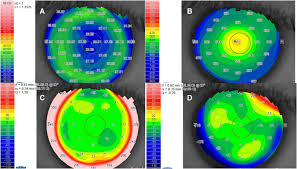
| Stable outcome | No regression, no ectasia signs on Pentacam | Corneal stability under physical stress is essential for CISF’s field operations |
| Final unaided vision | 6/6 in both eyes (CISF-specific — most stringent CAPF standard) | Must confirm LASIK has achieved the required bilateral result — not just the better eye |
For HC Ministerial candidates, see our guide on LASIK eligibility for CISF HC Ministerial.
CISF Medical Board Process for LASIK-Corrected Candidates
What actually happens at the CISF medical for a LASIK-corrected candidate, and the documents you must carry:
| Step | What Is Assessed | LASIK Candidate — What to Bring / Expect |
|---|---|---|
| 1. Unaided vision test | Snellen chart — both eyes tested without glasses. Must achieve 6/6 unaided in both eyes. | Attend without glasses or contacts. Post-LASIK vision is uncorrected — this is your natural result. You must achieve 6/6 in both eyes. |
| 2. Slit-lamp examination | Corneal assessment — looks for haze, flap interface, ectasia signs, active disease | The flap interface or lenticule zone from LASIK/SMILE is visible under slit-lamp. Disclose surgery proactively — concealment is misrepresentation and results in permanent disqualification. |
| 3. Colour vision test | Ishihara plates — CP-II standard required. Assessed independently of LASIK status. | LASIK does not affect this test. Pass or fail on colour vision is the same as any non-LASIK candidate. |
| 4. Corneal parameter verification | Board may verify corneal thickness (pachymetry) — confirms ≥425 microns post-surgery | Carry your Pentacam report, pre-op prescription records, and surgeon’s post-operative certificate confirming stability |
| 5. Surgical history documentation | Medical board reviews surgical record against CAPF conditions | Documents required: surgeon’s certificate; pre-op power prescription; post-op stability clearance; Pentacam/pachymetry report; axial length measurement |
CISF vs Other CAPF Forces — LASIK Position Comparison
| Force | LASIK Accepted? | Vision Standard (Unaided) | CAPF Conditions? |
|---|---|---|---|
| CISF | ✅ Yes — CAPF conditions apply | 6/6 better + 6/6 worse (most stringent bilateral) | 6 months; ≥425µm; ≤6D pre-op; axial 21–26mm |
| BSF | ✅ Yes — CAPF conditions apply | 6/6 better + 6/9 worse | Same CAPF conditions |
| CRPF | ✅ Yes — CAPF conditions apply | 6/6 better + 6/9 worse | Same CAPF conditions |
| ITBP | ✅ Yes — CAPF conditions apply | 6/6 better + 6/9 worse | Same CAPF conditions |
| SSB | ✅ Yes — CAPF conditions apply | 6/6 better + 6/9 worse | Same CAPF conditions |
CISF’s bilateral 6/6 — including the worse eye — is the most stringent CAPF standard, reflecting the critical infrastructure it guards (airports, nuclear installations). For BSF-specific guidance, see our guide on LASIK eligibility in BSF.
Conclusion
LASIK does not disqualify CISF aspirants — MHA/DoPT CAPF standards confirm conditional eligibility. CISF’s bilateral 6/6 unaided requirement is achievable post-LASIK for eligible candidates (pre-surgery error ≤6D). The CAPF’s 425-micron corneal thickness threshold is more conservative than the civilian 250-micron minimum. Plan surgery at least 6 months before your medical. Carry complete surgical documentation. Disclose proactively. Always verify against the current CISF notification.
Planning LASIK for CISF recruitment? Book a pre-operative candidacy assessment at Visual Aids Centre — CAPF recruitment assessment is part of every defence aspirant evaluation.
Frequently Asked Questions
Is LASIK allowed in CISF recruitment?
Yes — CISF is a CAPF under MHA, and MHA/DoPT CAPF standards explicitly allow LASIK-corrected candidates subject to conditions: minimum 6 months post-surgery; pre-surgery error ≤6D; corneal thickness ≥425 microns; axial length 21–26mm; stable, complication-free outcome; and 6/6 unaided in both eyes post-LASIK.
What vision is required for CISF recruitment?
CISF requires 6/6 unaided distant vision in both eyes — the most stringent bilateral standard across CAPF forces. Near vision N6 in both eyes; Colour Perception CP-II (Ishihara); normal binocular vision; no squint or active eye disease. No glasses or contact lenses at the time of medical examination.
If I had LASIK years ago, am I eligible for CISF?
Yes — the 6-month wait is about corneal stability, not a permanent restriction. If your LASIK achieved 6/6 in both eyes with a stable, complication-free result, pre-surgery error ≤6D, and corneal thickness ≥425 microns, you are eligible under CAPF conditions. How long ago the surgery was performed does not matter beyond the 6-month stability requirement.
What documents does a LASIK candidate need at the CISF medical?
Carry: surgeon’s certificate confirming procedure and stability; pre-op prescription (error ≤6D); Pentacam/pachymetry report (corneal thickness ≥425 microns); axial length measurement (21–26mm); post-operative stability clearance. Disclose surgery proactively — concealment is misrepresentation and results in permanent disqualification.
Does LASIK affect colour vision or binocularity in CISF medical?
No — LASIK reshapes the cornea to correct refractive errors. Colour vision (CP-II Ishihara) and binocular coordination are neurological functions unaffected by LASIK. A LASIK-corrected candidate is assessed on these criteria identically to any non-LASIK candidate. A candidate with colour blindness or squint is disqualified regardless of their LASIK status.
👁️ MEDICALLY REVIEWED BY
Padmashree Dr. Vipin Buckshey
BS Ophthalmology | AIIMS Graduate, 1977 | Padma Shri Honouree | Vision Standards and Refractive Surgery Specialist, Visual Aids Centre
The corrected position — LASIK IS conditionally permitted for CISF as a CAPF — reflects MHA/DoPT CAPF medical standards and clinical advisory experience at Visual Aids Centre. CISF’s 6/6 bilateral standard is verified from published CISF recruitment notifications. CAPF LASIK conditions (6 months; ≥425 microns; ≤6D pre-op; axial 21–26mm) reflect the CAPF medical standards framework. The 425-micron threshold is more conservative than the civilian 250-micron minimum — reflecting critical infrastructure guarding demands. Post-LASIK vision is uncorrected unaided vision by clinical and legal definition. The medical board process table reflects the standard CAPF medical examination sequence. An AIIMS alumnus, Padma Shri honouree, and former President of the Indian Optometric Association. Read more at our story.