
LASIK surgery has changed the world of eye care. It offers a way to fix vision problems without glasses or contacts. There are two main types: Bladeless Lasik and Blade Lasik.
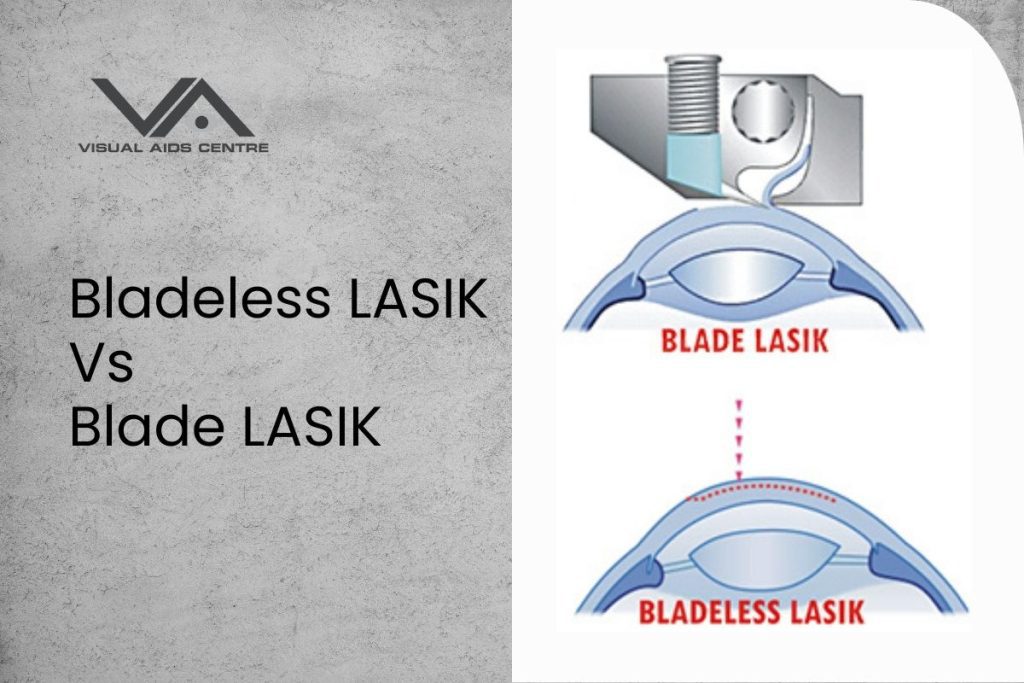
These methods differ in how they make a thin flap in the cornea. Blade Lasik uses a small tool called a microkeratome. Bladeless Lasik, on the other hand, uses a femtosecond laser. The right choice depends on the patient’s needs and what they prefer.
This article will compare Bladeless Lasik and Blade Lasik. We’ll look at their advantages and disadvantages. This will help people decide which surgery is best for them.
Introduction to Bladeless and Blade Lasik
LASIK eye surgery uses two main methods: Blade LASIK and Bladeless LASIK. Blade LASIK uses a microkeratome blade. Bladeless LASIK uses a femtosecond laser. Knowing the difference is key for those thinking about LASIK.
The main difference is how the corneal flap is made. Blade LASIK uses a blade, a method that’s been around for years. Bladeless LASIK, on the other hand, uses a laser for a newer approach. This might lead to fewer problems.
Both methods aim to fix vision by changing the cornea’s shape. The choice between Bladeless LASIK and Blade LASIK depends on several things. These include the eye’s shape, personal choices, and the doctor’s advice.
Understanding LASIK and its two types helps patients make better choices. It’s important to talk to an eye doctor. They can help decide which LASIK is best for you.
The Procedure: How Each Method Works
The LASIK procedure makes a thin flap in the cornea. The technology used for this step varies between Bladeless and Blade LASIK.
In Blade LASIK, a microkeratome creates the flap. This device is made to make a precise cut in the cornea. The surgeon then lifts the flap to expose the corneal tissue underneath. This tissue is reshaped with an excimer laser to fix vision problems.
Blade LASIK Procedure Details
The microkeratome’s precision is key to avoid complications. Yet, its mechanical nature might carry some risks.
Bladeless LASIK, on the other hand, uses a femtosecond laser for the flap. This laser tech makes the flap with high precision and control. It might lower the risks seen with the microkeratome in Blade LASIK.
Bladeless LASIK Procedure Details
The femtosecond laser brings customization and possibly better safety. Its precision is great for patients with thin corneas.
Both methods then use an excimer laser to reshape the cornea. The laser removes tiny amounts of tissue. This reshapes the cornea to correct vision issues like nearsightedness or astigmatism.
The tech difference between the two is big. Blade LASIK uses a mechanical device, while Bladeless LASIK has advanced laser tech. This makes Bladeless LASIK a safer and more precise option.
Also Read – Blade Lasik vs Femto Lasik: Understanding the Differences
Recovery Time: What to Expect After Each Procedure
The time it takes to recover from LASIK surgery depends on the method used. Bladeless LASIK and traditional Blade LASIK have different recovery times. This is because of how the flap is created.
Bladeless LASIK, or femtosecond LASIK, makes a thinner, more precise flap. This can make healing smoother. Some people say they recover faster with bladeless LASIK because of fewer flap problems.
Smooth Recovery with Bladeless LASIK
The femtosecond laser in bladeless LASIK creates a flap more precisely. This might mean less damage to the cornea. This could lead to quicker vision recovery for some.
Studies and patient feedback show that bladeless LASIK can be less painful. People might see clearer sooner than with Blade LASIK.
Recovery with Blade LASIK
Blade LASIK uses a microkeratome to make the flap. Its recovery time is a bit longer than bladeless LASIK. But, most patients see fast visual improvement.
The success of Blade LASIK recovery depends on the surgeon’s skill and post-care. It’s important to talk to your surgeon about your needs and expectations.
Choosing between bladeless and Blade LASIK depends on personal preferences and eye health. Knowing how each procedure heals helps make informed choices. This way, patients can have realistic hopes for their vision correction.
Risks and Complications Associated with Each Type
When thinking about LASIK surgery, knowing the risks is key. Both Bladeless LASIK and Blade LASIK are safe, but they differ in risks.
Blade LASIK uses a microkeratome to make a thin flap in the cornea. This can lead to flap damage or irregularities. There’s also a chance of dry eyes, infection, and seeing glare or halos.
Bladeless LASIK, by contrast, uses a femtosecond laser to create the flap. This reduces flap complications compared to Blade LASIK. Yet, it may cause dry eyes, infection, or visual issues. The laser’s precision helps, but it’s not completely risk-free.
Common Risks and Complications
Dry eyes and infection are risks for both procedures. Seeing glare or halos is also possible. Knowing these risks helps in making a smart choice.
It’s important for patients to talk to their surgeon about these risks. This way, they can understand how they might be affected. This helps in making a well-informed decision about LASIK.
Advantages of Blade Lasik
Blade Lasik has a long history in eye surgery, known for its safety and effectiveness. It has been a key part of vision correction for many years. This has built trust among surgeons and patients.
One big plus of Blade Lasik is its ability to create a precise corneal flap. Surgeons like the control it gives, leading to better results. Over time, the technique has become even more reliable for eye surgery.
Many surgeons stick with Blade Lasik because they know it well. Their experience makes them very good at it. Patients also feel secure knowing there’s a lot of data on Blade Lasik’s safety and success.
Even with newer methods around, Blade Lasik is a solid choice for fixing vision problems. Its long history and the trust it inspires are big pluses. Knowing about Blade Lasik’s benefits helps people make better choices for their eyes.
Advantages of Bladeless Lasik
Bladeless Lasik is known for its ability to correct vision with little discomfort. It uses a femtosecond laser to make a thin flap in the cornea. This means no need for a mechanical blade.
This method is more precise than traditional Blade Lasik. It creates a flap that fits the individual’s eye perfectly. This makes the procedure safer and more effective.
Enhanced Precision and Safety
Bladeless Lasik is precise because it uses a femtosecond laser. This laser makes the flap with exactness, reducing errors. This leads to better results and fewer complications.
It also has fewer side effects like dry eye compared to Blade Lasik. The technology allows for quicker healing in some cases. This is because the procedure is less invasive.
Minimal Discomfort and Faster Recovery
Patients often feel little pain during recovery with Bladeless Lasik. The procedure is gentle, making healing smoother.
In summary, Bladeless Lasik offers many benefits. It’s precise, safe, and causes little discomfort. As technology improves, these benefits will only grow.
Cost Comparison: Is Bladeless Lasik Worth the Price?
It’s important to understand the cost of Bladeless LASIK and Blade LASIK. The price difference can help you decide which is best for you.
Bladeless LASIK is pricier than Blade LASIK. It can cost between ₹1,50,000 both eyes. This price varies based on technology, surgeon skill, and clinic location.
Blade LASIK, on the other hand, costs between ₹50,000 to ₹ 95,000 both eyes. The higher cost of Bladeless LASIK might seem daunting. Yet, it offers benefits like fewer complications and a more precise procedure.
Factors Influencing Cost
Many things affect LASIK surgery cost. These include the technology used, care before and after surgery, and surgeon fees. Bladeless LASIK uses a femtosecond laser, which is more advanced but also pricier than the mechanical blade in Blade LASIK.
Think about the value of advanced technology and better outcomes with Bladeless LASIK. Even though it costs more, the benefits might be worth it for many.
Ideal Candidates for Each Procedure
Choosing between Blade Lasik and Bladeless Lasik depends on your vision needs and the surgeon’s skill. It’s not a one-size-fits-all choice. Your specific vision correction needs and the surgeon’s experience with the technique matter a lot.
Blade Lasik is best for those who meet traditional criteria. This includes having a thick enough cornea and a certain type of refractive error. Patients with specific corneal characteristics or simple corrections might prefer Blade Lasik. It has a proven track record and the surgeon is familiar with it.
Characteristics of Ideal Candidates for Blade Lasik
Patients with:
- Stable vision prescriptions
- Thick enough corneas to safely undergo the procedure
- No significant dry eye or other corneal issues
Bladeless Lasik is better for those with complex vision needs. It’s also good for those who want the precision of the latest technology. This includes people with thin corneas or complex corrections, as it offers a more tailored treatment.
Characteristics of Ideal Candidates for Bladeless Lasik
Patients with:
- Thin corneas that might be at risk with traditional Blade Lasik
- Complex vision correction needs, such as high levels of astigmatism
- A preference for the latest technology, potentially leading to a more precise outcome
The surgeon’s skill greatly affects your experience and results. A skilled surgeon can choose the best procedure for you. They consider your condition and needs, aiming for the best outcome.
In conclusion, the right choice between Blade Lasik and Bladeless Lasik varies by person. It depends on your vision needs, corneal health, and the surgeon’s expertise. By considering these factors, you can make a well-informed decision for better results.
Long-Term Outcomes: Comparing Vision Quality
When thinking about Lasik surgery, it’s key to know about long-term vision quality. Both Blade Lasik and Bladeless Lasik can lead to great vision, but results vary by person.
The quality of vision after Lasik surgery depends on several things. These include how precise the surgery is, the technology used, and how well the patient heals. Bladeless Lasik, with its advanced lasers, might offer better vision for some.
Factors Influencing Long-Term Vision Quality
The accuracy of the flap creation is very important for long-term vision. Blade Lasik is effective but might have a higher risk of flap problems than Bladeless Lasik.
Studies show both methods can achieve high vision quality. But, the results can also depend on the surgeon’s skill and the technology used.
Comparing Outcomes
Both procedures can provide stable vision correction over time. The choice between Blade Lasik and Bladeless Lasik depends on personal preferences and eye characteristics.
Talking to an eye care professional about possible outcomes is important. Both methods can lead to excellent long-term vision quality.
Conclusion: Making the Right Choice for Your Eyes
Choosing between Blade Lasik and Bladeless Lasik depends on your personal situation. You need to talk to an experienced eye surgeon. The choice should be based on understanding the procedures, their risks, and the technology used.
Advances in LASIK technology have made both procedures safer and more effective. Bladeless Lasik uses precise laser technology for high accuracy. Blade Lasik has been improved over time to give reliable results.
The best treatment is decided by a skilled surgeon. They look at your specific needs and suggest the best option. By thinking about safety, technology, and your needs, you can choose wisely for your LASIK procedure.