
Walk into any conversation about laser eye surgery and two words come up again and again: “bladeless” and “flapless.” They sound similar, they’re often used in the same breath, and a lot of people assume they mean the same thing. They don’t — and mixing them up can lead you to choose the wrong procedure for the wrong reasons.
The difference matters more than it first appears. One word describes how a cut is made; the other describes whether a flap is created at all. This guide from Visual Aids Centre untangles the two terms clearly, explains why they get confused, and shows you how to read procedure descriptions accurately so you can compare your options like an informed patient rather than a confused one.
Key Takeaways
- Bladeless means no mechanical blade is used — a laser does the cutting instead. It describes the tool, not the technique.
- Flapless means no corneal flap is created at all. It describes the method of accessing the cornea.
- A procedure can be bladeless but still create a flap (like modern femtosecond LASIK). Bladeless does not mean flapless.
- Truly flapless procedures include SMILE Pro and surface treatments like PRK — these avoid the flap entirely.
- Knowing the difference helps you ask the right questions and compare procedures on what actually matters for your eyes.
Why These Two Terms Get Confused
The confusion is understandable. Both words are used as selling points, both signal “modern and gentle,” and both turn up in the marketing for premium laser procedures. When a clinic advertises a treatment as “bladeless,” many people hear “no cutting at all” — which slides easily into the assumption that there’s no flap either. But those are two separate claims about two separate things.
It doesn’t help that the older language of LASIK was all about blades. The first generation of LASIK used a mechanical oscillating blade called a microkeratome to create the flap, so “no blade” felt like a complete reinvention. In reality, the blade was replaced by a laser — but the flap, in standard LASIK, stayed. Understanding that history is the key to separating the two ideas, and our explainer on whether they cut your eye for LASIK is a useful place to see what’s really happening at the surface.
What “Bladeless” Actually Means
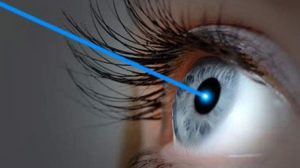
“Bladeless” refers purely to the instrument used to make the corneal cut. In bladeless LASIK, a femtosecond laser replaces the old mechanical microkeratome blade. Instead of a physical blade slicing the cornea, the laser delivers ultra-fast pulses of light that separate the tissue at a precise depth, creating the flap with far greater accuracy and consistency.
So bladeless is a genuine and meaningful upgrade — it makes the flap more uniform, more predictable, and generally safer than the blade era. But notice what it describes: the how of the cut, not whether a flap exists. A bladeless procedure can still very much involve a flap. The comparison between the two flap-creation methods is laid out in blade LASIK versus Femto LASIK, and the practical pros and cons are weighed up in our guide on bladeless versus blade LASIK.
What “Flapless” Actually Means
“Flapless” is a completely different claim. It refers to whether a corneal flap is created at all. In flap-based procedures — including all forms of LASIK, bladeless or not — a hinged flap is cut in the cornea, lifted to reshape the tissue beneath, and then laid back into place. A flapless procedure skips that step entirely. There is no flap to lift and no flap to heal.
This is a difference in the fundamental technique, not just the tool. Flapless procedures reach the corneal tissue through a different route — either a tiny keyhole incision or by working on the surface directly. Because the flap is the structure people most often worry about, “flapless” speaks to a different set of concerns than “bladeless” does — concerns that come down to the flap’s own dimensions, like its thickness, which simply don’t exist when no flap is made.
The Key Difference, Side by Side
If you remember nothing else, remember this contrast:
- Bladeless answers the question: “What tool made the cut?” → A laser, not a blade.
- Flapless answers the question: “Was a flap created at all?” → No flap was made.
Put simply, bladeless is about the method of cutting; flapless is about the absence of a flap. A procedure can be bladeless and still create a flap. It can also, in theory, avoid a flap entirely. The two words are not interchangeable, and a procedure being one does not make it the other. This is the single most common misunderstanding patients arrive with — and clearing it up changes how you read every brochure from then on.
Where Real Procedures Fit
It’s easier to lock this in with actual examples of where today’s procedures land:
Bladeless but Flap-Based
Modern femtosecond LASIK — including advanced AI-guided platforms — is bladeless, because a laser creates the flap. But it is still a flap-based procedure. This is the exact combination that causes the most confusion: no blade, yet very much a flap.
Flapless (and Also Bladeless)
SMILE Pro is flapless — it removes a small disc of tissue through a keyhole incision with no flap, and it’s bladeless too, since a laser does all the work. Our piece on SMILE Pro explains how that keyhole approach works.
Flapless by Working on the Surface
Surface procedures such as PRK and Trans-PRK are flapless because they reshape the cornea from the surface rather than under a flap. Our guides on Trans-PRK and advanced surface ablation show how these differ from flap-based LASIK.
Why the Distinction Matters for Your Choice
This isn’t just terminology for its own sake. The two words point to different things you might actually care about. If your concern is precision and safety of the cut, “bladeless” is the relevant feature — and nearly all reputable modern LASIK is bladeless now. If your concern is avoiding a corneal flap altogether — perhaps because you play contact sports, have a physically demanding job, or simply prefer no flap — then “flapless” is the feature to look for, and bladeless LASIK won’t satisfy it.
Knowing which question you’re really asking lets you compare procedures on the right axis instead of being swayed by whichever buzzword a brochure leads with. The fuller landscape of options is mapped in our overview of the types of laser eye surgery, and if you’re unsure which suits you.
Conclusion
Bladeless and flapless are not two words for the same thing. Bladeless tells you a laser, not a blade, made the cut — a real safety upgrade that almost all modern LASIK now offers. Flapless tells you no corneal flap was created at all, which is a different matter entirely and points to procedures like SMILE Pro and PRK. A treatment can be bladeless while still creating a flap, so don’t let one word stand in for the other. Once you know which question matters to you — the tool, or the flap — you can compare your options clearly and confidently.
Still not sure which approach fits your eyes and lifestyle? Book a consultation at Visual Aids Centre, and we’ll explain your options in plain language and recommend what genuinely suits you.
Frequently Asked Questions (FAQs)
Is bladeless the same as flapless?
No. Bladeless means a laser, not a blade, made the cut. Flapless means no corneal flap was created at all. A procedure can be bladeless and still create a flap — the two terms describe different things.
Does bladeless LASIK have a flap?
Yes. Bladeless LASIK uses a femtosecond laser instead of a blade to create the flap, but it is still a flap-based procedure. “Bladeless” refers only to the cutting tool.
Which procedures are genuinely flapless?
SMILE Pro (a keyhole technique) and surface treatments like PRK and Trans-PRK are flapless. They avoid creating a corneal flap entirely, reaching the tissue a different way.
Is flapless better than bladeless?
Neither is universally better — they address different concerns. Bladeless is about a precise, safe cut; flapless is about avoiding a flap. The right choice depends on your eyes and priorities.
Why do clinics use the word “bladeless” so much?
Because it marks a real improvement over old blade-based LASIK. Just be aware it describes the cutting method, not whether a flap is made — don’t read it as “flapless.”
How do I know which procedure is right for me?
It depends on your corneal thickness, prescription, and lifestyle. Decide whether the cut method or the presence of a flap matters more to you, then confirm with a surgeon at a proper consultation.
👁️ MEDICALLY REVIEWED BY
Padmashree Dr. Vipin Buckshey
Optometrist & Laser Vision Correction Specialist | AIIMS Graduate, 1977 | Padma Shri Honouree | Refractive Surgery Specialist, Visual Aids Centre
Few things cause more avoidable confusion in laser eye surgery than the words “bladeless” and “flapless,” and Dr. Vipin Buckshey regularly finds himself untangling them for patients at Visual Aids Centre. In four decades of refractive practice he has watched marketing language blur genuine technical distinctions, and he believes patients choose far better when they understand what each term actually describes — the tool that makes the cut, versus whether a flap is created at all. His approach is to explain the difference plainly, then help each patient decide which factor genuinely matters for their eyes and lifestyle. The clarity in this article reflects exactly that educational, no-spin philosophy. An AIIMS alumnus, Padma Shri honouree, and former President of the Indian Optometric Association, Dr. Buckshey is trusted for turning industry jargon into decisions patients can own. Read more on our story.