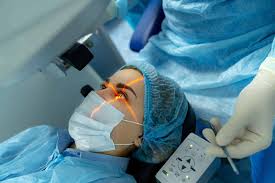

Prayer time arrives a few hours after your LASIK surgery. Your vision is already clearer — and you are wondering whether your daily prayers are safe or whether they need to wait. They do not need to wait. But some of the physical practices that accompany prayer need a brief, practical adjustment.
What requires temporary modification is the physical dimension — bowing, prostration, water-based ablution, and incense exposure. This guide from Visual Aids Centre gives you the exact guidance for each faith practice, verified clinical reasoning, and a week-by-week timeline so your prayers are spiritually complete and physically safe.
Key Takeaways
- ✓ Seated and standing prayers are safe from day one — prayer itself poses no risk to the healing corneal flap.
- ⚠ Bowing and full prostration need modification for the first 7–10 days — clinical studies show head-down positions cause a transient IOP rise of 2–4 mmHg that warrants caution in early recovery.
- ⚠ Direct water contact on the eye area during Wudu or other ablution should be avoided for at least 7 days.
- ⚠ Eye rubbing — including when emotionally moved during prayer — is the most clinically significant post-LASIK risk.
- ✓ Islamic Tayammum (dry ablution) is a valid religious accommodation when water causes bodily harm — it fully applies to the post-LASIK period.
- ✓ Full normal prayer resumes for most patients from week two onward.
Why Prayer Practices Need Short-Term Modification
During LASIK, a thin corneal flap heals through natural adhesion — no sutures — and is most vulnerable in the first 72 hours. Prayer itself carries no risk. The concerns are purely physical: actions that bring hands near the eye, expose the eye to water or dust, or place the head in a downward position during the early healing window.
Surgeons advise keeping the eye surface free from water for 7–10 days and exercising caution with head-down positions in the first week. Everything else — intention, words, sitting or standing — is completely safe.
Bowing and Prostration — The Clinical Concern
Published studies confirm head-down positions cause a transient IOP increase of 2–4 mmHg — mild, but sufficient to warrant caution in the first week of LASIK healing. Full prostration also places the face near floor surfaces where dust can irritate the healing ocular surface.
Gentle bowing is manageable from day two. Full floor prostration should wait until day 7–10. A prayer chair or raised surface is the practical alternative. See our guide on bending safely after LASIK for the complete clinical reasoning.
Wudu, Ablution, and Water Contact
Standard post-operative ophthalmological guidelines recommend avoiding direct water contact with the eyes for 7–10 days after LASIK — tap water is not sterile and introduces contamination risk when the corneal surface is still healing. This directly affects Muslim patients whose pre-prayer Wudu involves washing the face including the eye area.
Tayammum (dry ablution) is the Islamic religious provision for precisely this situation — when water use would cause harm to the body, dry ablution is fully valid. Most Islamic scholars confirm this applies to post-surgical contexts. For 7–10 days after LASIK, Tayammum fulfils the pre-prayer obligation without risk to healing eyes.
From day 8, Wudu resumes with a modified technique — use a damp cloth to wipe gently around (not on) the eye area, rather than splashing directly. If water accidentally reaches the eye, our guide on accidentally getting water in the eye after LASIK provides the immediate response protocol. For the full face-washing technique, see our guide on washing your face safely after LASIK.
Incense, Outdoor Prayer, and Emotional Tears
Incense and Dhoop
Incense, agarbatti, and dhoop used in Hindu puja and other traditions produce smoke that irritates healing corneal tissue. Maintain distance from the incense source for the first two weeks, or ask a family member to handle incense during your recovery. Normal puja resumes after two weeks.
Outdoor and Communal Prayer
Outdoor and communal settings introduce dust, UV exposure, and accidental contact risk. Wear UV-protective wraparound eyewear outdoors and recovery goggles in crowded settings (mosques, temples, churches) for the first week.
Tears During Prayer
Natural tears are safe. The risk is instinctive rubbing afterward. Blot gently at the outer corner only — never press on the eye surface. Our guide on crying safely after LASIK covers the rubbing reflex in detail.
Dos and Don’ts — Quick Reference
| ✓ Do | ❌ Don’t |
|---|---|
| Pray seated or standing from day one | Perform full prostration to the floor in the first week |
| Use Tayammum (dry ablution) for first 7–10 days | Splash or run water over the eye area during Wudu |
| Wear recovery goggles in crowded prayer settings | Rub or press your eyes — even when emotionally moved in prayer |
| Wear UV-protective eyewear for outdoor prayer | Expose healing eyes to close-range incense smoke in first 2 weeks |
| Maintain distance from incense — ask for help | Bow deeply for the first 24 hours post-surgery |
| Blot tears gently at the outer corner of the eye | Attend prayer in dusty or polluted outdoor environments in week 1 |
Prayer Recovery Timeline After LASIK
| Period | Safe Prayer Activities | What to Modify |
|---|---|---|
| First 24 hours | Seated or standing prayer; silent or spoken prayer | No bowing or prostration; no Wudu with water; no incense; no outdoor prayer |
| Days 2–7 | Most standing/seated prayers; gentle bowing | No full prostration to floor; Tayammum or cloth-only Wudu; distance from incense |
| Week 1–2 | Nearly all prayer routines; gentle prostration | Modified Wudu avoiding eye splash; goggles in communal settings |
| Month 1+ | Full normal prayer routine resumed | Standard post-LASIK hygiene; no-rubbing habit maintained permanently |
Modifications by Religious Practice
| Practice | Concern | Safe Modification |
|---|---|---|
| Sujood (Islamic prostration) | Forehead to floor; dust proximity; IOP rise | Prayer chair or elevated surface; resume floor Sujood from day 7–10 |
| Wudu (Islamic ablution) | Direct water contact with eye area | Tayammum for first 7–10 days; cloth-wipe Wudu from day 8 |
| Ruku / Matha Tekna (bowing) | Head-down position; mild transient IOP increase | Gentle bow safe from day 2; avoid deep or prolonged bowing in first 24 hours |
| Incense / dhoop (puja) | Smoke irritates healing corneal surface | Maintain distance; ask family to handle incense for first 2 weeks |
| Kneeling / altar prayer | Risk of inadvertent eye rubbing when emotionally moved | Wear recovery goggles; blot tears at outer eye corner only |
Conclusion
You can pray after LASIK from day one. Seat yourself, stand, speak, focus — none of it harms your healing eyes. The adjustments are temporary: no floor prostration for a week, no water on the eye area for 7–10 days, distance from incense, goggles in crowds. By week two, your full routine is back.
Want a recovery plan tailored to your daily prayer schedule before your procedure? Book a consultation at Visual Aids Centre.
Frequently Asked Questions
Can I pray immediately after LASIK surgery?
Yes — seated and standing prayer is safe from day one. What to avoid in the first 24 hours is bowing deeply, full prostration, water near the eyes during Wudu, and dusty outdoor environments. Prayer itself carries no clinical risk to your healing cornea.
Can Muslims perform Wudu after LASIK?
Not with direct water on the eye area for 7–10 days. Tayammum (dry ablution) is a valid Islamic religious provision when water would cause bodily harm — Islamic scholars confirm it applies to post-surgical contexts. From day 8, careful Wudu with a damp cloth around (not on) the eye area can resume.
When can I do full Sujood (prostration) after LASIK?
From day 7–10, with a clean prayer mat and surgeon confirmation. Head-down positions cause a transient IOP increase of 2–4 mmHg — mild but worth managing in the first week. A prayer chair is the practical alternative during this window.
Is crying during prayer safe after LASIK?
Yes — natural tears are safe. The risk is instinctive eye rubbing afterward. Blot gently at the outer corner of the eye with a soft tissue only — never press on or across the eye surface. The no-rubbing rule applies in prayer just as at any other moment during recovery.
Can I use incense during puja after LASIK?
Not at close range for 2 weeks — smoke directly irritates healing corneal tissue. Maintain distance or ask a family member to handle incense during your recovery. Normal puja resumes from week three.
Can I attend Friday prayers (Jumu’ah) or communal prayer after LASIK?
Yes, from day 2 for most patients — with protective recovery goggles in crowded spaces where accidental elbow or hand contact is possible. Outdoor communal prayer requires UV-protective wraparound eyewear. Avoid dusty or polluted outdoor settings in the first week.
👁️ MEDICALLY REVIEWED BY
Padmashree Dr. Vipin Buckshey
BS Ophthalmology | AIIMS Graduate, 1977 | Padma Shri Honouree | Post-LASIK Lifestyle and Activity Recovery Specialist, Visual Aids Centre
The prayer question arrives from patients of virtually every faith — and the answer is always the same: prayer itself is never the problem. Dr. Vipin Buckshey has counselled thousands of LASIK patients through the intersection of post-operative care and religious practice at Visual Aids Centre. The IOP context for prostration, the Tayammum provision, and the incense guidance in this article reflect four decades of clinical experience with India’s multi-faith patient population. An AIIMS alumnus, Padma Shri honouree, and former President of the Indian Optometric Association. Read more at our story.